Dr. Alphine Jefferson
Distinguished Professor Emeritus of History
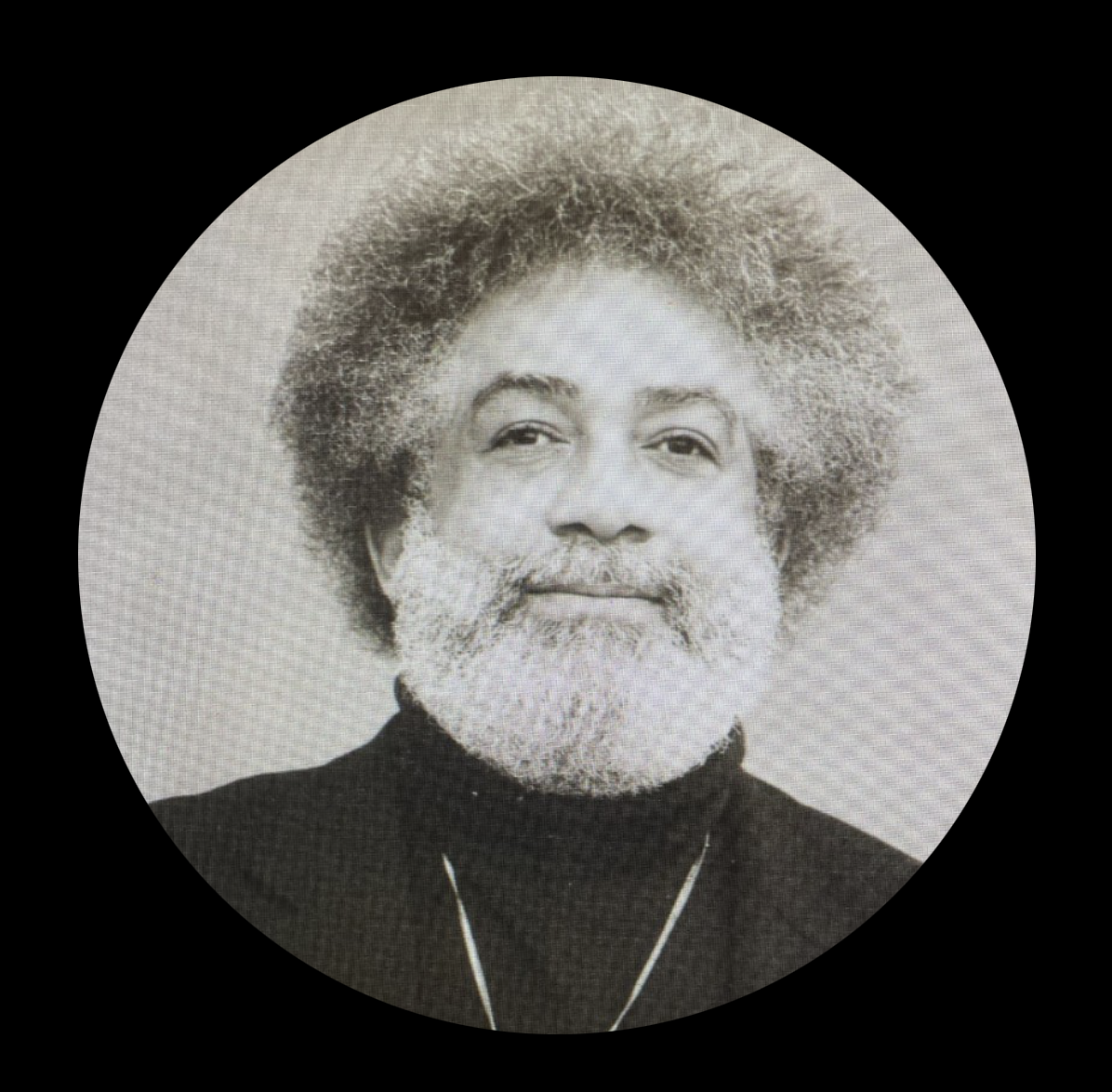
Renowned oral historian, his work emphasizes lived experience as a foundation for scholarship, particularly within American colonial, Southern, and African diasporic history.
Former director of Black Studies at Randolph-Macon College.
“he is often cited for his expertise in “giving voice to the voiceless” and the importance of oral history”.
“Jefferson was born in Caroline County, Virginia and spent half his youth in Baltimore, Maryland. It was there he had his first male African American teacher, and was inspired to the profession. It was also in Baltimore, where he was selected for an advanced program in high school, which exposed him to the possibilities of higher education. Jefferson attended the University of Chicago as an undergraduate as one of only 34 Black students. He pursued graduate work in history at Duke University, completing his PhD with a dissertation on the effects of housing discrimination.
Jefferson’s early faculty career included Northern Illinois University, Southern Methodist University, Johns Hopkins University, and the College of Wooster. In 2005, he moved home to Virginia to be with family. He began teaching at Randolph-Macon College, where Jefferson chaired the Black Studies Program. Jefferson served as the national president of the Oral History Association and on the editorial board for The Public Historian for the National Council of Public History.”
– Downtown Ashland Association
“Jefferson has taught at Southern Methodist University (where he was recognized with the Most Popular Professor Award), the College of Wooster, and Randolph-Macon College, among others. He retired in 2022. His current projects include an essay on novelist and anthropologist Zora Neale Hurston, whom Jefferson calls “America’s first Black oral historian.”—Carrie Golus, AB’91, AM’93
I stuttered severely until I had a faith healing in my Pentecostal church when I was 15 and a half. As a result of stuttering, I have always paid attention to language—people’s accents, their speech patterns, and their grammar.
My introduction to oral history, as we call it now, was listening to the stories that people told. My parents were the second family in our area to get electricity. Most people had no electricity. So obviously, there was no TV. There was no radio.
But my interest in oral history actually began on December 4, 1969, when [Black Panthers] Mark Clark and Fred Hampton were assassinated in North Lawndale. Judy Mitchell-Davis [AB’73], who was from North Lawndale, took me in her car to her sister Edna’s restaurant—Edna’s famous restaurant where Martin Luther King Jr. had set up his open-housing campaign—and she introduced me to Timuel Black [AM’54, author of Bridges of Memory, a two-volume oral history on the Great Migration]. He and I talked that night.
I’m sure he realized that he could best get the story of Black Chicago by talking to people. I remember running into him one time at Valois on 53rd Street. I could barely get in because everybody’s sitting around the table with Timuel Black.
After graduation I attended the brand-new Duke University Oral History Program, the first PhD program in oral history in the country. They aggressively recruited me.
The very first academic oral history program had been established in 1948 at Columbia University by Allan Nevins. He interviewed only politicians: governors, senators, and presidents. It was a great white men oral history program. He wanted to capture those rare moments when someone made that one unguarded remark.
So I went to Duke in 1973. In the summer of 1974, I was chosen to coordinate a group of eight Duke students, Black and white, to interview Black farmers who were losing their land throughout the South.
Two of us drove to Montgomery, Alabama. At the hotel reception desk, we told them we were Duke students who had reserved rooms for our oral history work. And the guy said, “Oh. We do not have a reservation for you.” So we said, “If we have to call Duke University and say there are no rooms for us, you are probably going to have some problems. Do you want us to make that call?” So they gave us one room. We had to share.
The people at Duke had trained us—when you’re in a community that you do not know—to go to the barber shop, the beauty shop, or the post office. Introduce yourself, tell them who you are and why you’re there, to establish credibility.
So I went to the post office. It happened to be a Black postal worker, male. I told him I was going to interview Charles Johnson. He looked at me with horror and said, “Which Charles Johnson? The Black Charles Johnson, or the white Charles Johnson? Because the white Charles Johnson just shot a Black man to death last week who walked up and knocked on his front door.” That is a true story.
We asked farmers about losing their land, about how they were denied loans. And it was just a sad story. In the year 1900 Black Americans owned 25 million acres of land. Right now, it’s less than 1 million.
The best way to get someone to talk to you is to find that point of commonality. So I would talk about being a church boy. The family would invite me in. One of the interviews I did, the guy had no time for me, but he said, “If you ride on the back of this tractor, I’ll talk to you.” That is a true story.
My dissertation was on housing discrimination in North Lawndale. Obviously, I was the outsider. I’m from Virginia. People have all these stereotypes about Southerners.
There’s a longtime rivalry between Black Americans on the South Side of Chicago and on the West Side. People from the South Side were supposedly more sophisticated, educated, and bourgeois. People from the West Side were directly from Mississippi’s cotton fields and were less sophisticated. I was intrigued by that dichotomy.
Timuel Black introduced me to some of the elders of the North Lawndale community. I was interviewing this woman, and she said, “Boy, you don’t understand the protection you have.” I said, “What do you mean?” She said, “It has gone out to the gang members not to bother the guy with the white-over-blue Chevy Malibu with the North Carolina plates. Do not bother that boy, because he is doing good work.”
I’ve always been fascinated by the color line. What has amazed me is the extent to which people’s stories are grounded in their ability to negotiate the contradictions in their own lives.”
– The University of Chicago Magazine
“Prejudice is a function of visibility” – Robert E Parks
“I was missing something” – Ntozake Shange
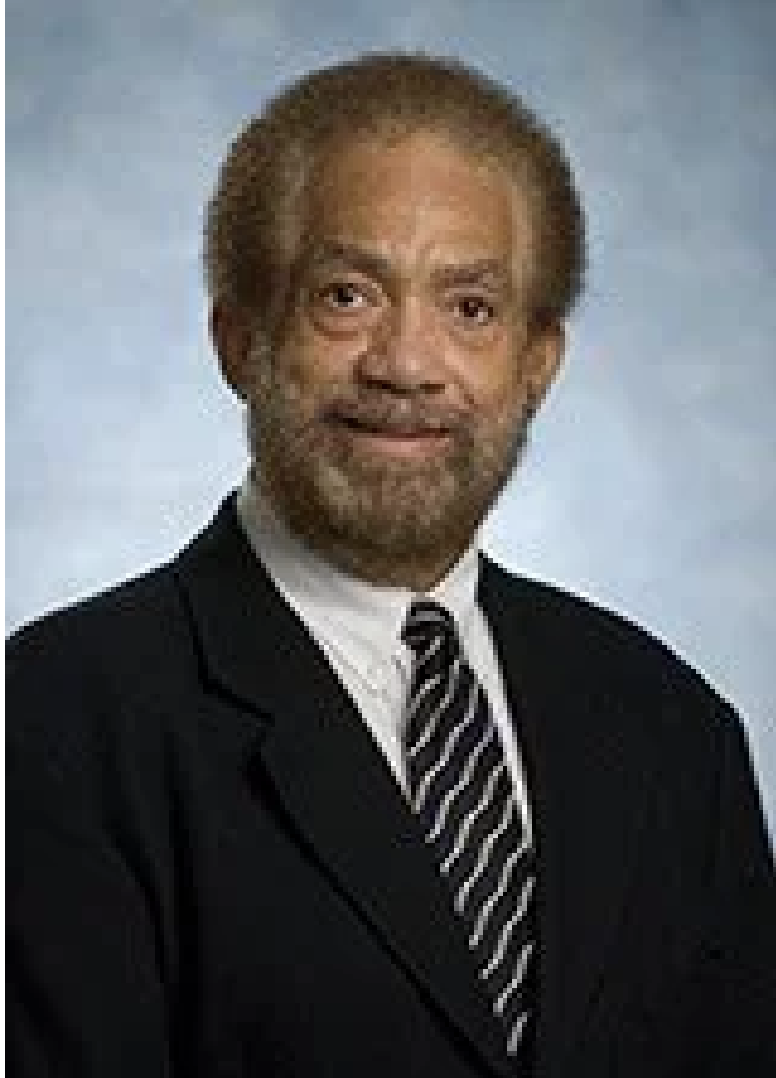
Academic & Professional Career
-
Education: He earned his A.B. from the University of Chicago and his M.A. and Ph.D. from Duke University.
-
Teaching History: Before joining Randolph-Macon in 2005, he taught at Northern Illinois University, Southern Methodist University, and Johns Hopkins University.
-
Leadership: He served as the national president of the Oral History Association and was instrumental in elevating Randolph-Macon’s Black Studies program to a full major in 2020.
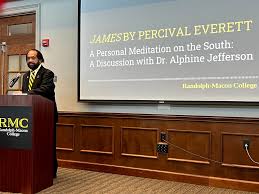
“Dr. Alphine Jefferson, professor of history, joined Randolph-Macon’s faculty in 2005, having earned his A.B. from the University of Chicago and his M.A. and Ph.D. from Duke University.
His dedicated leadership of RMC’s Black Studies program led to it becoming a full-fledged major in 2020, and he was particularly involved with helping the College offer meaningful Black History Month programming each February and organizing the area’s Juneteenth celebrations.
Jefferson was instrumental in establishing and fostering ties between local historical organizations and the College, leading the Hanover County Black Heritage Society and serving on the boards of numerous historical associations.
In 2021, he was awarded the Samuel Nelson Gray Distinguished Professor Award.”
Community Impact
-
Juneteenth Celebrations: Since 2010, Dr. Jefferson has been the lead organizer for Juneteenth events in the Ashland, Virginia region.
-
Board Service: He remains active in local history, serving on the boards of the Ashland Museum, Hanover Tavern Foundation, and the Ashland Theatre Foundation.
-
Awards: In 2021, he received the Samuel Nelson Gray Distinguished Professor Awardfor excellence in the classroom.
Dr. Jefferson retired in 2022 but continues to lead community book discussions and historical projects.
Are you looking for Dr. Jefferson’s published works or information on his upcoming community speaking events?
Macon Memories Interview 65: Prof. Alphine Jefferson
Dr. Jefferson’s scholarship often focuses on the intersection of economics and the human impact of historical events.
-
The Richmond Slave Trade: The Economic Backbone of the Old Dominion
: Published in 2012 with Jack Trammell, this book explores the harrowing history of Richmond’s 15th Street (Wall Street) as a commercial center for the slave trade [1.4.2, 1.4.3].
-
Housing Discrimination Research: His doctoral work at Duke University focused on the historical effects of housing discrimination, a theme that has influenced much of his later work on urban America [1.4.9].
-
Oral History Leadership: As a former president of the Oral History Association, he has authored numerous articles on the ethics and methodology of capturing lived experiences for the National Council of Public History [1.4.9].
Notable Published Works
Dr. Jefferson’s research often bridges the gap between formal archives and the “living history” of oral narratives.
-
“African American History as Regional History”: A significant contribution to The New Encyclopedia of Southern Culture, where he re-evaluates the role of Black communities in shaping Southern identity.
-
Oral History Methodology: He has published extensively in the Oral History Review, focusing on how to ethically document the lives of marginalized groups.
-
“The South as a Mirror of the Nation”: An essay exploring how Southern racial dynamics reflect broader American struggles.
-
Collaborative Local Histories: He frequently contributes to regional publications in Virginia and Illinois that document local Black history and the impact of the Great Migration.
Community Speaking & Events
Since retiring from full-time teaching, Dr. Jefferson has focused on “Public History”—bringing academic rigor to local communities.
-
The Ashland Museum Book Club: Dr. Jefferson frequently leads discussions here. He recently facilitated a deep dive into The 1619 Project and The Warmth of Other Suns.
-
Hanover County Black Heritage Society: He is a regular keynote speaker for their annual heritage events and Juneteenth celebrations.
-
The Ashland Theatre: He often introduces film screenings or participates in panel discussions regarding civil rights and social justice documentaries.
-
Guest Lectures: He remains a sought-after speaker for colleges and universities to discuss the intersection of Black Studies and Oral History.
Faith Ringold – March 29, 2012, at Randolph-Macon College
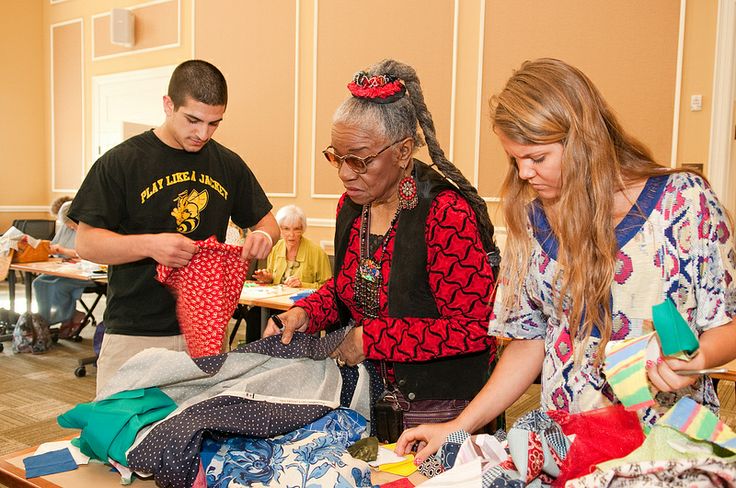
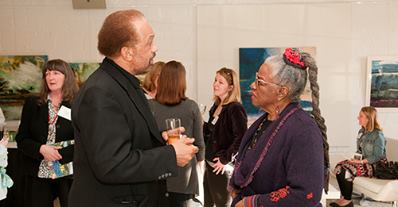
R-MC celebrates Juneteenth with Professor Jefferson
Upcoming Event at the Ashland Museum
Dr. Jefferson remains a core figure in the Ashland historical community, regularly leading deep-dive book discussions.
-
Next Event: Book Discussion with Dr. Alphine Jefferson
-
Date: Wednesday, April 16, 2025
-
Time: 7:00 PM – 8:30 PM
-
Location: Ashland Museum
These sessions are typically free and open to the public, focusing on works that challenge and expand the understanding of American history.
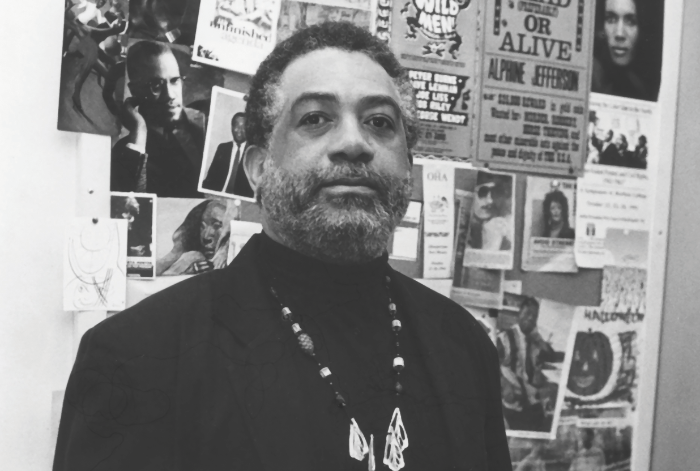
Jefferson in his office at the College of Wooster, where he taught for 16 years. He supervised more than 125 senior theses in history. (Photo courtesy Alphine Jefferson)
LINKS~
https://www.ashlandvirginia.com/news/jefferson
https://www.rmc.edu/news/r-mc-celebrates-juneteenth-with-professor-alphine-jefferson-video/
-
Community Spotlight: Dr. Alphine Jefferson
Jun 30, 2022 — Jefferson’s early faculty career included Northern Illinois University, Southern Methodist University, Johns Hopkins University, a…
Downtown Ashland, Virginia
-
Oral historian Alphine Jefferson, AB’73, found a rich history not …
Nov 23, 2025 — Oral historian Alphine Jefferson, AB’73, found a rich history not in archives, but in lived experience. His work ranged from Chica…