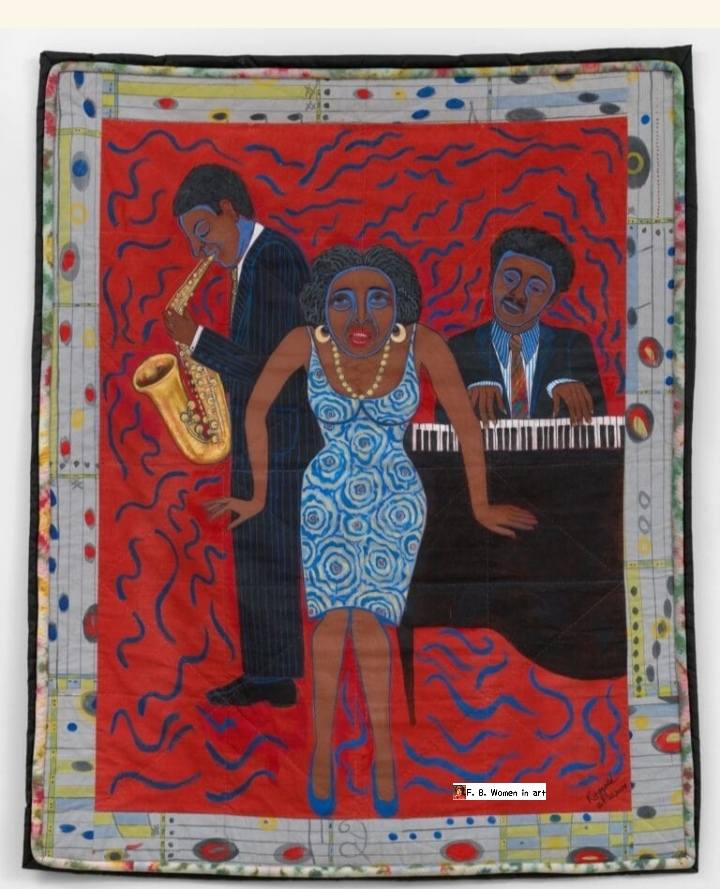
Jazz Stories: Mama Can Sing, Papa Can Blow #5: You Put the Devil in Me” (2004)
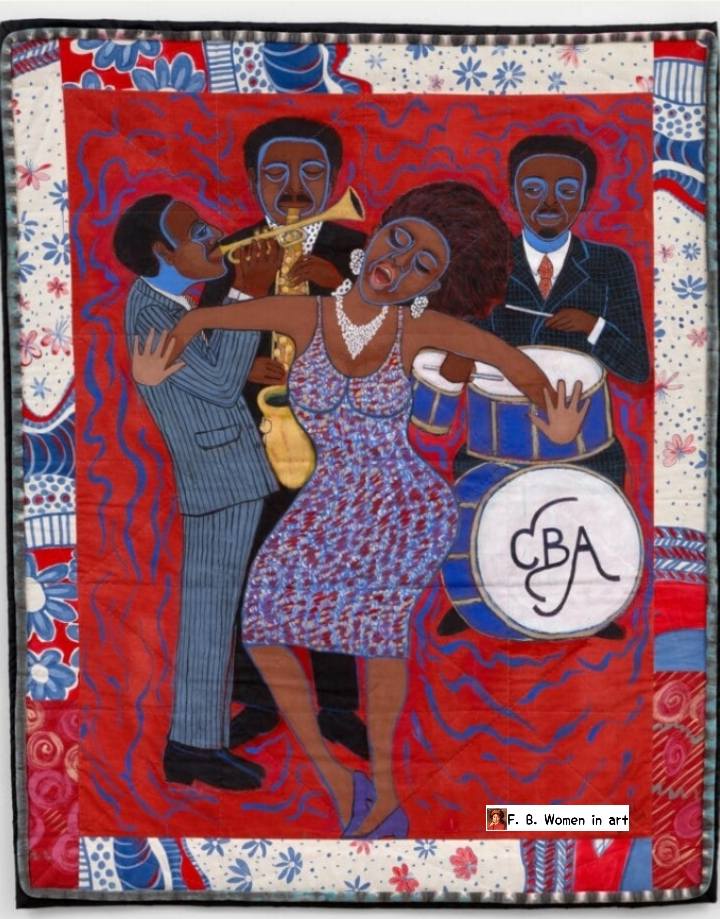
“Jazz Stories: Mama Can Sing, Papa Can Blow #2: Come On Dance With Me” (2004), acrylic on canvas with pieced fabric border, 81 x 64 inches. Photos by Dan Bradica Studio. All images © Faith Ringgold, courtesy of the Anyone Can Fly Foundation and Jack Shainman Gallery, New York, shared with permission
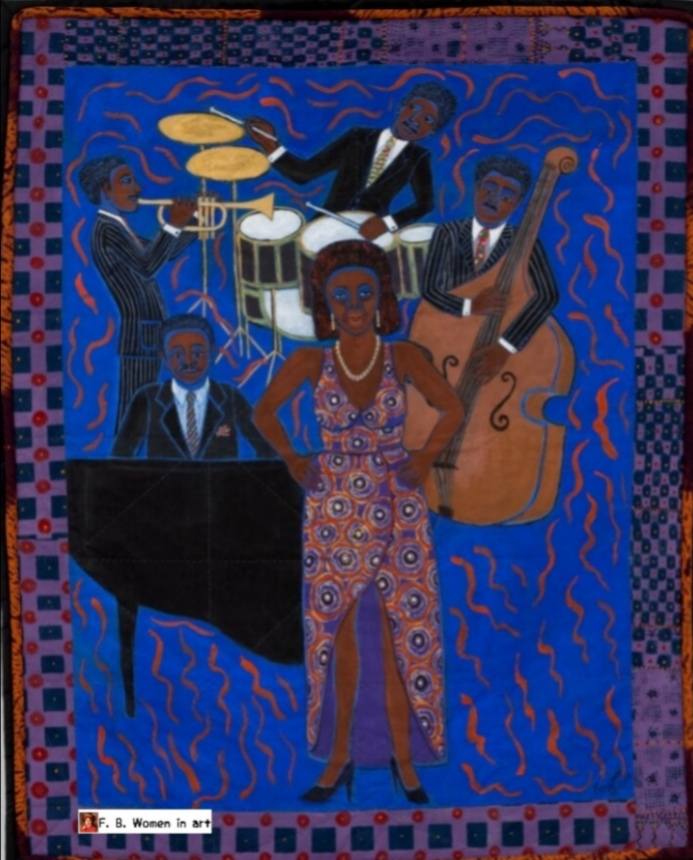
“Jazz Stories: Mama Can Sing, Papa Can Blow #2: Come On Dance With Me” (2004), acrylic on canvas with pieced fabric border, 81 x 64 inches. Photos by Dan Bradica Studio. All images © Faith Ringgold, courtesy of the Anyone Can Fly Foundation and Jack Shainman Gallery, New York, shared with permission
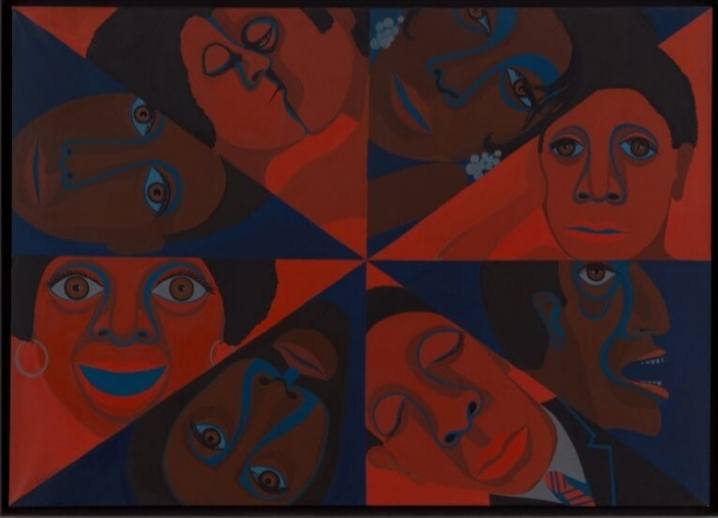
Black Light #11: US America Black” (1969)
Faith Ringgold’s activism was as much a part of her craft as the thread in her quilts. She didn’t just paint the struggle; she actively dismantled the barriers that kept Black and female artists out of the American art canon.
Strategic Institutional Protests
Ringgold targeted major New York institutions with high-visibility, often disruptive protests to demand representation.
The Whitney Museum (1970): As a leader of the Ad Hoc Women’s Art Committee, Ringgold led a four-month campaign demanding that 50% of artists in the Biennial be women and that 25% of those be Black. Protesters blew whistles and scattered tampons and raw eggs around the museum to force institutional attention.
The Museum of Modern Art (1969): She demanded the creation of a “Martin Luther King, Jr. Wing” dedicated to Black and Puerto Rican art. While the wing was not built, her pressure led to the appointment of the first Black trustees and major solo exhibitions for Black artists like Romare Bearden.
The Judson Three (1970): Ringgold was arrested and convicted (charges later dropped) for “desecrating” the American flag during The People’s Flag Show, an exhibition she co-organized to protest anti-war censorship.