Early Pioneers and Individual Milestones
Before Latino-written productions found a foothold on commercial stages, individual performers broke major barriers:
Anthony Quinn
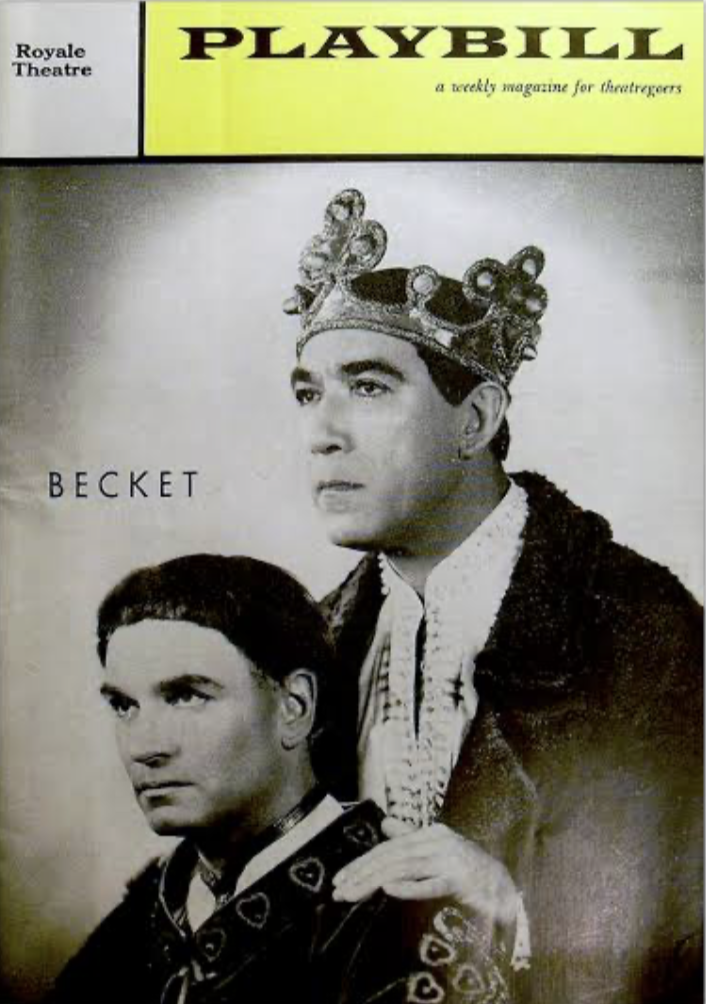
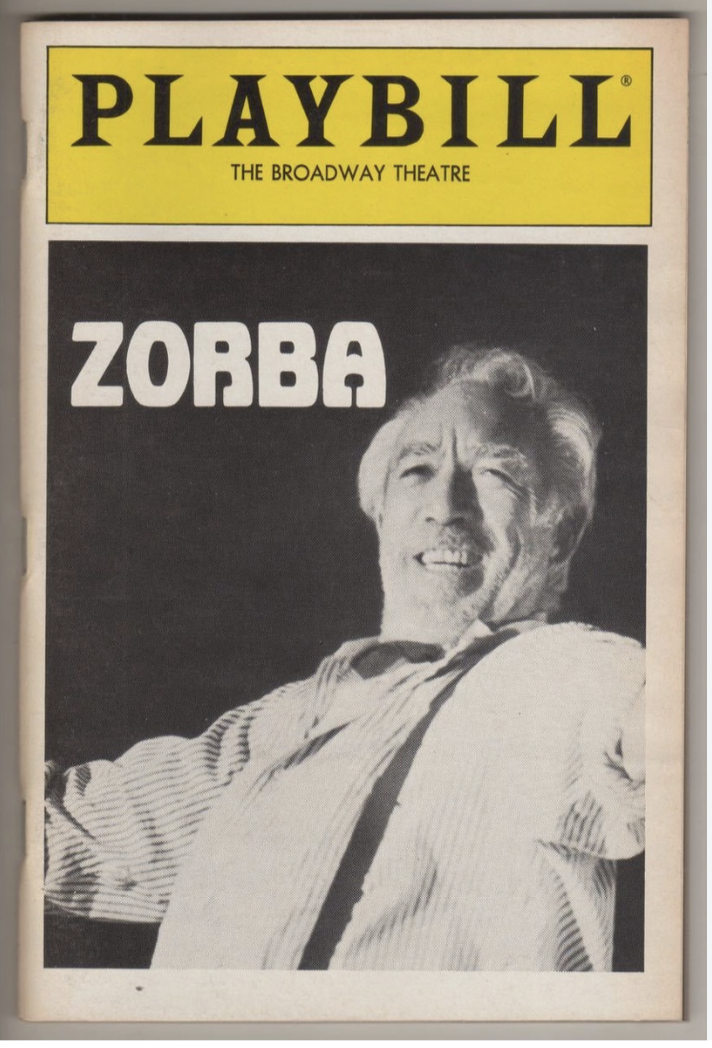
“Born Manuel Antonio Rodolfo Quinn Oaxaca, Quinn changed his name before becoming the first Mexican-born actor to win an Oscar. Quinn’s Broadway credits include a stint as Stanley Kowalski in the original Broadway run of A Streetcar Named Desire, originating the role of Henry II in Becket which garnered him a Tony nomination, and leading the 1983 revival of Zorba as the title character.
“Quinn was an activist for civil rights and contributed funding to several causes fighting discrimination against Hispanic Americans.”
.
Chita Rivera and Rita Moreno:
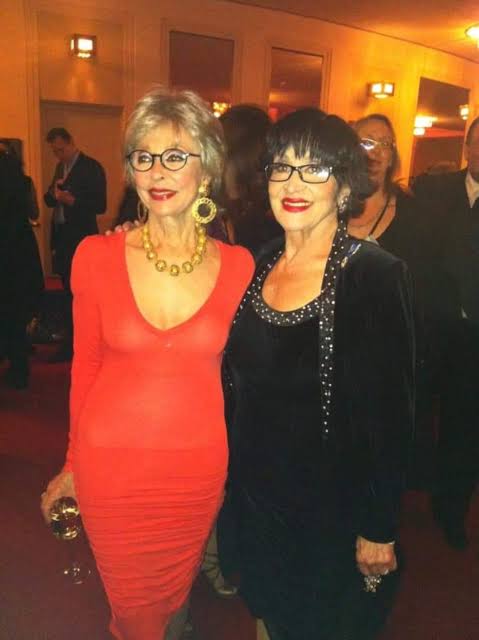
Iconic artists who challenged limited industry spaces. Moreno won a Tony in 1975 for The Ritz—later completing her legendary EGOT status—while Rivera became a defining Broadway fixture, notably starring in West Side Story (1957) and later winning acclaim in Kiss of the Spider Woman (1993).
Ricardo Montalbán
Mexican-born stars who asserted his presence in major mid-century productions.
Ricardo Montalbán appeared in three Broadway productions during his career:
• Seventh Heaven (1955)
Role: Chico (Original Broadway Cast)
Theater: ANTA Playhouse
Run: May 26, 1955 – July 2, 1955 (44 performances)
Jamaica (1957–1959)
Role: Koli (Original Broadway Cast, starring opposite Lena Horne)
Theater: Imperial Theatre
Run: October 31, 1957 – April 11, 1959 (558 performances)
• Accolade: Nominated for the 1958 Tony Award for Best Actor in a Musical
• Don Juan in Hell (1973)
Role: Don Juan (Original cast of this specific revival)
Theater: Palace Theatre
Run: January 15, 1973 – February 4, 1973 (22 performances)
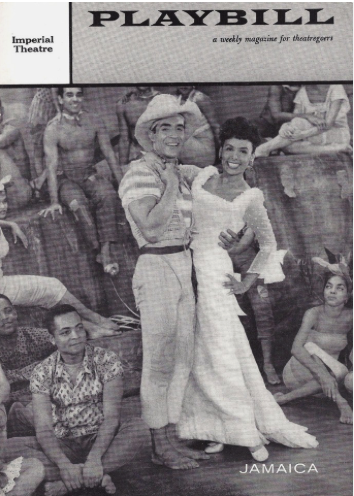
Montalbán earned a Best Actor Tony nomination for Jamaica (1957) and later founded Nosotros to advocate for Latino artists.
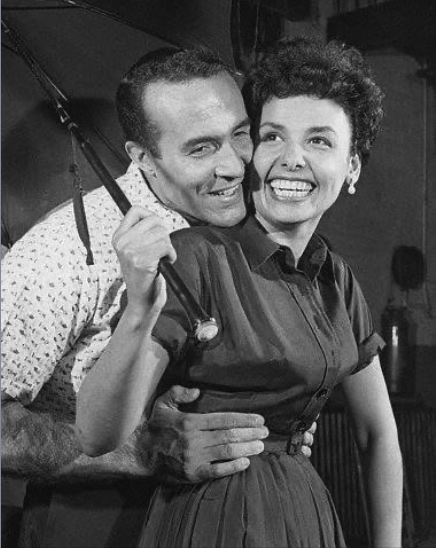
Lena Horne and Ricardo Montalban in rehearsal for the 1958 Broadway musical, “Jamaica.“
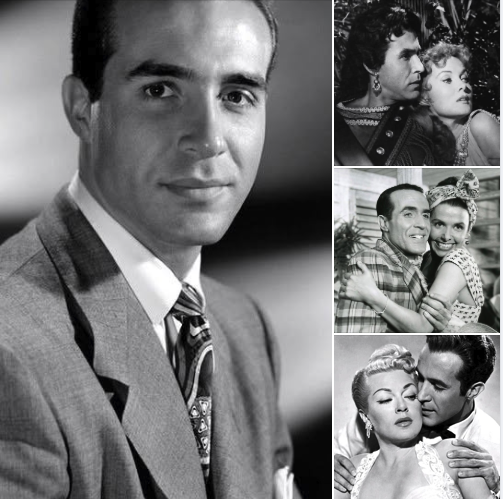
Ricardo Montalban movie credits include:
‘Neptune’s Daughter’ 1949
‘Mystery Street’ 1950
‘Two Weeks With Love’ 1950
‘Right Cross’ 1950
‘Mark Of The Renegade’ 1951
Across The Wide Missouri’ 1951
‘My Man And I’ 1952
‘Sombrero’ 1953
‘Latin Lovers’ 1953
‘Untouched’ 1954
‘The Saracen Blade’ 1954
‘The Queen Of Babylon’ 1954
‘Life In The Balance’ 1955
‘Sayonara’ 1957
*~ *
Breaking the Playwriting Barrier (1970s–1980s)
For decades, Broadway presented shows about Hispanic communities (like the original West Side Story or Evita) that were constructed entirely by non-Latino creative teams, often leading to protests over authentic casting. The tide began to turn as writers took ownership of the narrative:
.
Miguel Piñero (Short Eyes, 1974): Piñero became the first known Hispanic playwright produced on Broadway when his gritty, raw drama about incarceration transferred to the Vivian Beaumont Theater, earning six Tony nominations.
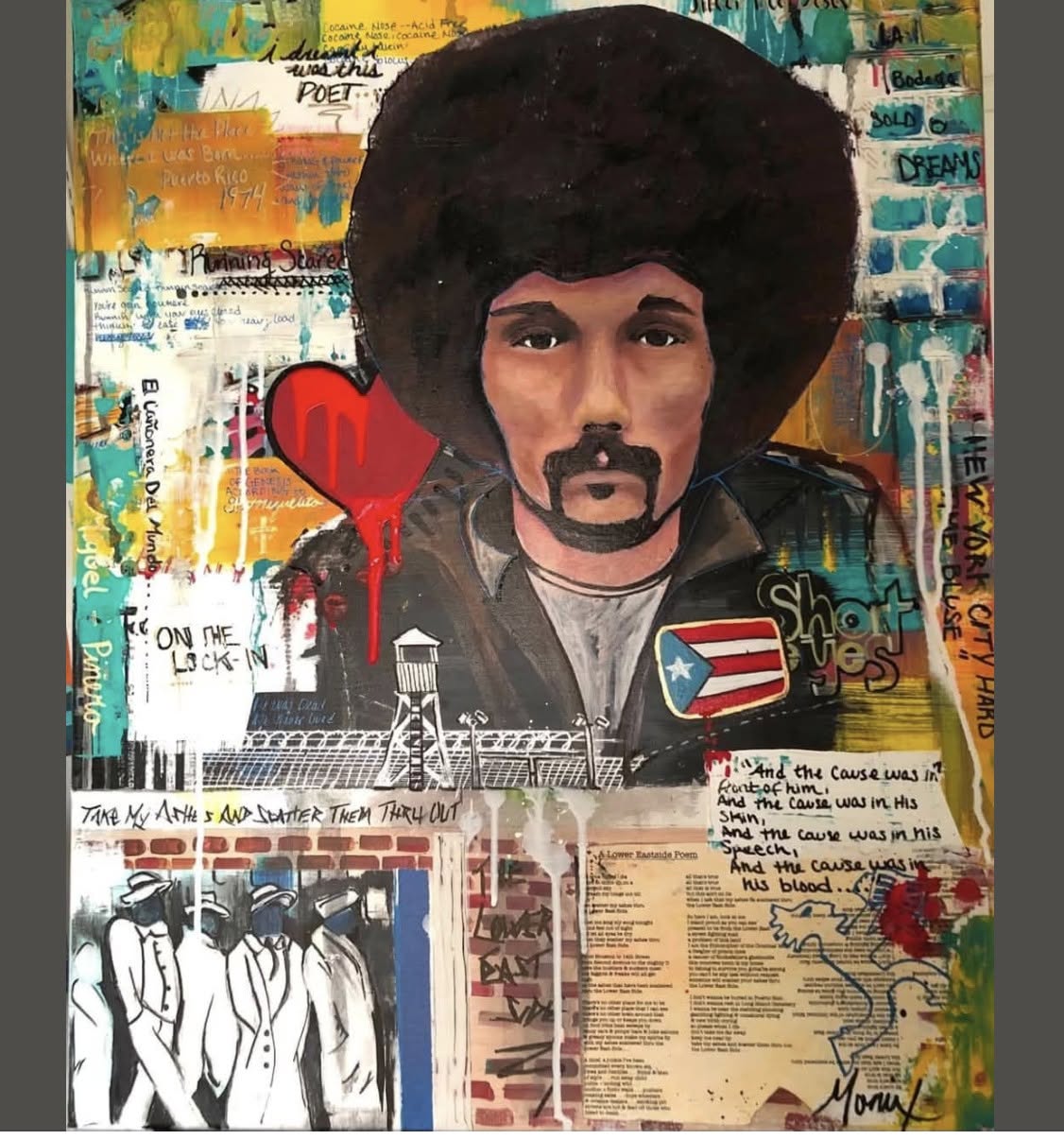
Artist Unknown
Miguel Piñero was a poet, actor, playwright, and one of the founding fathers of the Nuyorican Poets Cafe.
– * He wrote the play, “Short Eyes”, and was screenwriter of the movie adaptation, released in 1977, starring Bruce Davison, Jose Perez, and Luis Guzmán.
“Just once before I die
I want to climb up on a
tenement sky
to dream my lungs out till
I cry
then scatter my ashes thru
the Lower East Side.”
Piñero was raised in the Lower East Side in New York, so he was brought up in a harsh environment. He has admitted that he was involved in petty crimes as a little boy in order to gather food to eat. Piñero continued his life in crime, and his first literary works were conceived in jail.
Piñero died on June 16, 1988, and his ashes were scattered in the Lower East Side in New York as he had wished in the poem.
Miguel Piñero’s legacy and Broadway’s impact
Miguel Piñero was a prominent figure in the Nuyorican literary and political movement. His journey began in Sing Sing prison, where he honed his writing skills, culminating in his acclaimed play, “Short Eyes“. This play about the experiences of marginalized Puerto Ricans in prison garnered critical success, moving from Off-Broadway to Broadway’s Vivian Beaumont Theater, a significant achievement for a Puerto Rican playwright.
Piñero, alongside Miguel Algarín, co-founded the Nuyorican Poets Café,
fostering a vibrant artistic community that celebrated Puerto Rican culture and identity. His work, a blend of English, Spanish, and street language, illuminated the struggles and resilience of his community. Despite his literary achievements, he battled addiction, leading to his early death in 1988.
Piñero’s success on Broadway highlights the impact of this renowned theater district. Broadway, encompassing theaters in and around the thoroughfare in Midtown Manhattan, represents the pinnacle of commercial live theater in the English-speaking world. Shows like “Short Eyes” moving to Broadway exemplify the district’s ability to elevate and widely disseminate important works.
*
Broadway’s historical significance and theatrical landscape
Broadway’s history dates back to the mid-1700s, with a theater company on Nassau Street presenting operas and Shakespearean plays. After a brief halt during the Revolutionary War, theater returned and expanded, leading to the construction of larger venues like the Park Theater, seating 2,000 patrons. The popularity of Shakespeare eventually gave way to musicals and vaudeville, solidifying Broadway’s status as a theatrical hub.
*
Today, the Broadway Theatre District is a major tourist attraction, housing numerous theaters and attracting millions of visitors annually. While Broadway is closely identified with Times Square, only three theaters are actually located on the avenue itself: the Broadway Theatre, Palace Theatre, and Winter Garden Theatre.
*
The majority are located on the cross streets between 41st and 54th Streets, with one exception at Lincoln Center on 65th Street. To be considered a Broadway theater, a venue must have a seating capacity of at least 500 people.
*~ *
Luis Valdez
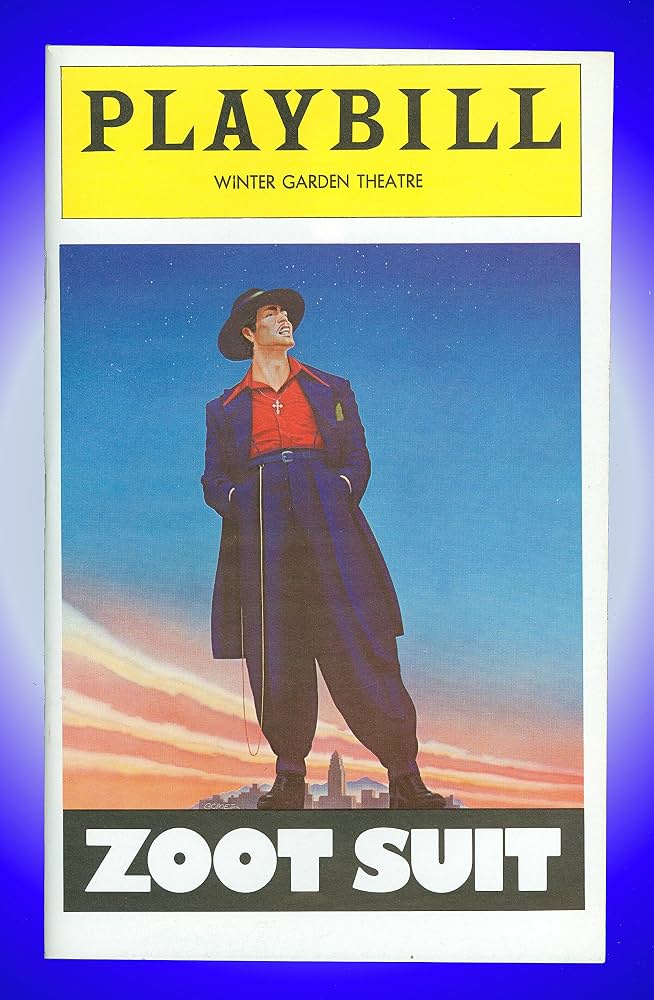
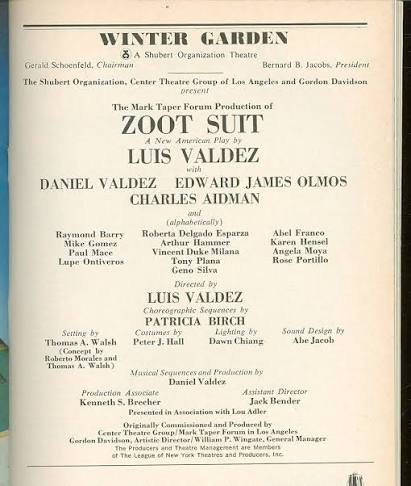
(Zoot Suit, 1979): Transferred from the historic El Teatro Campesino on the West Coast, Zoot Suit made history as the first Chicano-written and directed play on Broadway, directly confronting the 1943 Los Angeles riots and Mexican-American discrimination.
~ * ~
Afro-Latino and Afro-Latina
Afro-Latino and Afro-Latina artists occupy a crucial, historic intersection on the Broadway stage, blending rich African diaspora traditions with Latin American heritage. As extraordinary triple-threat performers, they have broken major structural barriers, originated iconic foundational roles, and taken home theater’s highest honors.
Pioneering Legends & Trailblazers
Lola Falana
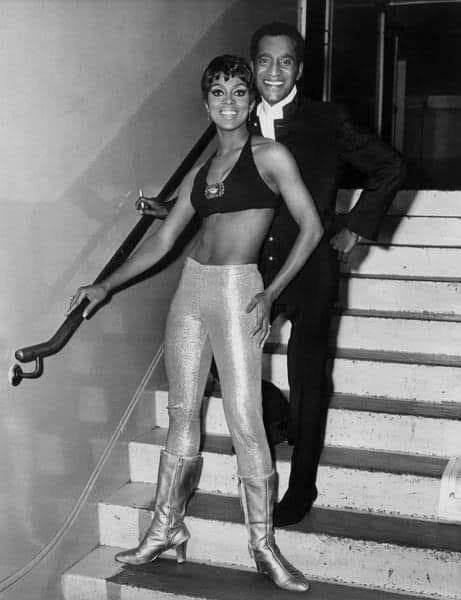
A phenomenal Afro-Cuban triple-threat performer who took the stage by storm in the 1960s and 70s. Originally discovered by Sammy Davis Jr., she starred in Golden Boy (1964) and went on to earn a Tony Award nomination for Best Actress for her electric leading turn in Doctor Jazz (1975).
Sammy Davis Jr.
The legendary entertainer was of Afro-Cuban descent through his mother, Elvera Sanchez. He delivered seminal Broadway performances, most notably earning a Tony nomination for originating the leading role of Joe Wellington in the musical Golden Boy (1964).
*~ *
Irene Cara
The late Afro-Puerto Rican and Cuban actress, dancer, and singer famously captured the spirit of young performing artists.
Before achieving global fame with the title tracks for the films Fame (in which she starred as Coco Hernandez) and Flashdance, she graced Broadway in shows like Maggie Flynn (1968), The Me Nobody Knows (1970), and Via Galactica (1972).

(Harry Langdon / Getty Images)
Irene Cara had a rich, accomplished career on the theatrical stage long before achieving global pop-stardom with Fame and Flashdance.
Making her Broadway debut as a child actress in 1968, she went on to perform in several notable Broadway and Off-Broadway productions throughout the late 1968 to 1979 era.
Broadway Credits
• Maggie Flynn (1968): At just nine years old, she made her official Broadway debut as “Iris,” playing a Civil War orphan. The production starred Shirley Jones and Jack Cassidy. Coincidentally, she shared the stage in this production with another future star, Stephanie Mills.
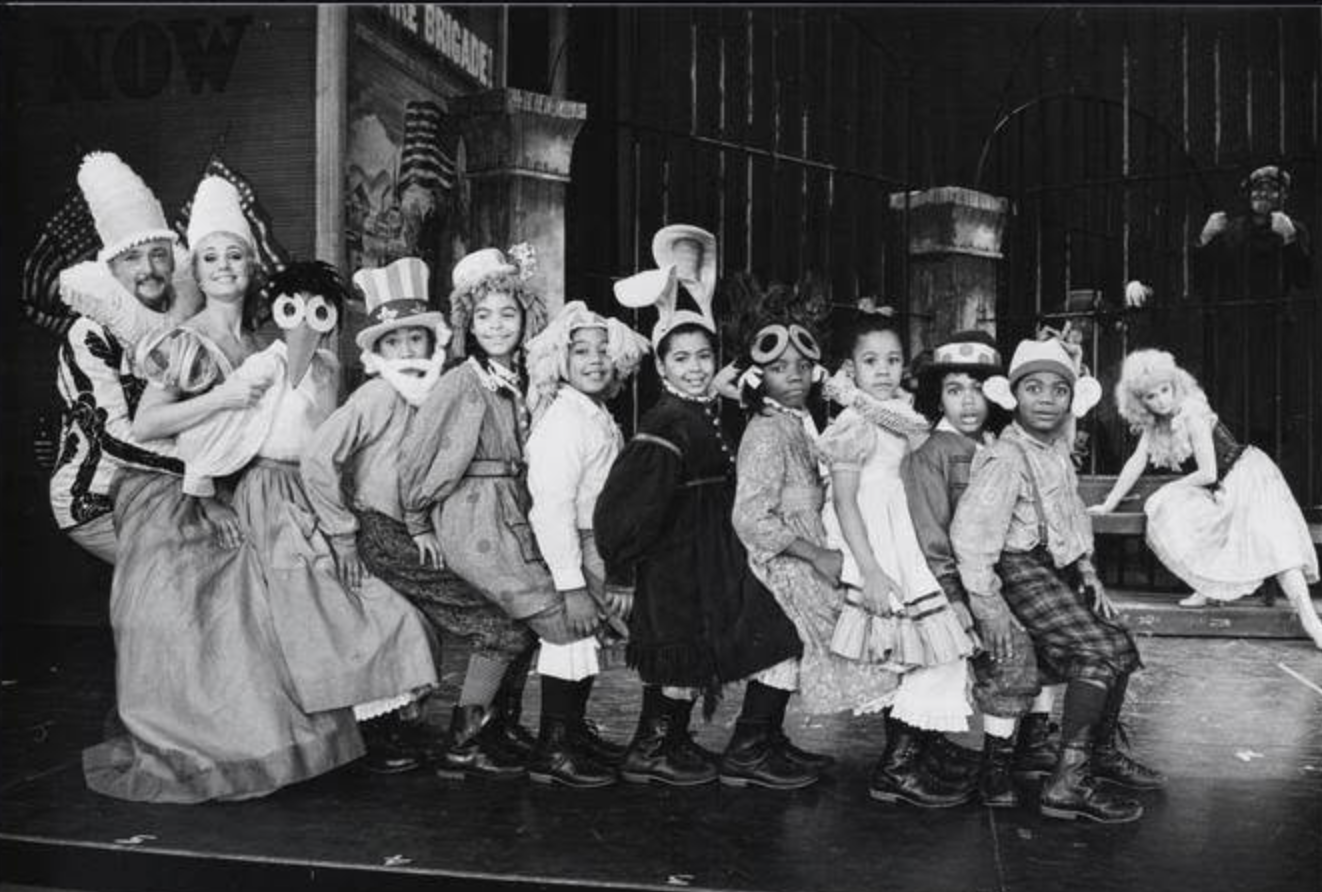
“MAGGIE FLYNN“
Irene Cara – Iris
Giancarlo Esposito – Andrew
Stephanie Mills – Pansy
*****
[“Shirley Jones and Jack Cassidy in
Maggie Flynn
ANTA Playhouse, (10/23/1968 – 1/05/1969)]
• The Me Nobody Knows (1970): She played the role of “Lillie Mae” in this landmark, Obie Award-winning rock musical that transferred to Broadway and gave an authentic voice to inner-city youth.
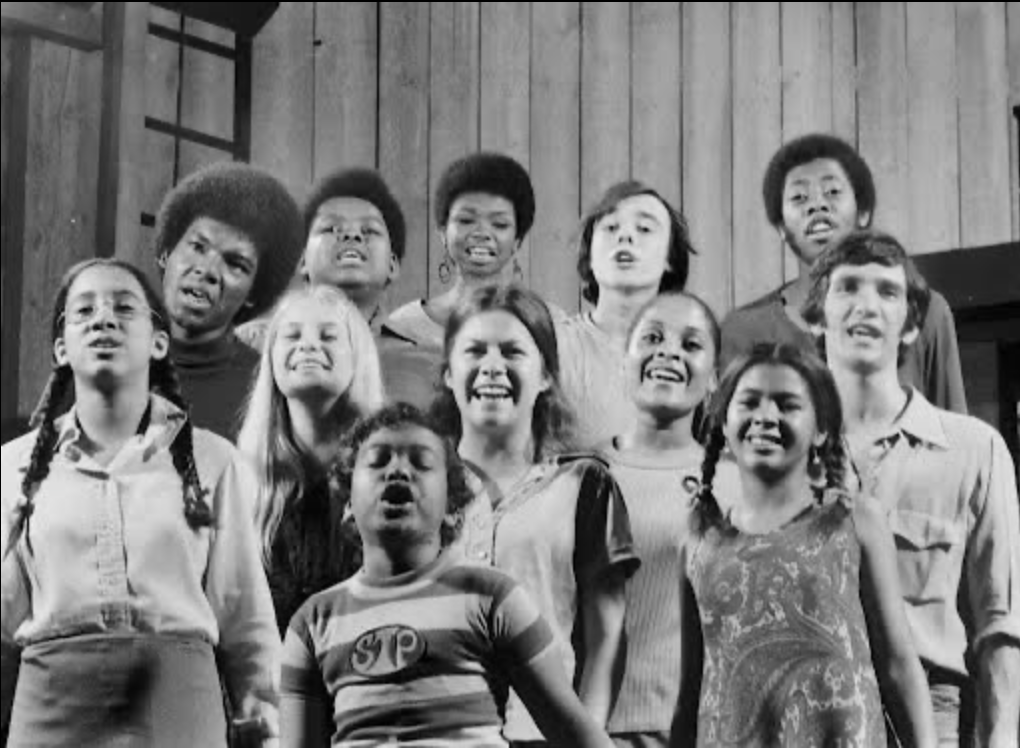
THE ME NOBODY KNOWS – Original cast:
Melanie Henderson, Beverly Bremers, Kevin Lindsay, Laura Michaels, Gerri Dean,
Irene Cara, Jose Fernandez, Carl Thoma, Douglas Grant, Hattie Winston Wheeler, Paul Mace, and Northern Calloway
• Via Galactica (1972): Cara was cast as a “Storyteller” in this short-lived, futuristic rock musical that famously co-starred Raúl Juliá.
• Got Tu Go Disco (1979): Right before her mainstream film breakthrough, she starred as “Cassette” in this disco-era studio musical that ran briefly at the Minskoff Theatre.
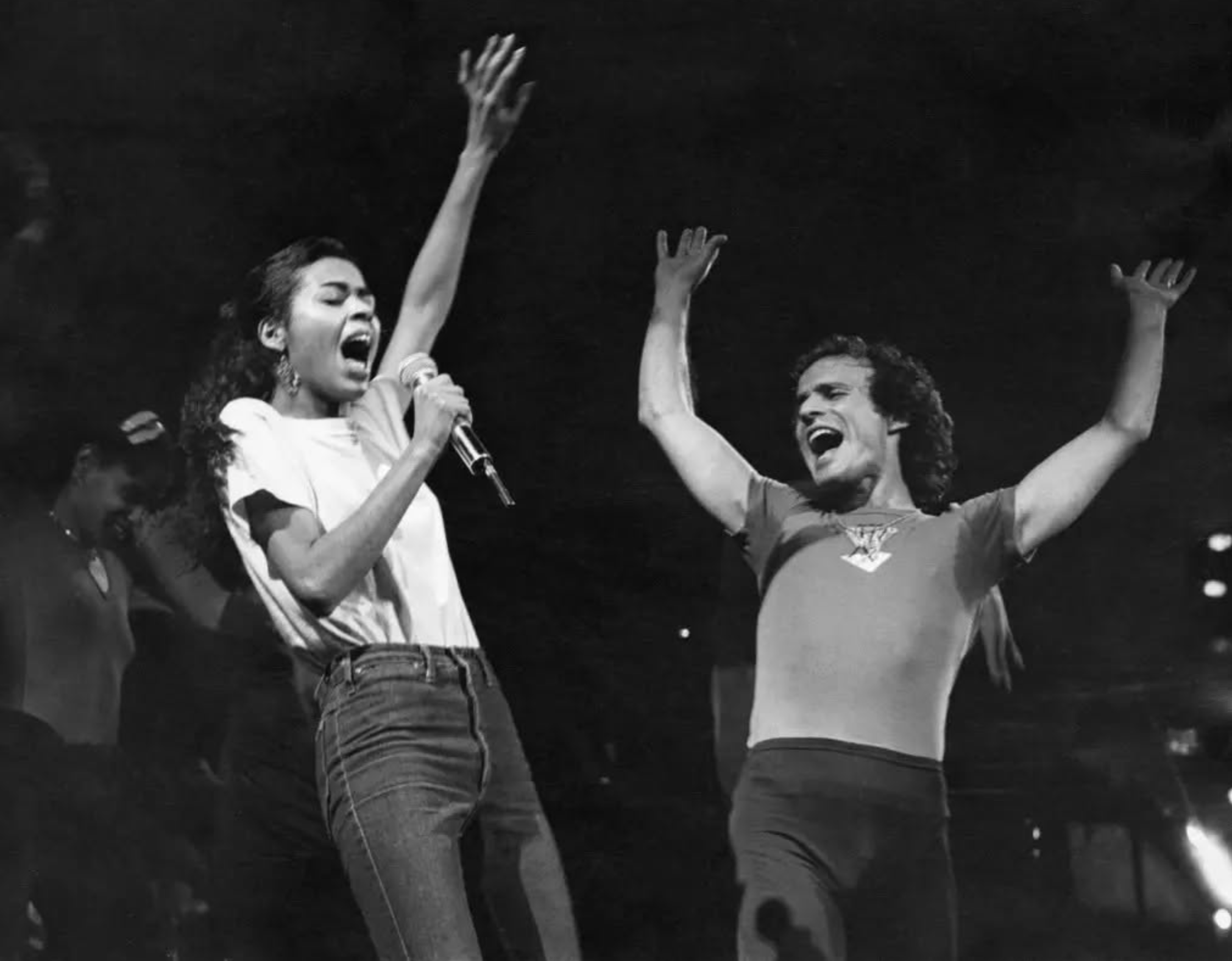
Irene Cara and Patrick Jude (a/k/a Cassette and Billy) in GOT TU GO DISCO.
Notable Off-Broadway & Touring Work
• Ain’t Misbehavin’ (1978): Cara was part of the original, acclaimed Off-Broadway development of the Fats Waller revue before it famously transitioned into a massive Broadway smash.
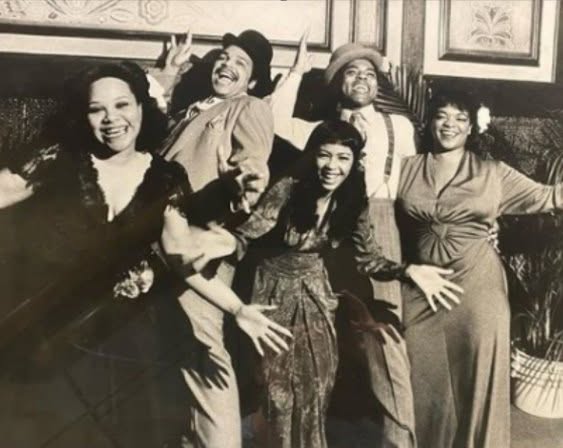
The cast of “Ain’t Misbehavin‘” (1978). From left to right: Armelia McQueen, Ken Page, Irene Cara, André De Shields, Nell Carter.
• Lotta (1973): She appeared in this underground production at the Public Theater.
• The Wiz (1980 National Tour): Fresh off the heels of filming Fame, she took to the road to briefly headline as Dorothy.
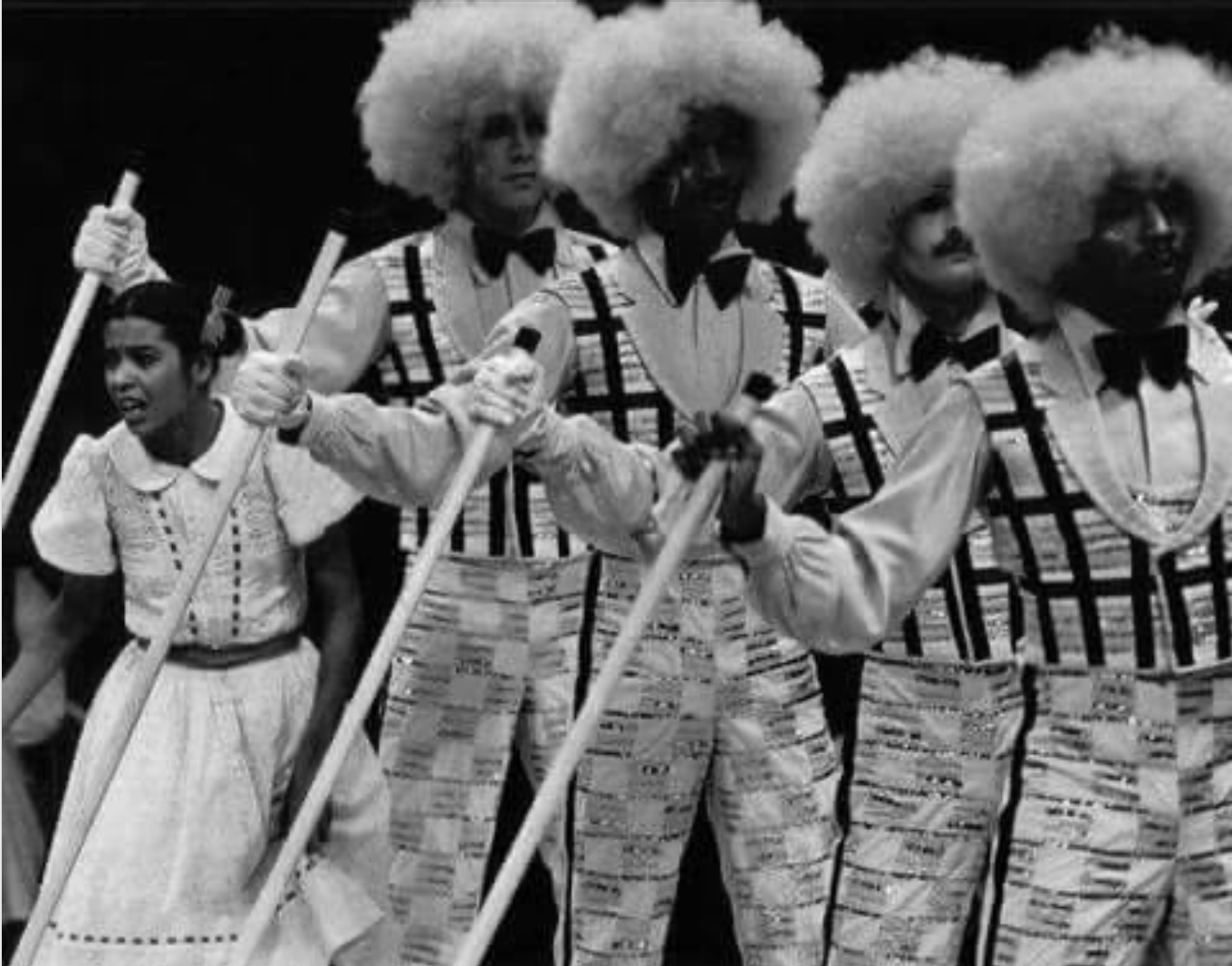
Irene Cara – THE WIZ
• Jesus Christ Superstar (1992–1994 National Tour): In the 1990s, she returned to the stage to star as Mary Magdalene in a major milestone anniversary tour of the Andrew Lloyd Webber classic.