“I’ve been in every kind of show business except the circus and grand opera.”
| Movies | |
|---|---|
| 1986 |
Horrible Horror1986 |
| 1957 |
The Young Don’t Cry1957 |
| 1955 |
The Shrike1955 |
| 1949 |
Lost Boundaries1949 |
| 1947 |
Untamed Fury1947 |
| 1946 |
Undercurrent1946 |
Young Widow1946 |
|
| 1945 |
Jungle Queen1945 |
The Hidden Eye1945 |
|
| 1944 |
Dark Waters1944 |
The Impostor1944 |
|
The Yellow Rose of Texas1944 |
|
| 1943 |
Happy Land1943 |
Mission to Moscow1943 |
|
| 1942 |
Heart of the Golden West1942 |
Lady for a Night1942 |
|
The Ox-Bow Incident1942 |
|
The Vanishing Virginian1942 |
|
White Cargo1942 |
|
| 1941 |
Bahama Passage1941 |
King of the Zombies1941 |
|
Road to Zanzibar1941 |
|
Robin Hood of the Pecos1941 |
|
Virginia1941 |
|
| 1939 |
Of Mice and Men1939 |
| 1920 |
The Symbol of the Unconquered1920 |
Within Our Gates1920 |
|
| Series | |
|---|---|
| 1958 |
Peter Gunn1958 |
Streetcar Jones1958 |
|
| 1949 |
Martin Kane, Private Eye1949 |
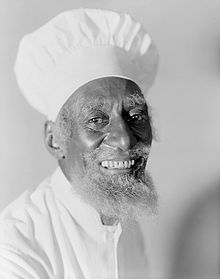
Leigh Whipper as Crabman in “Porgy” (1927).
Leigh went on to appear in classical Broadway productions of Stevedore, Of Mice and Men, and Porgy. Whipper achieved national fame for his characterization of the Crabman of the Catfish Row in Porgy, interposing into his part the Crabman’s Song. It was later incorporated into the film version.
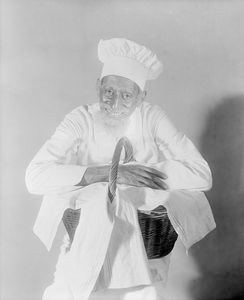
Leigh Whipper (Crab Vendor, or Crab Man). (1927)
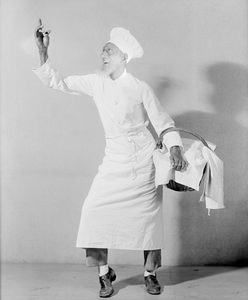
![Georgette Harvey as Maria and Leigh Whipper as Crab Vendor [Crab Man]. (1927)](https://iforcolor.org/wp-content/uploads/Georgette-Harvey-as-Maria-and-Leigh-Whipper-as-Crab-Vendor-Crab-Man.-1927.jpg)
Georgette Harvey as Maria and Leigh Whipper as Crab Vendor [Crab Man]. (1927)
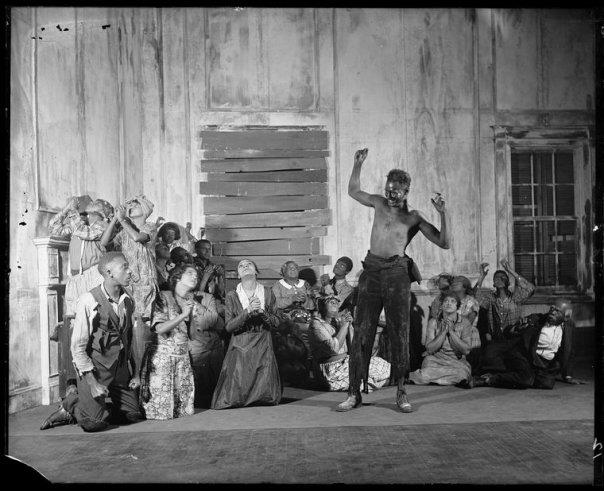
Porgy and Bess began as a novel, Porgy, published by DuBose Heyward in 1925. Shortly after Porgy’s release in 1925, producers rapidly began to seek the dramatic rights for the story. Cecil B. DeMille committed $4500 for a movie deal, and DuBose agreed. While DeMille’s company scouted Paul Robeson for the film, the project was abandoned for fears that it could not be played in the South. Meanwhile, DuBose Heyward’s wife, Dorothy, began pressing her husband to compose a theatrical adaptation of the novel. Dorothy herself was a playwright whose comedy Nancy Ann had received a Broadway production in 1924.
“Although it has been reported that because of his unusual looks some film viewers thought Whipper was a White actor in blackface, he assumed the presidency of the Negro Actor’s Guild in 1957.
He became embroiled in a very heated public controversy over Samuel Goldwyn’s decision to fire Rouben Mamoulian, who had worked on preproduction for eight months on the troubled 1959 film version of PORGY AND BESS. Among other disagreements, Mamoulian was incensed that the producer chose Otto Preminger to replace him.
Fifteen years earlier when Preminger was producing LAURA, he became angered when director Mamoulian resisted his suggestions, so he fired him and replaced him himself. When an embittered Mamoulian lost the resultant litigation about his firing by Goldwyn, he invoked charges of racism against Preminger.
Mamoulian had cast the then-unknown Whipper in the original 1927 production of PORGY, and now the actor used his position as president of the Negro Screen Actors to call a press conference with Mamoulian’s press agent, Russell Birdwell.
Whipper claimed that Preminger was “unsympathetic to my people” for unclear reasons, and he announced he was withdrawing from his role of Crabman with allegedly racially insensitive Preminger as director.
Because of his stand, Whipper came under sharp criticism by the NAACP and a Past President of the Guild in addition to the cast of PORGY AND BESS, especially Pearl Bailey, who had worked with Preminger previously on CARMEN JONES. The role of Crabman was eventually played by Scatman Crothers, and the problematic movie became that last produced by Goldwyn.”
Of Mice and Men
(1937, 1939)
Whipper is most celebrated for originating the role of Crooks,
the isolated Black stable hand, in the original 1937 Broadway production of John Steinbeck’s
Of Mice and Men
He later reprised the role in the acclaimed 1939 film.
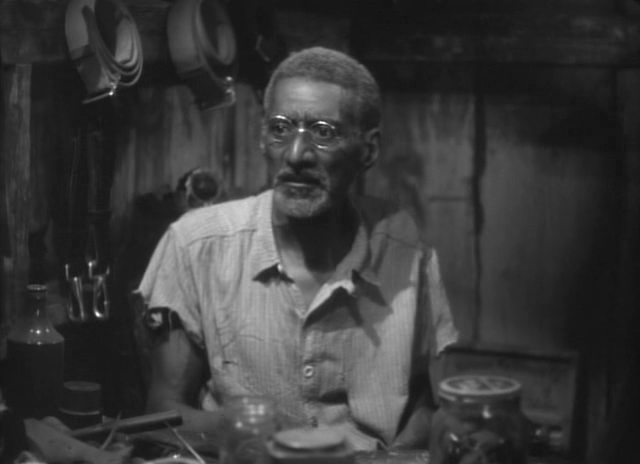
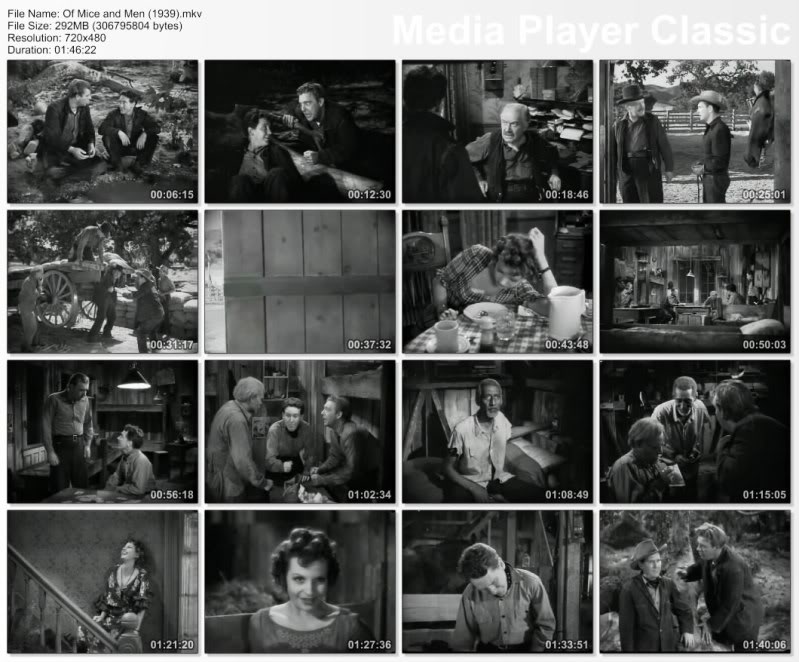
Of Mice and Men (1939) – FilmFanatic.org
- A Groundbreaking Performance: At a time when many roles for African Americans were written as caricatures, Whipper’s portrayal of Crooks was noted for its remarkable power and naturalism.
- Stage vs. Screen: In the original Broadway play, the character of Curley’s wife was softened, and she did not threaten Crooks with lynching as she does in the novella, a change that shifted the dynamic of Whipper’s scenes.
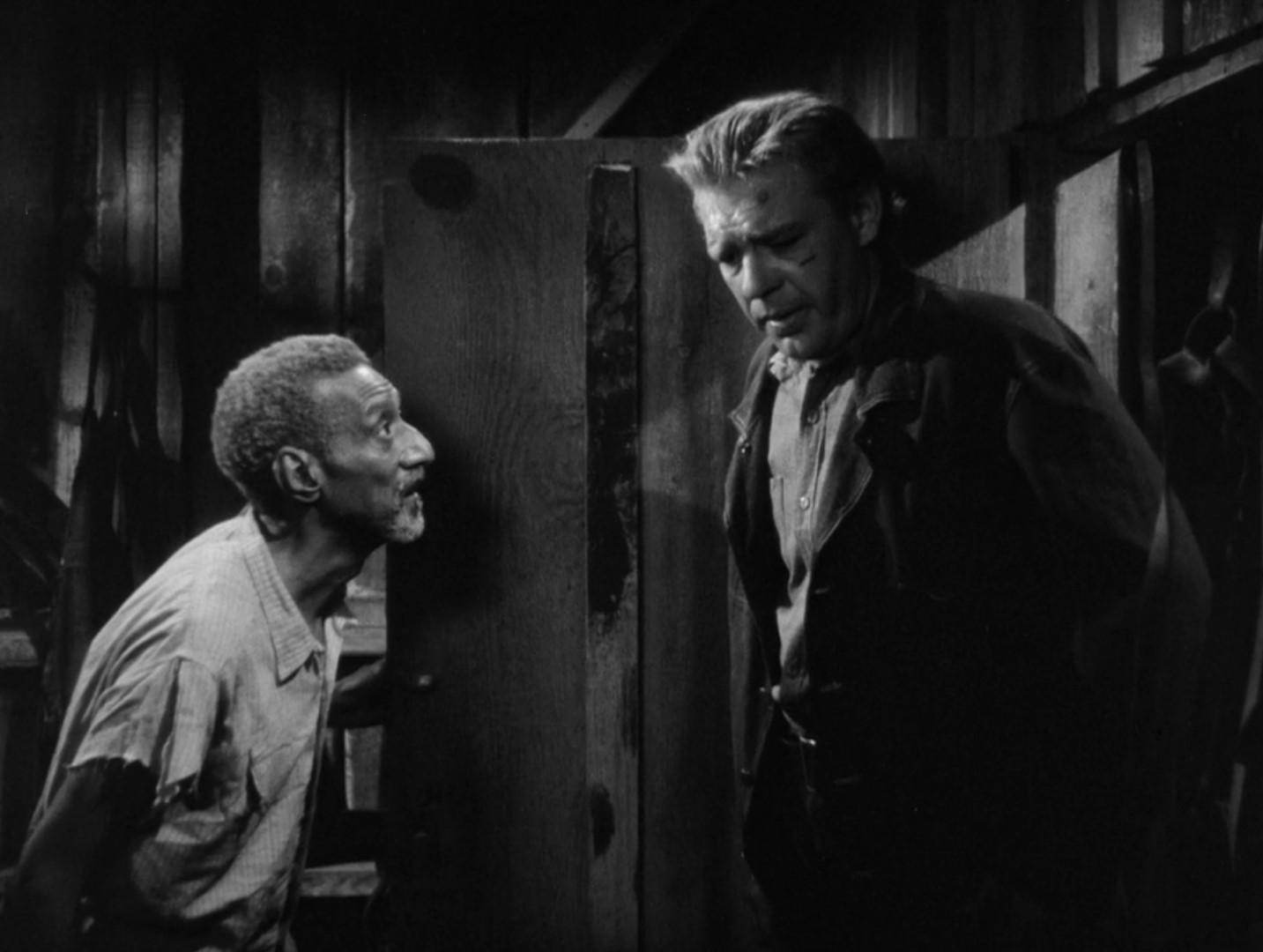
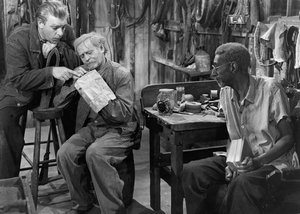
Crooks (Leigh Whipper) Lenny (Lon Chaney Jr.) bond over their social isolation.
This adaptation of Steinbeck’s classic novella easily could have written out Crooks, a Black ranch hand; yet, director Lewis Milestone and actor Leigh Whipper bring this character to life in a key scene. Forced to live in a solitary hut separate from the ranch’s White workers, Crooks connects with Lenny on a personal level as two social outcasts, frankly discussing Crook’ss loneliness from being excluded simply due to his skin color.
Released in the same year as Gone with the Wind, Milestone’s humanistic, if brief, depiction of a black working man devoid of the stereotypes common in Hollywood at the time shows an alternative path available to classic filmmakers that too many bothered to take.
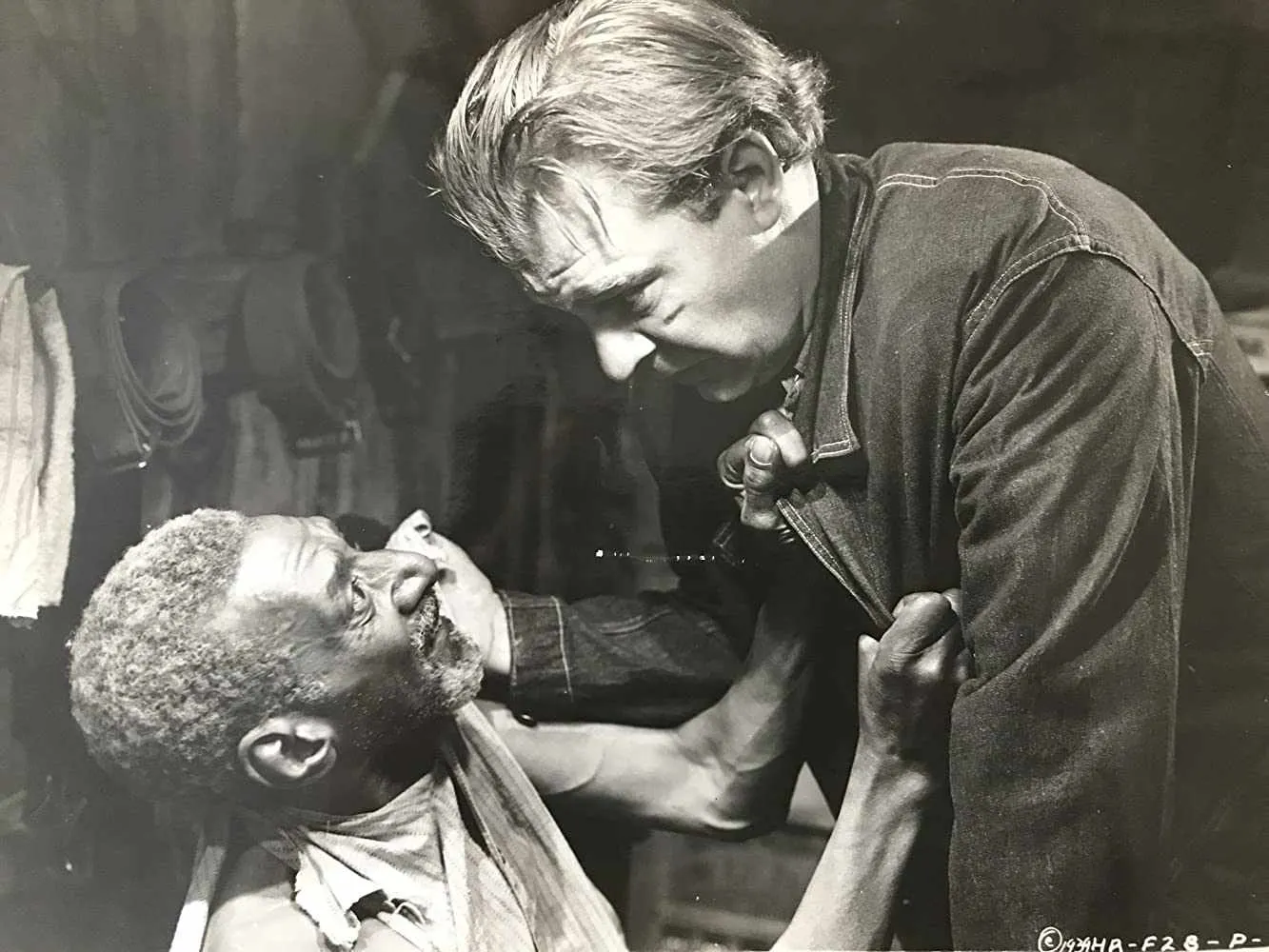
Leigh Whipper with Lon Chaney, Jr. in the film “Of Mice and Men” (1939).
Activism: Whipper was a pioneer in the fight for labor rights and representation for Black artists.
He was a talented stage actor, an accomplished film star, and a barrier-breaker.
Whipper was a light-skinned man, and his skin color led some to question his race.
Leigh Whipper starred as Crooks in Of Mice and Men on Broadway and in the 1939 film.
A fan of the Of Mice and Men film complained that Crooks was played by a White man.
Others believed that Leigh Whipper was a white man in blackface in his films.
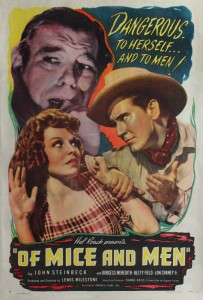
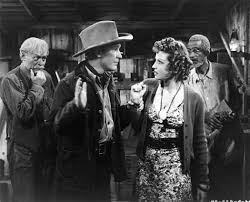
ADAMS THEATER, Of Mice and Men (1939)
King of the Zombies
(often misspelled as Wipper) delivered a standout performance as Momba, the mysterious and unsettling butler on a Caribbean island.
- Character: As Momba, Whipper played a key role in the mansion of Dr. Sangre, an enemy spy using voodoo rituals to control the dead.
- Critical Reception: Despite the film’s low-budget “Poverty Row” origins, modern critics often highlight Whipper’s performance alongside other Black cast members like Mantan Moreland and Madame Sul-Te-Wan as the film’s most memorable elements.
- Plot: Three men crash-land on a remote island and discover a Nazi spy using voodoo to extract military secrets from a captured Admiral.
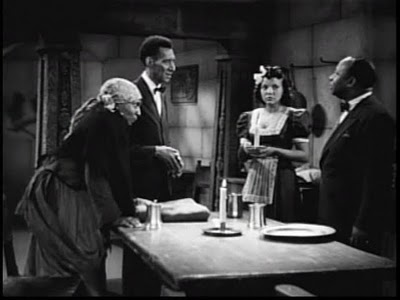
King of the Zombies – There is a cadaverous butler Momba (Leigh Whipper), a cackling witch-like voodoo woman Tahama (Madame Sul-Te-Wan), a beautiful and sassy servant Samantha (Marguerite Whitten), and Mantan Moreland
Whipper made his film debut as a bit player in Oscar Micheaux’s silent race films, Symbol of the Unconquered (1920) and Within Our Gates (1920).
- The Symbol of the Unconquered (1920): Whipper appeared in this silent drama which sought to counter the racist narratives of The Birth of a Nation. The film dealt with themes of land rights and the KKK, providing a dignified platform for Black actors.
- Within Our Gates (1920): Though his involvement is sometimes debated by historians, Whipper is frequently linked to the ensemble of Micheaux’s most famous work, which directly addressed lynching and systemic injustice.
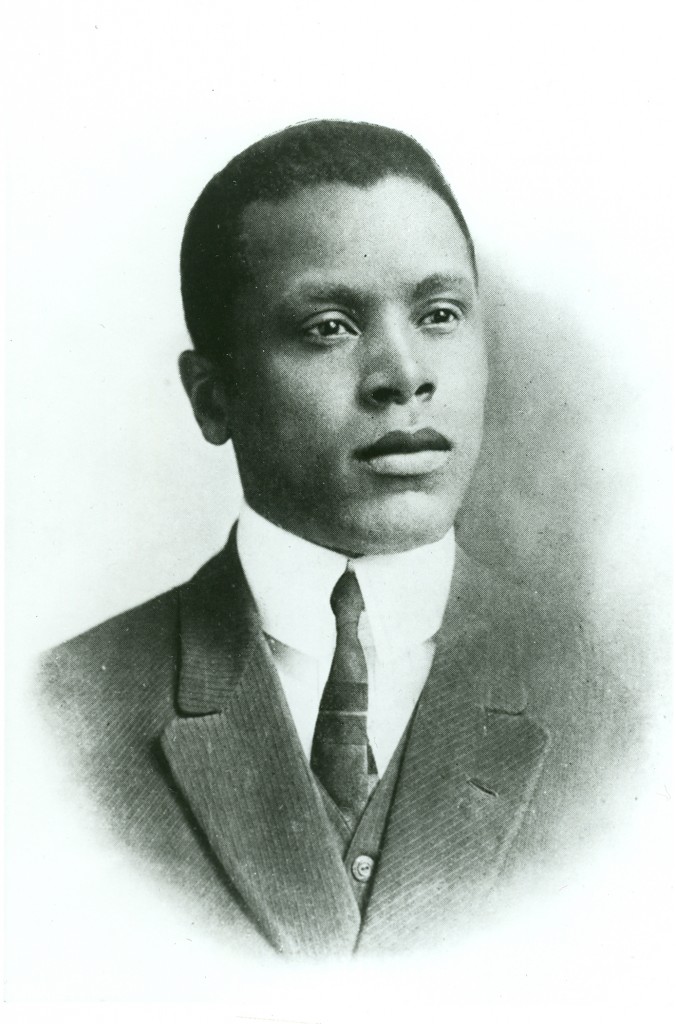
Oscar Micheaux
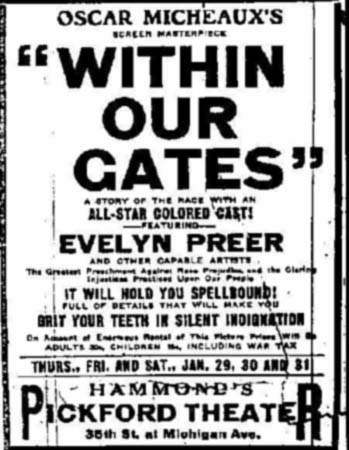
Oscar Micheaux (1884–1951) was a pioneering African American filmmaker who produced over 40 films, including influential silent “race films” that challenged racial injustice, stereotypes, and social issues. His surviving silent works, Within Our Gates (1920), The Symbol of the Unconquered (1920), and Body and Soul (1925), remain key, bold examples of early Black independent cinema.
- Within Our Gates (1920): Often considered a response to The Birth of a Nation, this film directly addressed racism, lynching, and mob violence. It is the oldest known surviving feature-length film by a Black director, discovered in the 1990s in Spain.
- Body and Soul (1925): Featured Paul Robeson in his film debut, exploring themes of hypocrisy within the Black church.
- The Symbol of the Unconquered (1920): A Western that tackled the Ku Klux Klan and the “passing” phenomenon.
- Themes: Micheaux’s films frequently explored interracial relationships, “passing” for white, economic ambition, and critiques of both white supremacy and Black social mobility.
- Profound Social Commentary: Micheaux used his films to provide realistic, often controversial, portrayals of Black life, countering negative stereotypes in mainstream, white-dominated cinema.
- Independent Production: Operating outside the Hollywood studio system, he often faced financial challenges and censorship, yet his career spanned three decades.
- Lost Works: Many of his films, such as his first, The Homesteader (1919), are considered lost, though his surviving films are now recognized for their immense historical importance.
- Lost Boundaries (1949): He appeared in this groundbreaking “passing” drama, which explored the complexities of racial identity in America.
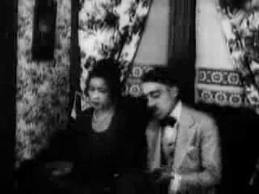
Within Our Gates (1920) – Oscar Micheaux Silent Film.
He later starred in the Hollywood films Of Mice and Men (1939) King of the Zombies (1941) and The Oxbow Incident (1943).
The Symbol of the Unconquered
“Part One,” by William Hooker, was recorded live on February 14, 2009, at The Sanctuary for Independent Media in Troy, NY.
Percussionist William Hooker improvises to pioneering African-American filmmaker Oscar Micheaux’s 1920 silent classic, The Symbol of the Unconquered.
Originally advertised as a chance to come to see the annihilation of the Ku Klux Klan, the film is part of the emergence of a radical black voice in the mass media. William Hookers’ work is frequently grounded in a narrative context. Whether set against a silent film or anchored by a poetic theme, Hooker brings dramatic tension and human warmth to avant-garde jazz. His ability to find fertile ground for moving music in a variety of settings that obliterate genre distinctions offers a much-needed statement of social optimism in the arts.
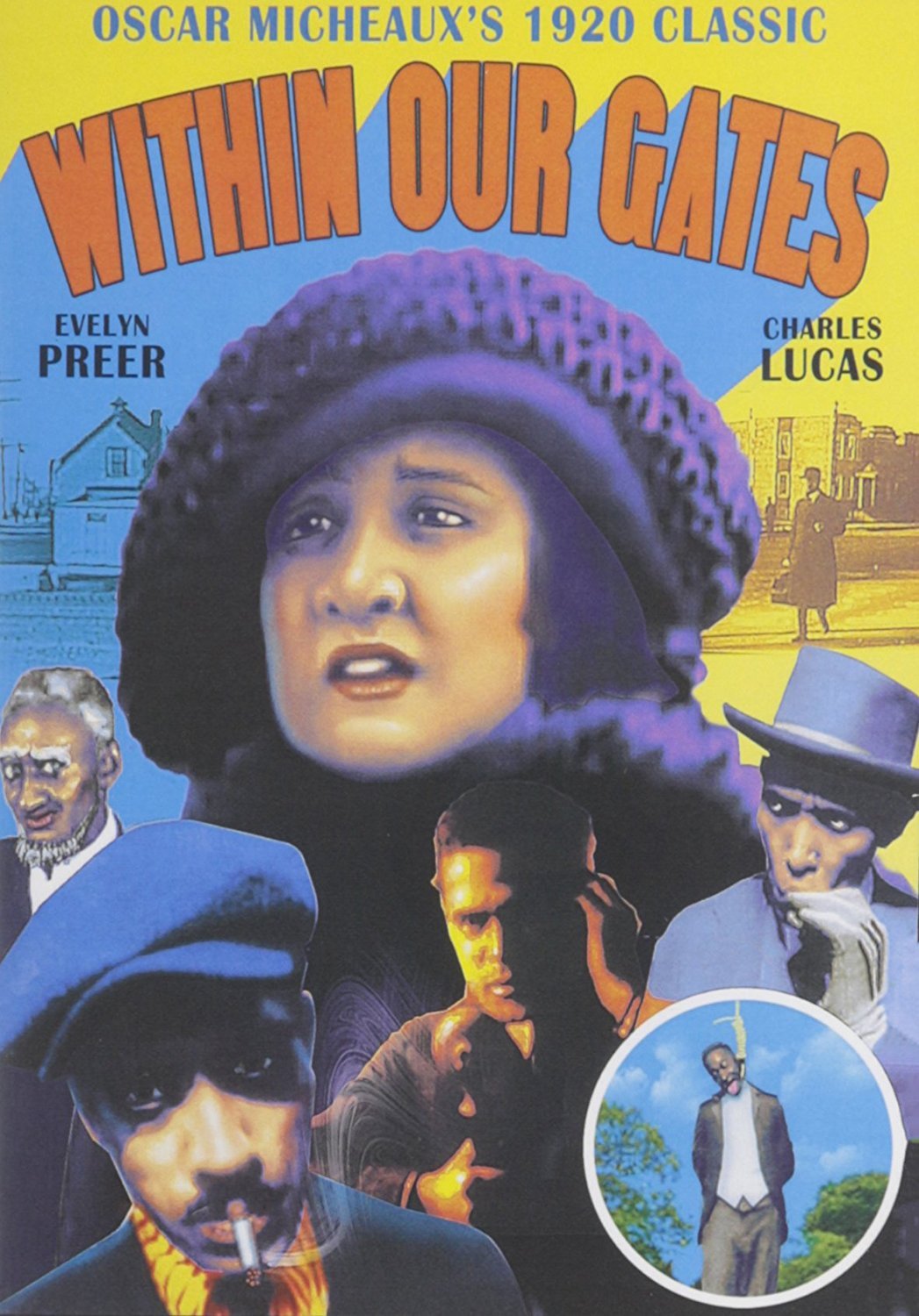
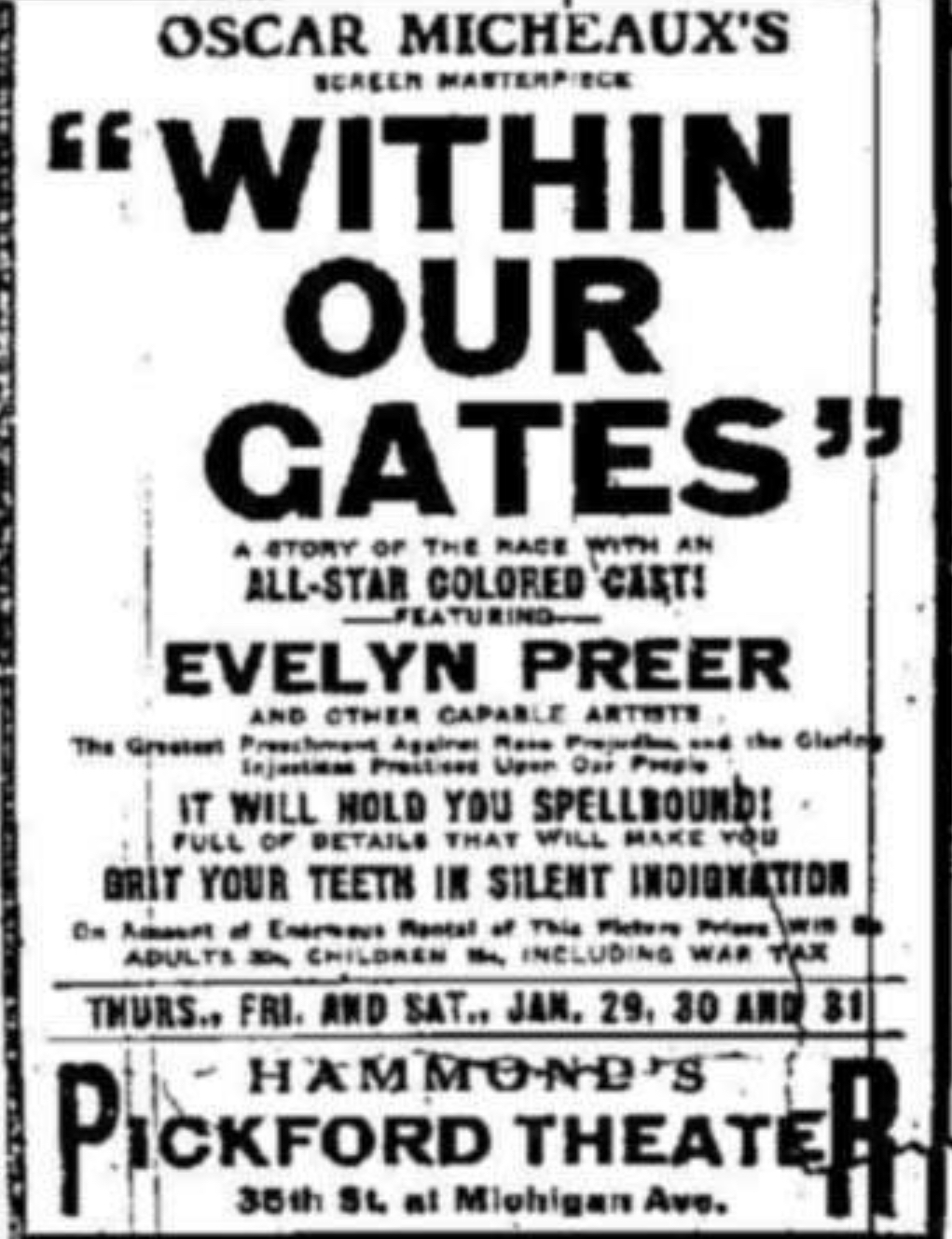
Within Our Gates (1920) – Oscar Micheaux Silent Film
Abandoned by her fiancé, an educated negro woman with a shocking past dedicates herself to helping a near-bankrupt school for impoverished negro youths. Within Our Gates was produced and directed by Oscar Micheaux in 1919. He is considered to be the first African-American director of feature films and this is the first such film still in existence.
Cast (IMDB): Evelyn Preer as Sylvia Landry; Flo Clements as Alma Prichard; James D. Ruffin as Conrad Drebert; Jack Chenault as Larry Prichard; William Smith as Detective Philip Gentry; Charles D. Lucas as Dr. V. Vivian; Bernice Ladd as Mrs. Geraldine Stratton; Mrs. Evelyn as Mrs. Elena Warwick; William Stark as Jasper Landry; Mattie Edwards as Jasper’s Wife; Ralph Johnson as Philip Gridlestone; E.G. Tatum as Efram, Gridlestone’s Servant; Grant Edwards as Emil Landry; Grant Gorman as Armand Gridlestone; Leigh Whipper ; Jimmie Cook as (uncredited); S.T. Jacks as Reverend Wilson Jacobs (uncredited).
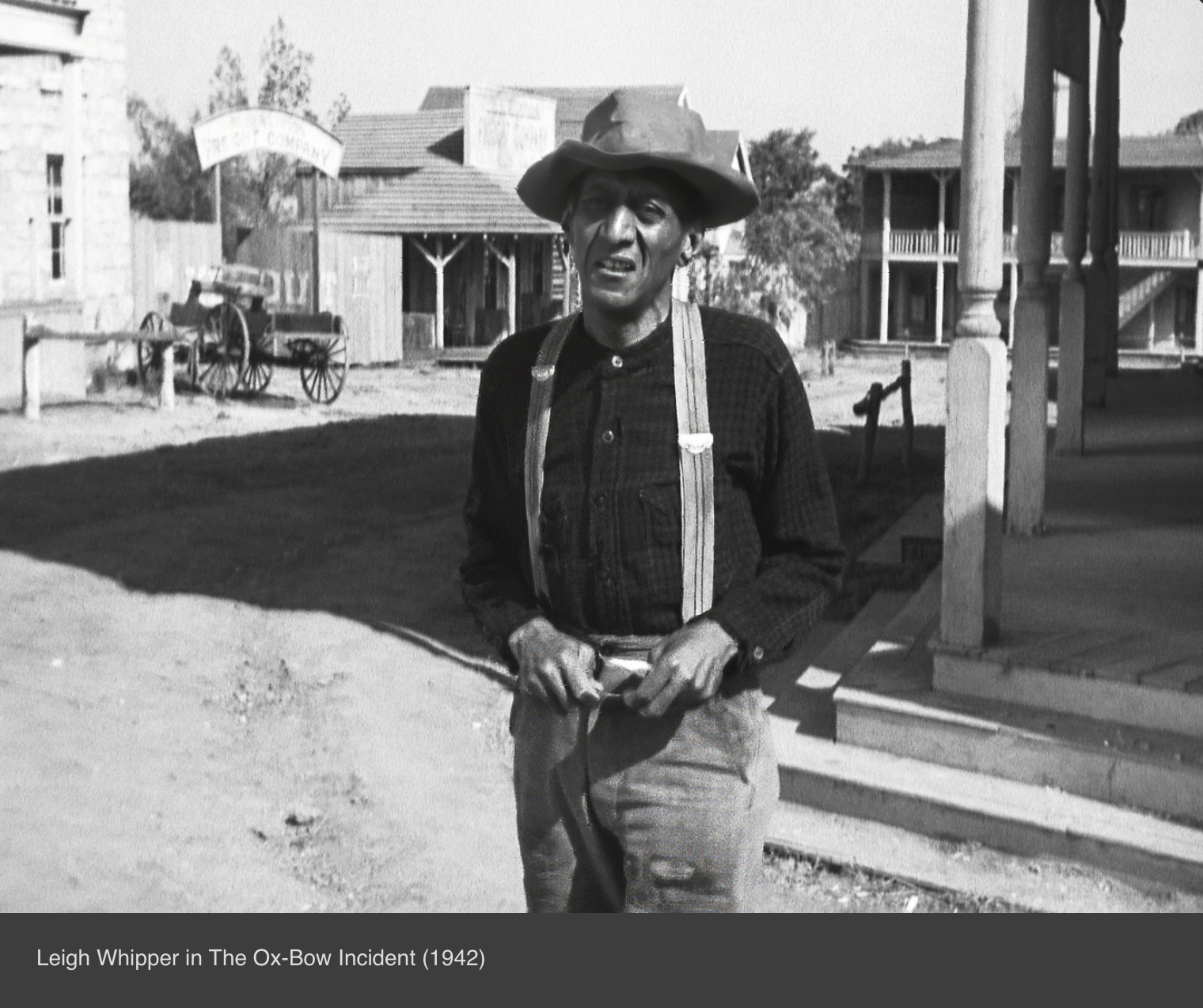
Leigh Whipper in The Ox-Bow Incident (1942)
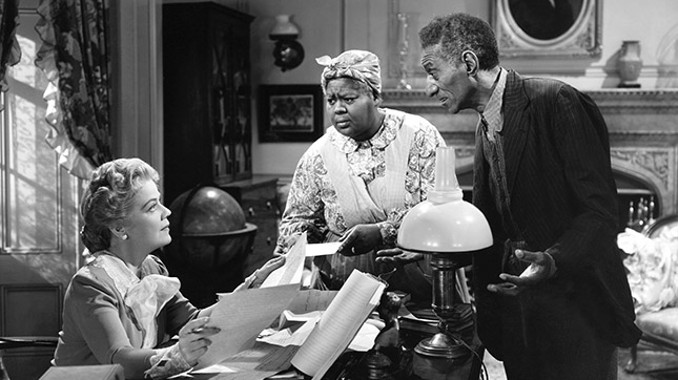
Spring Byington, Louise Beavers, and Leigh Whipper in The Vanishing Virginian (1942)
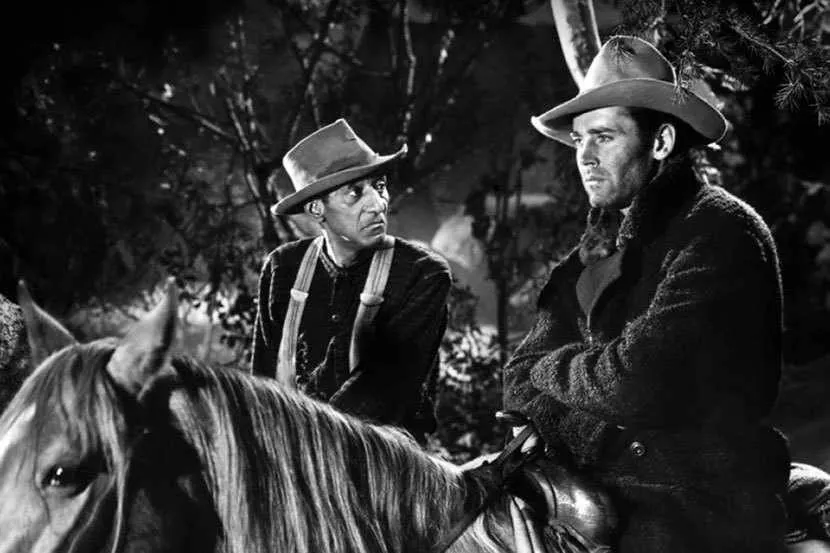
Leigh Whipper and Henry Fonda in “The Ox-Bow Incident” (1942/43).
The Ox-Bow Incident (1943): As Sparks, he provided the moral conscience of the film, delivering a haunting performance as he watched a lawless lynching unfold.
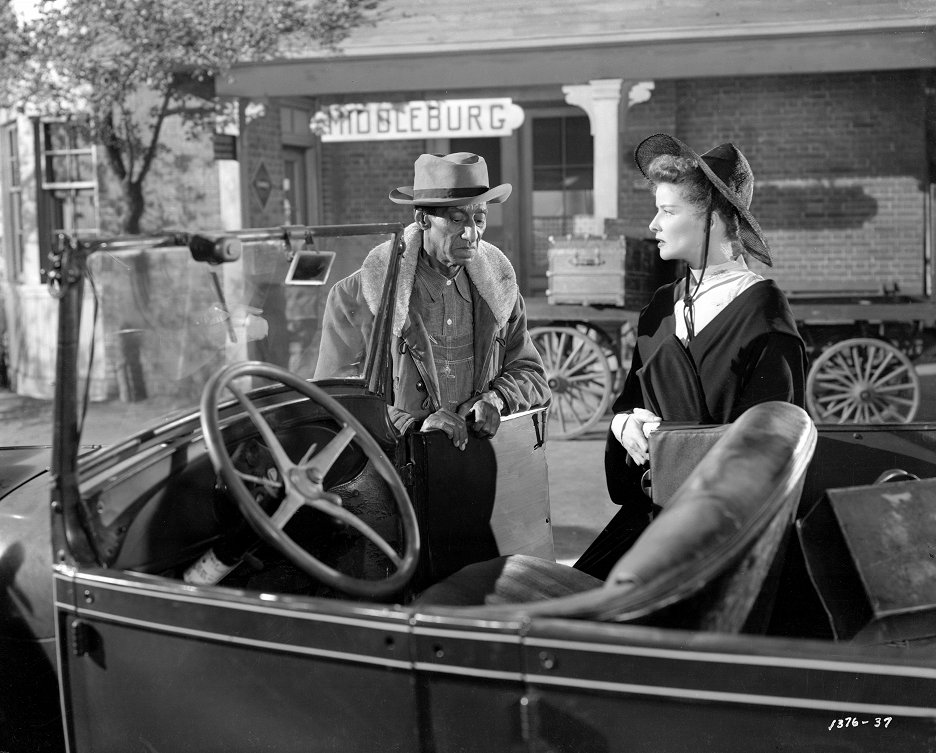
Leigh Whipper, Katharine Hepburn
– Undercurrent (1946)
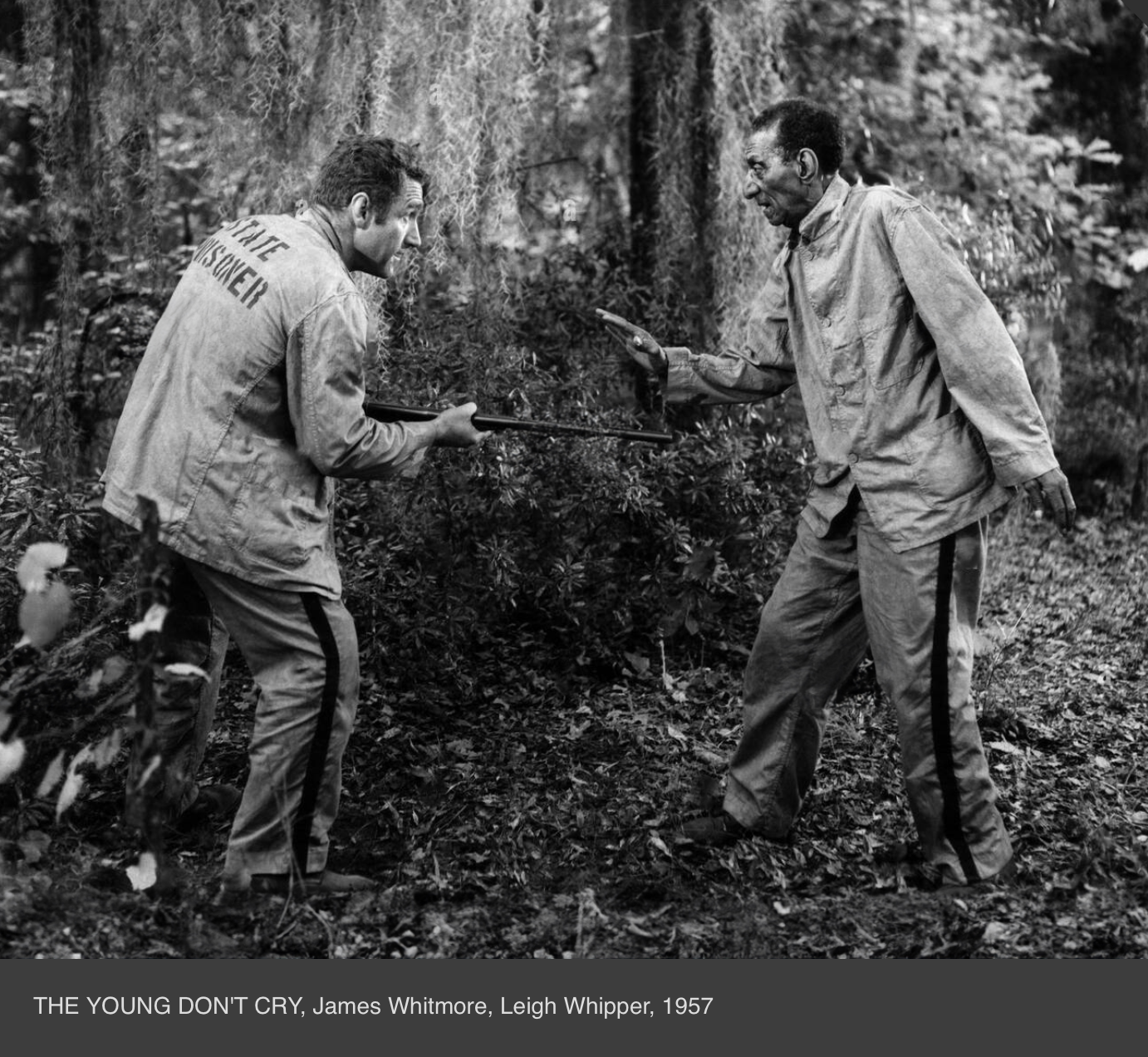
THE YOUNG DON’T CRY, James Whitmore, Leigh Whipper, (1957)
NO COPYRIGHT INFRINGEMENT INTENDED
Iforcolor.org 2026 – All rights reserved ©2026