Orangeburg Massacre: A Conversation with Henry Smith’s Sister
Quotes from survivors, leaders, and observers of the Orangeburg Massacre
(February 8, 1968) highlight the tragedy of the event, the subsequent lack of accountability, and the ongoing struggle for historical recognition.
From Survivors and Witnesses
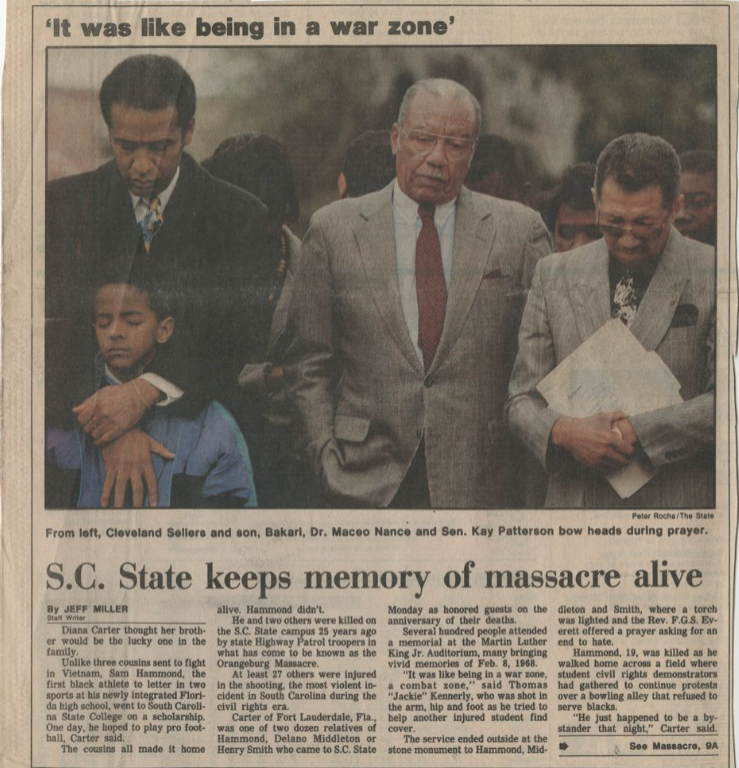
Survivors and witnesses shared their harrowing experiences. Cleveland Sellers, the protest organizer and the only person convicted, questioned how students shot from behind could be seen as a threat and described the sounds and smells of the gunfire, along with the cries of injured students [18, 21]. Harold C. Riley recalled the distinct sound of the shotguns and pondered the lasting impact of the event on South Carolina State University and his own life [4]. Robert “Red” Davis remembered victim Samuel Hammond’s final question in the hospital [5]. Protester Emma McCain recounted the pain of being beaten and the sense that they were being taught a lesson despite being unarmed [17].
From Officials and Public Figures
Officials and public figures offered varying perspectives. Former U.S. Attorney General Ramsey Clark asserted that the officers had lost control and committed murder, attributing the incident to police criminal acts and an unnecessary display of force [17, 18]. Governor Robert McNair initially blamed “Black power advocates” and called it a sad day, but inaccurately claimed the shooting happened off-campus and involved an “exchange of gunfire” [4, 20]. Bakari Sellers, son of Cleveland Sellers, described the deceased as “soldiers to a cause” [17]. Corporal Joseph Lanier, Jr., one of the officers involved, viewed himself as a soldier reacting to orders and expressed regret that the event occurred [17].
None of the law enforcement officers involved in the Orangeburg Massacre were convicted of any crime.
l Justice Initiative
Trial and Acquittal
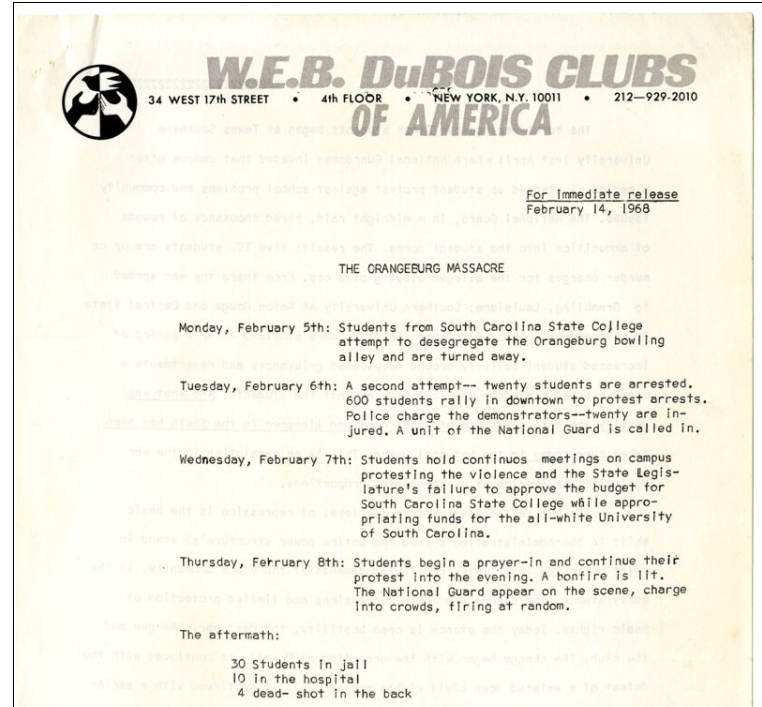
Federal Charges: In 1969, the federal government brought charges against nine state troopers for using excessive force and imposing “summary punishment without due process of law”. This was notably the first federal trial of police officers for using excessive force at a campus protest.
The Verdict: Despite evidence that the students were unarmed and many were shot from behind, a federal jury in Florence, South Carolina, acquitted all nine officers in less than two hours.
Defense Argument: The officers testified they had acted in self-defense, claiming they were being shot at by protesters first, though no weapons were found among the students and no evidence supported this claim in court.
Aftermath for the Officers
Lack of State Prosecution: The state of South Carolina never launched its own formal investigation or brought state-level charges against the officers.
Career Progression: Many of the officers involved continued their careers in law enforcement, with some even receiving promotions. For instance, defendant Joseph Howard “Red” Lanier Jr. eventually served as the Highway Patrol commander.
Later Reflections: In later years, some officers expressed regret. Lanier acknowledged in an interview that the patrolmen were “poorly trained” and described himself as a soldier simply reacting to orders from leaders.
In sharp contrast to the officers’ exoneration, activist Cleveland Sellers was the only person convicted in relation to the events. He served seven months in prison for a “riot” charge stemming from an earlier protest at the bowling alley before being officially pardoned decades later.
Scarred Justice: the Orangeburg Massacre 1968
On History and Remembrance
Individuals also reflected on the importance of remembering the event. Survivor James French emphasized that understanding history is crucial to avoid repeating it [1]. Photographer Cecil Williams stressed that this history must be told and requires ongoing effort, much like freedom [8]. Dr. Alison McLetchie characterized the massacre as an example of the state acting against its citizens in the struggle for constitutional rights [1].
Memorial Sites in Orangeburg
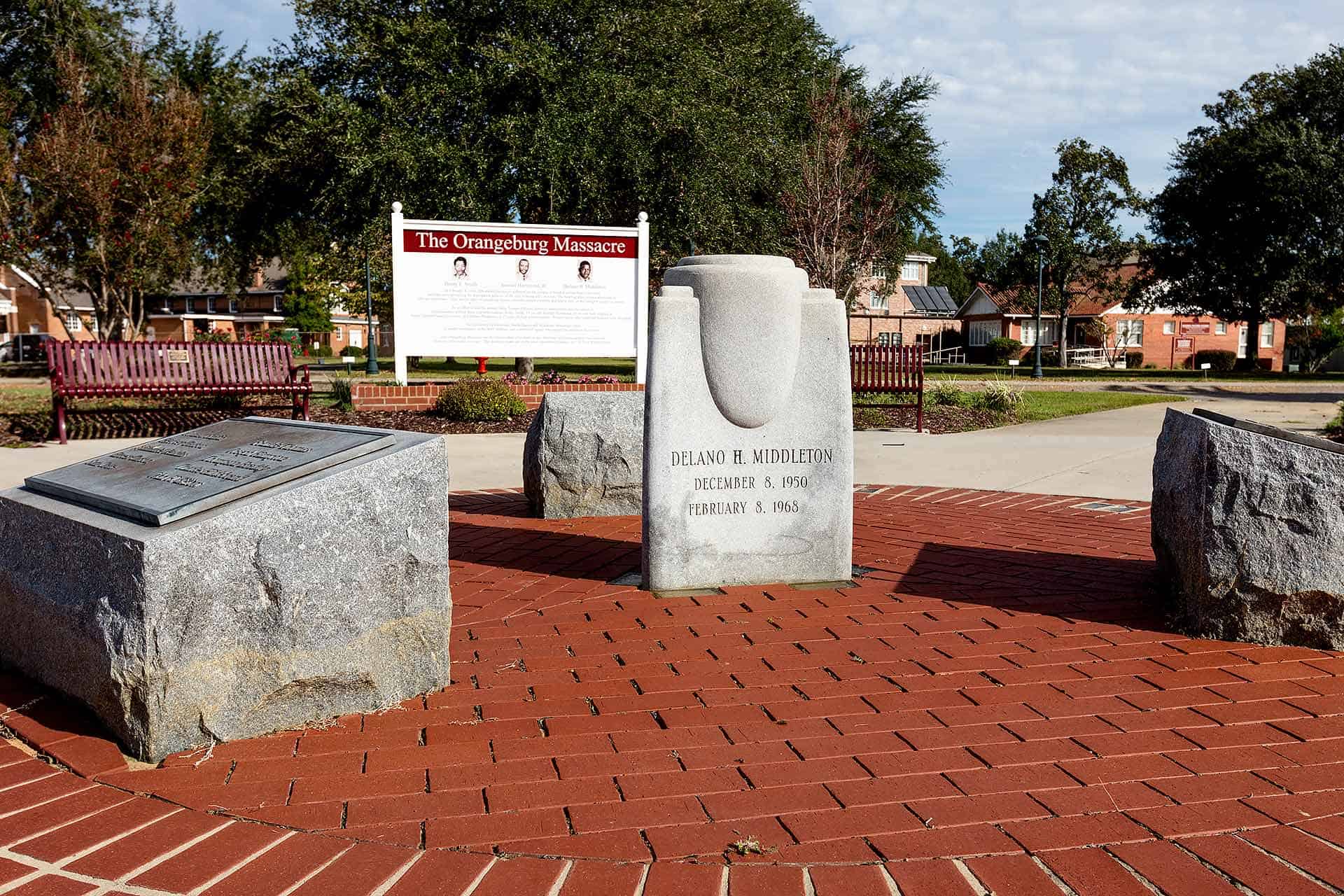
Several locations honor the victims—Samuel Hammond Jr., Henry Smith, and Delano Middleton—and provide space for reflection.
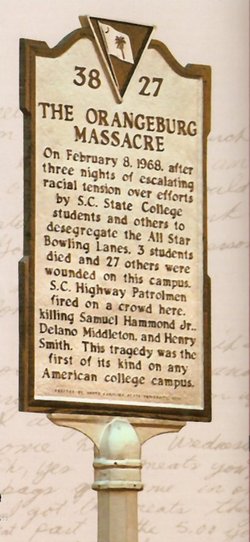
Major locations honoring Samuel Hammond Jr., Henry Smith, and Delano Middleton are primarily located at South Carolina State University (SCSU) in Orangeburg, South Carolina, where they were killed during the 1968 Orangeburg Massacre.
Key commemorative sites include:
Smith-Hammond-Middleton Legacy Plaza: A dedicated memorial space on the SCSU campus. In 2022, the university added a permanent monument to this plaza featuring bronze busts of all three men, sculpted by Dr. Tolulope Filani.
Smith-Hammond-Middleton Memorial Center (S.H.M. Gymnasium): The university’s multipurpose arena and convocation center, named in their memory. It serves as a living memorial and a central hub for university athletic and commemorative events.
Bulldog Lanes: A bowling alley at the Kirkland W. Green University Center that was originally built in response to the massacre. It was recently renovated and rededicated on February 8, 2026, to serve as a recreational facility and home for the university’s women’s bowling team.
Civil Rights Memorial: Their names are also inscribed on the Civil Rights Memorial in Montgomery, Alabama, which honors individuals who lost their lives during the modern Civil Rights Movement.
Remembering the Orangeburg Massacre Shooting
Each year on February 8, South Carolina State University holds a formal commemoration ceremony to honor the victims and survivors
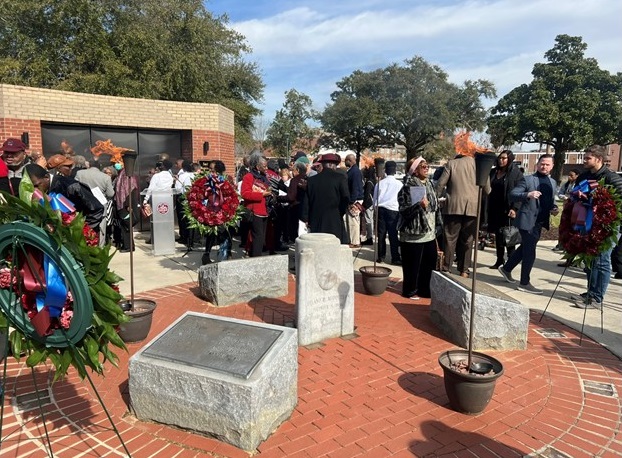
(Panther photo by Tyler Starks)