Dooley Wilson’s life was as much about rhythm and resilience as it was about film. Here is the breakdown of his international music career and his later move into television.
Early Years: Jazz Drummer in Paris
Before he was “Sam,” Wilson was a celebrated jazz musician who found more freedom and acclaim in Europe than in the segregated U.S. during the 1920s.
The Red Devils: After performing with James Reese Europe’s legendary 369th Infantry Hellfighter Band during WWI, Wilson formed his own jazz ensemble, The Red Devils.
European Tour: Throughout the 1920s, he toured extensively as a singing drummer, becoming a staple of the nightclub scenes in Paris and London.
Artistic Versatility: In these years, he was known as a high-energy performer who played both drums and alto saxophone. He didn’t pivot fully toward acting until returning to the United States around 1930 during the Great Depression.
Transition to Television: The 1950s
In his final years, Wilson made the jump to the emerging medium of television, notably starring in one of the first sitcoms to feature Black leads.
Beulah (1951–1952): Wilson took over the role of Bill Jackson, the boyfriend of the title character, Beulah (played initially by Ethel Waters).
The Character: His character, Bill, ran a fix-it shop and was a central part of the show’s domestic comedy. Wilson was the second of three actors to play the role during the series’ run.
Final Performances: Television provided Wilson with steady work until his health began to decline. He retired from show business shortly before his death in 1953, with his time on Beulah serving as his final major professional contribution.
Dooley Wilson was a drummer and singer who led his own band in the 1920s, touring nightclubs in London and Paris. In the 1930s he took up acting, playing supporting roles onstage on Broadway and in a series of modest films.
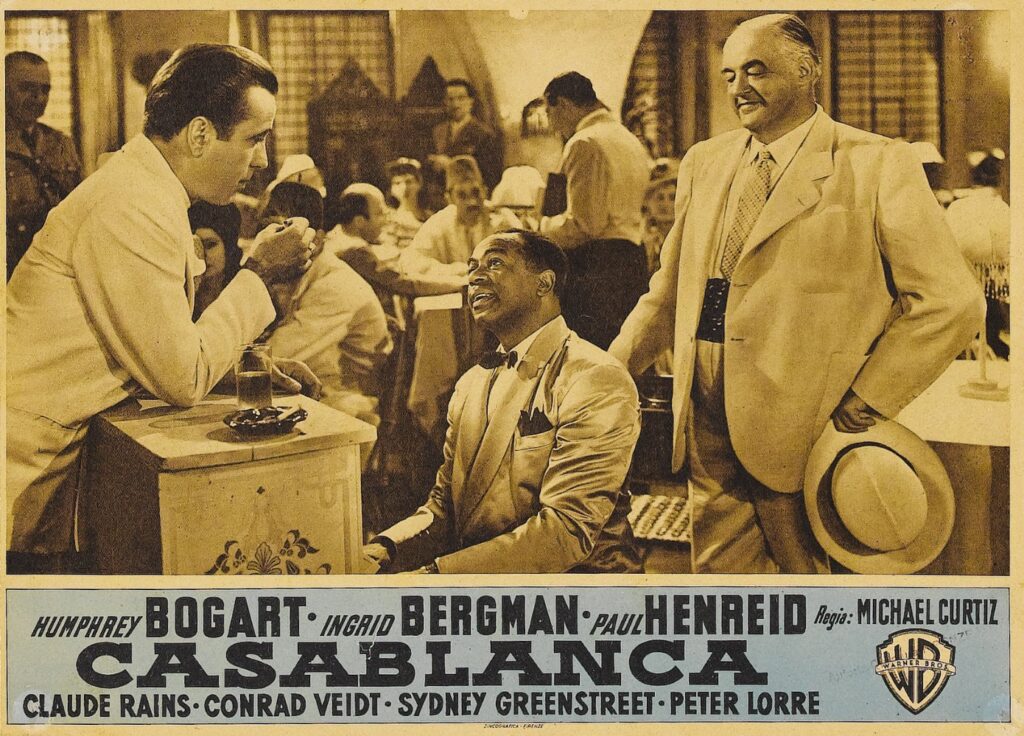
His role in Casablanca was by far his most prominent, but his other films included My Favorite Blonde (1942) with Bob Hope, Stormy Weather (1943) with Lena Horne and the Nicholas Brothers, and The Western Passage West (1951)
Casablanca
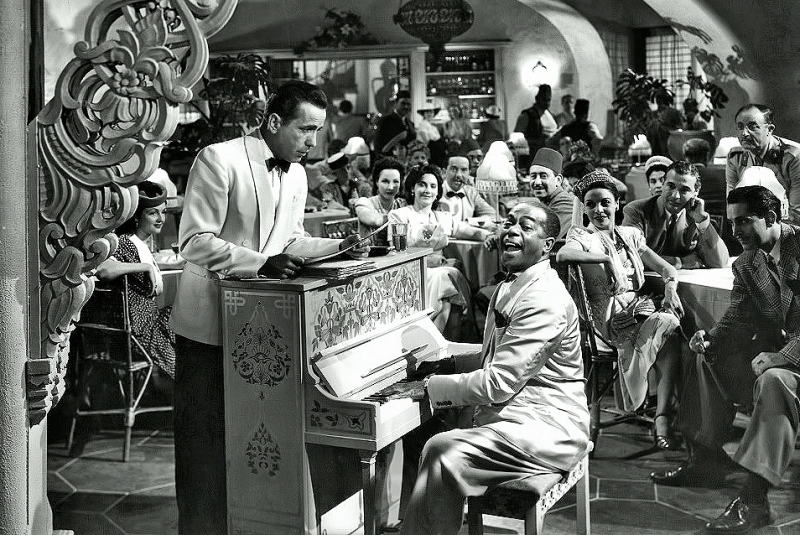
HUMPHREY BOGART
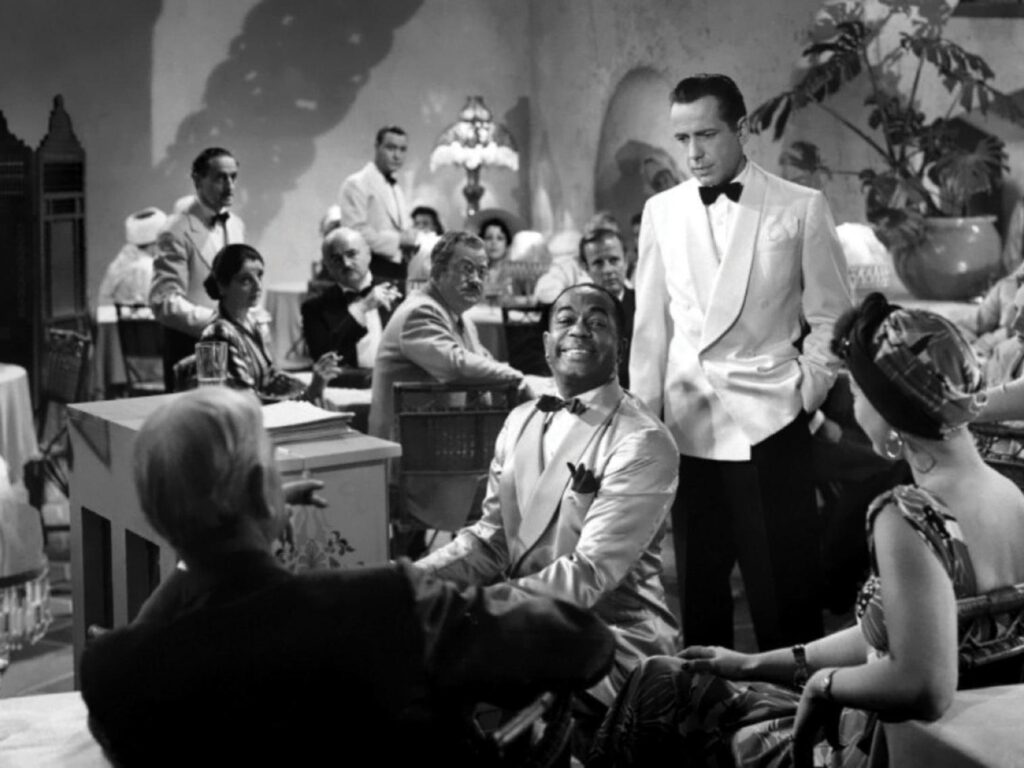
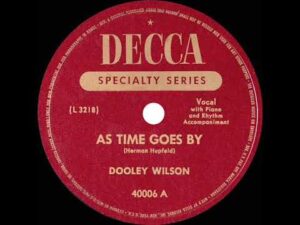
As Time Goes By
Casablanca – The Original Sam Dooley Wilson song
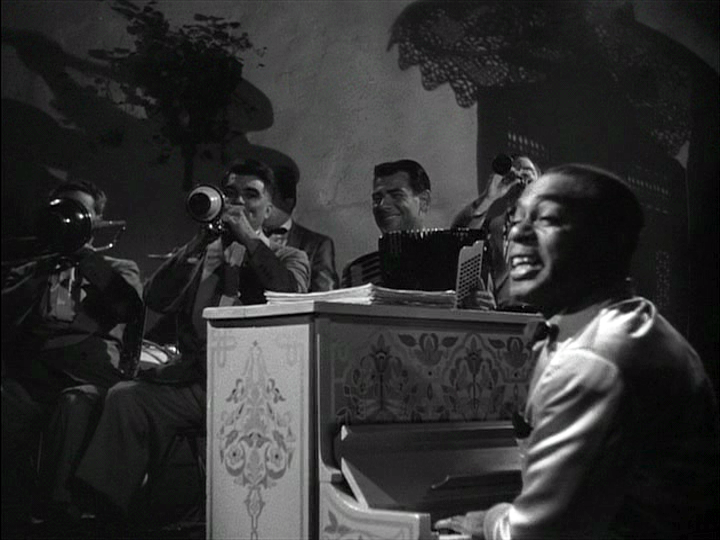
Wilson was a singer and drummer, but not a pianist.
The piano music for the film was played off-screen and dubbed.
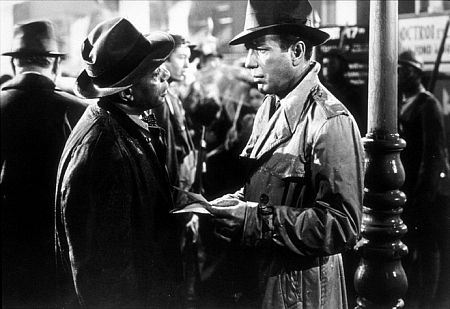
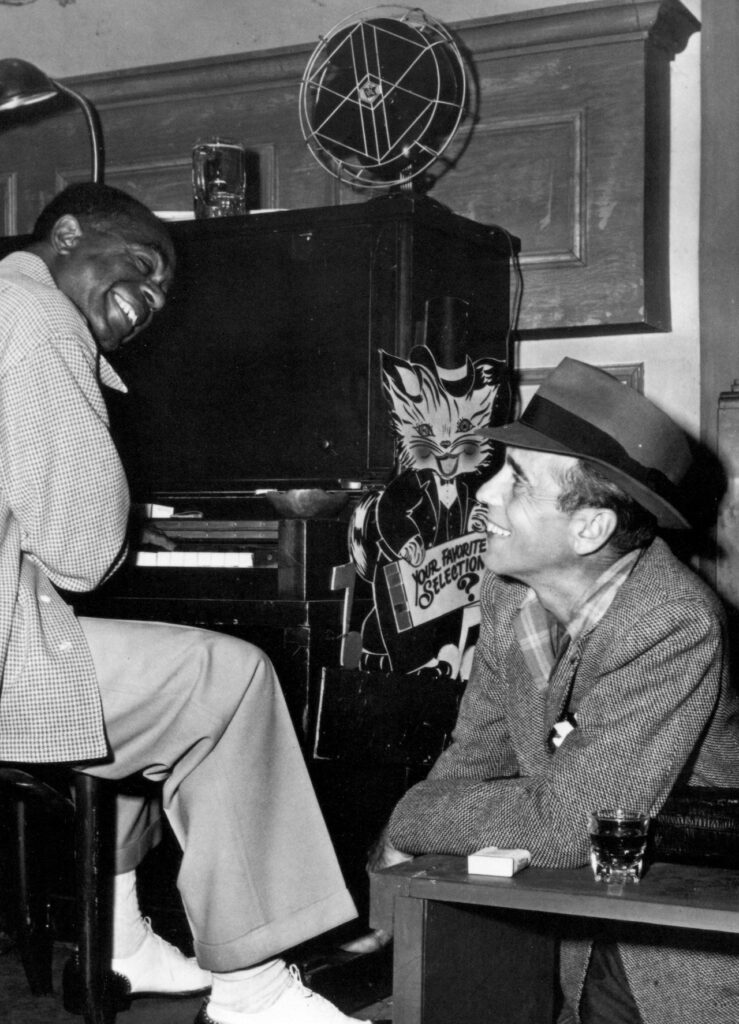
Dooley Wilson and Humphrey Bogart on the set of Casablanca (1942)
©2021
Dooley Wilson’s film career and his navigation of the Hollywood studio system highlight the significant challenges and rare successes of Black performers during the “Golden Age” of cinema.
Key Filmography (Beyond Casablanca)
Wilson appeared in approximately 20 films, often as a supporting character or uncredited performer.

(1943): One of his most significant roles, playing Gabe Tucker alongside Lena Horne and Bill “Bojangles” Robinson.


(1949): He played Anthony James, a character assisting two nuns in building a hospital.


(1949): Ironically, he made an uncredited appearance as a piano player in this Humphrey Bogart film.
Impact on the Hollywood Studio System
Wilson’s career was a testament to the rigid “contract player” system, which often limited the roles available to Black actors.
-
Studio Contracts: After his Broadway success in Cabin in the Sky, he was signed as a contract player for Paramount Pictures.
-
The “Loan-Out” to Warner Bros.: Paramount frequently “loaned” Wilson to other studios. For
Casablanca
, Warner Bros. paid Paramount $500 per week, but Wilson only received his fixed contract salary of $350 per week. This arrangement made him the most expensive supporting actor in the film despite his actual take-home pay being much lower.
-
Challenging Stereotypes: Wilson was vocal about his unhappiness with demeaning typecasts such as porters and chauffeurs. His role in
Casablanca
was revolutionary because it portrayed Sam as a close friend and confidant to Rick, rather than just a servant—a choice producer Hal Wallis fought to keep despite concerns it would be banned in the segregated American South.