
“Black Codes” in the 1800s
The state of Texas passed its notorious Black Codes in 1866 following the conclusion of the American Civil War.
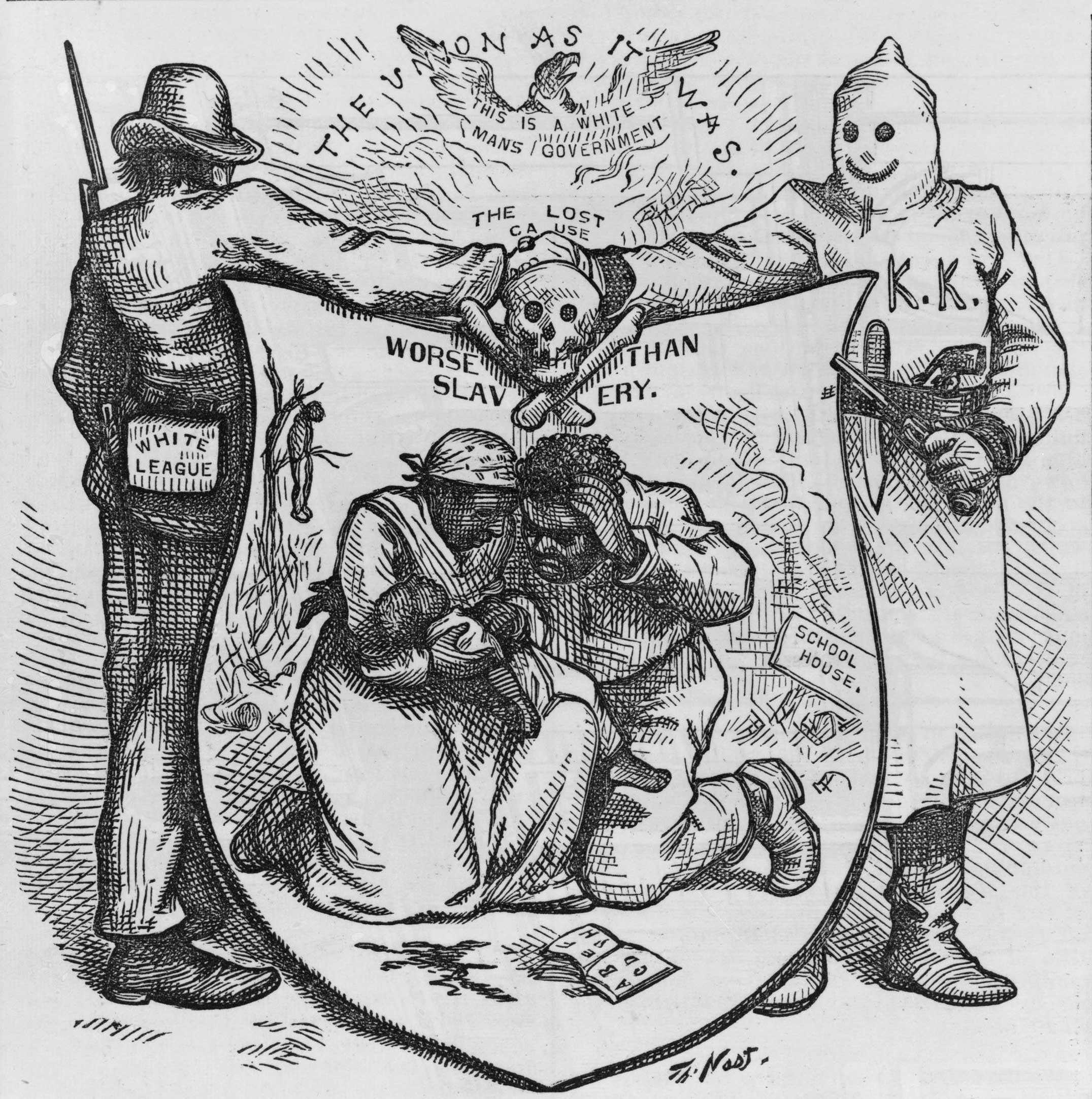
https://www.searchablemuseum.com/black-codes/
- Labor Contract Regulations: Freedmen who wished to work as laborers were forced to sign strict, year-long labor contracts. Breaking a contract early meant forfeiting all accumulated wages and risking arrest.
- Vagrancy Laws: Any unemployed African American could be labeled a vagrant, arrested, fined, and forced into unpaid labor or auctioned off to private employers to work off the debt.
- Legal and Court Restrictions: Under amended criminal procedures, Black individuals were prohibited from testifying in court in cases involving white persons. They could only testify if the prosecution or offense strictly involved other people of color.
- Social and Civic Exclusions: Black Texans were barred from voting, holding public office, serving on juries, marrying White individuals, or accessing public land and public education funds.
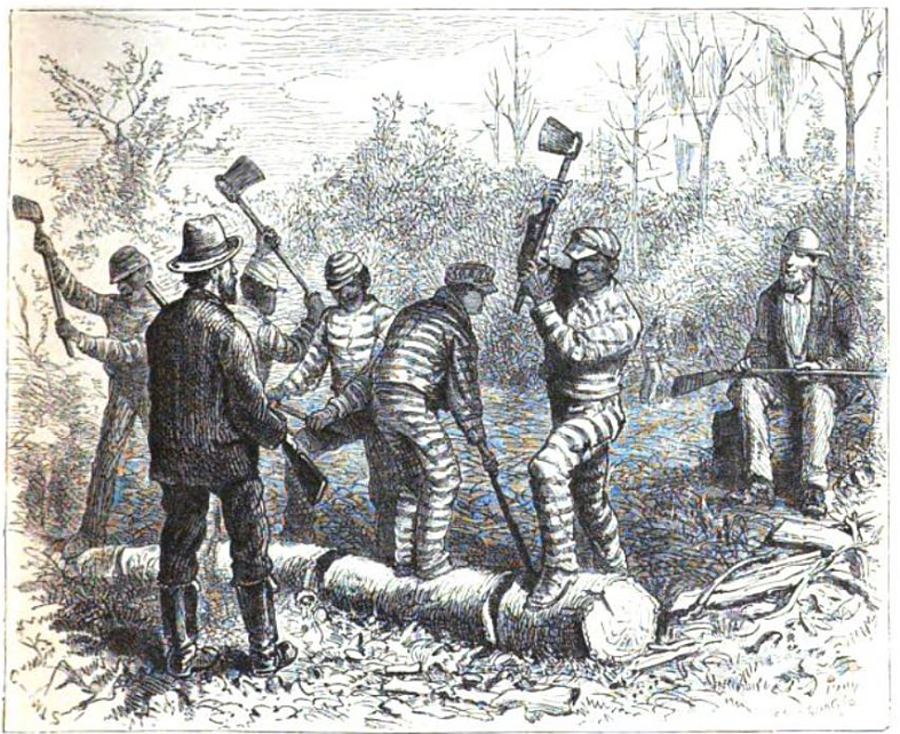
Black convicts work on post-war railroad construction in Texas in this drawing by J. Wells Champney. (from the book “The Southern States of North America”)
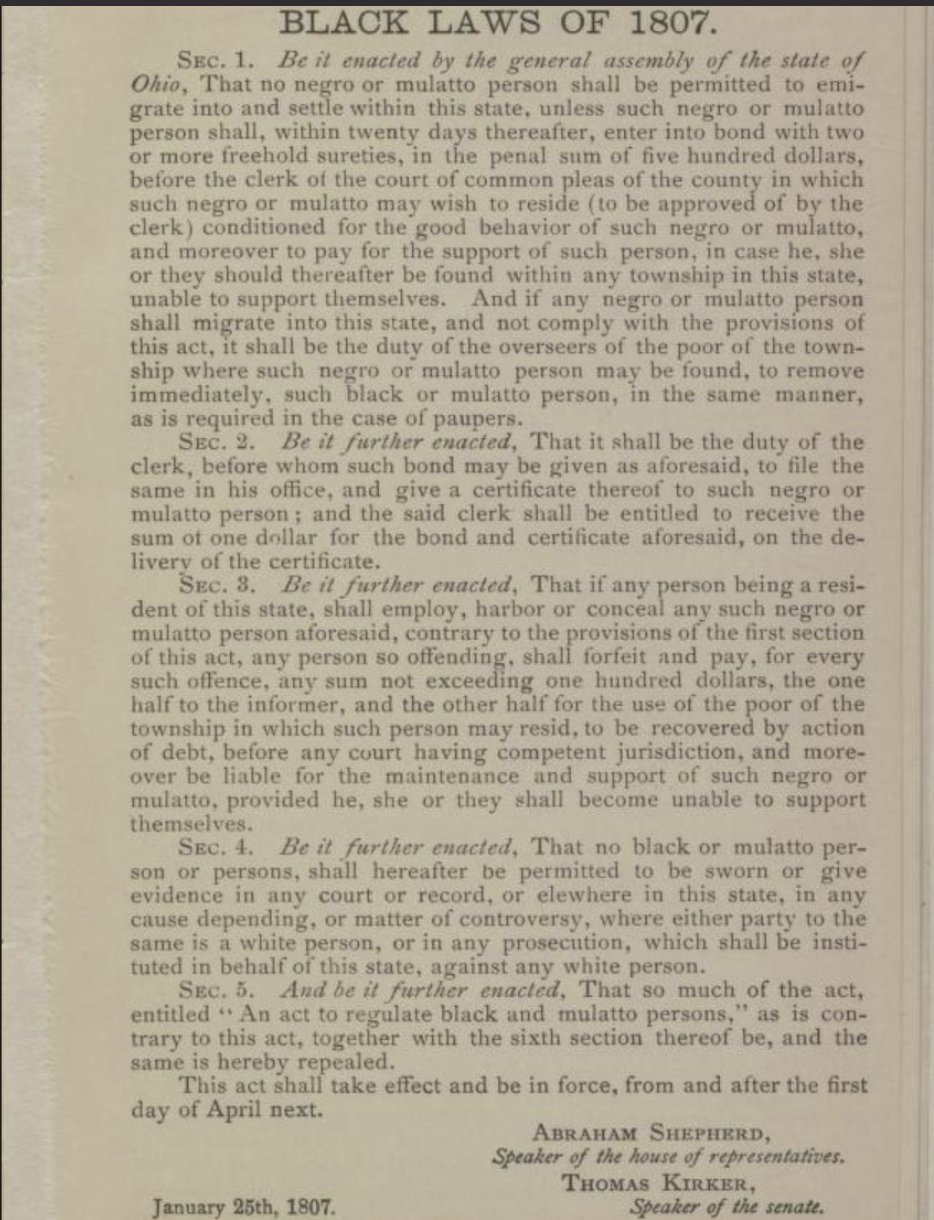
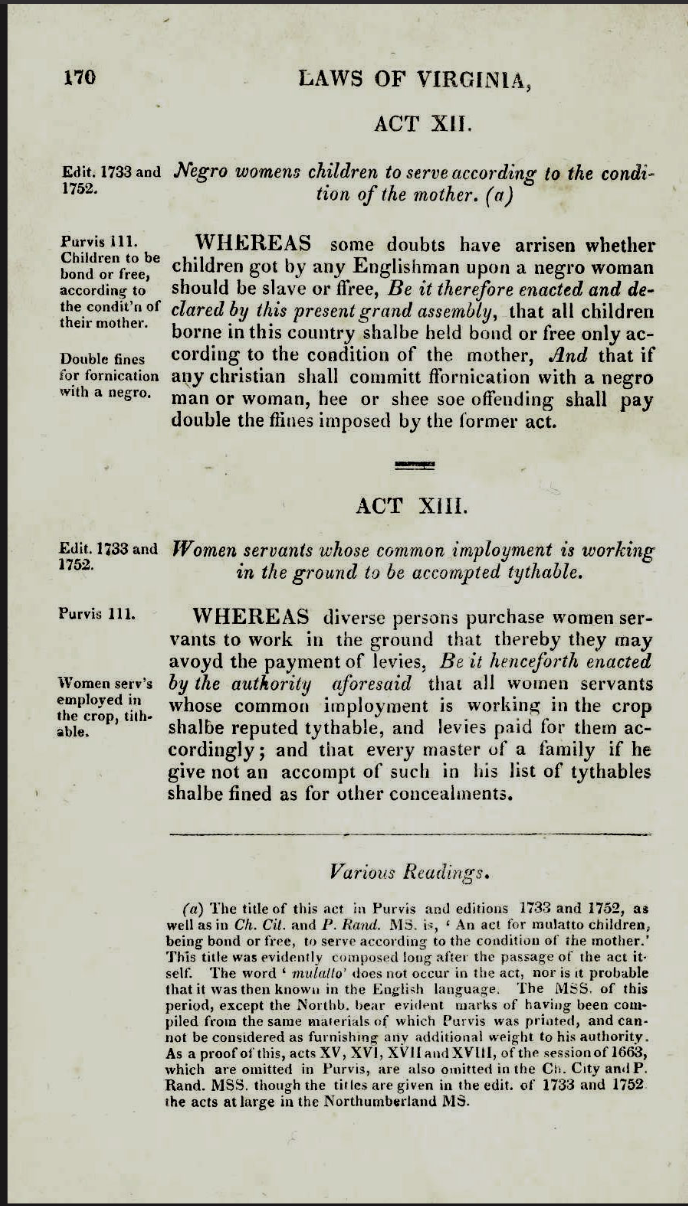
The Black laws! : speech of Hon. B.W. Arnett of Greene County, and Hon. J.A. Brown of Cuyahoga County, in the Ohio House of Representatives, March 10, 1886.
Library of Congress, Rare Book and Special Collections
Imperial State Prison Farm (later the Central Unit) was a notorious Texas penitentiary in Sugar Land, operated from 1909 to 2011. Known for its brutal convict-leasing system, the site made national headlines in 2018 when the remains of 95 forced laborers (“the Sugar Land 95”) were discovered buried in unmarked graves.
History & Legacy
- The Convict-Leasing Era: The state acquired 5,000 acres of the former Imperial Sugar Plantation. Inmates—predominantly Black men affected by Jim Crow laws—were forced to clear land, lay rail, and harvest sugarcane in grueling conditions.
- Prison Hub: Renamed the Central State Prison Farm in 1930, it became the hub of the Texas prison system, housing row crops, cattle, and a processing cannery.
- Closure: As suburban development encroached on the property, the facility was closed in 2011, marking the first voluntary prison shutdown in Texas history.
- The Sugar Land 95: In 2018, construction crews breaking ground for a Fort Bend Independent School District school accidentally exhumed 95 bodies. These were African American men who died during the brutal early 20th-century convict leasing period.
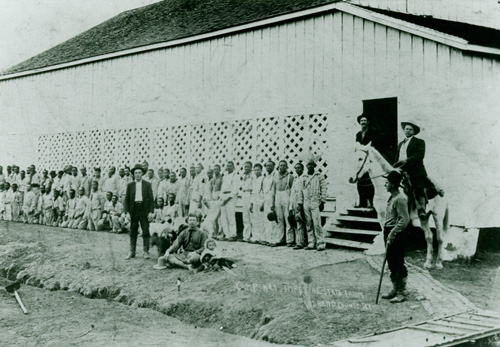
Convicts and guards of Imperial State Farm, circa 1900. Topical photographs, Photographs, Texas Department of Criminal Justice, Archives and Information Services Division, Texas State Library and Archives Commission.
In addition to convict leasing, the state began to operate its own farms, a system known as state account. The first was Wynne, a 1900-acre spread just two miles from Huntsville, which the state bought as part of the final settlement with Cunningham & Ellis. At Wynne, elderly or infirm prisoners were kept busy growing cotton, corn, vegetables, and animal fodder for the prison’s own use. More profitable ventures were soon to follow. In 1886, the state purchased the Harlem sugar plantation and several adjacent tracts of land along the Brazos River near Richmond. Within a year the operation was turning a profit. In 1899 the state purchased the William Clemens sugar plantation and mill near Velasco, and in 1908, the state bought three additional operations: Riddick, a plantation adjoining the Harlem farm; Imperial, purchased from Imperial Sugar; and Ramsey, a huge property consisting of five former plantations.
–
The History of the ‘Convict-Leasing Loop-Hole’
- Vagrancy Laws: It became a crime for a Black person to be unemployed or unable to prove employment at any given moment.
- Petty Crimes: Trivial actions—like walking on grass, stealing food, or speaking loudly—were upgraded to felonies.
- Debt Traps: Individuals declared innocent in court were still jailed and leased out if they could not pay their arbitrary court fees.
These targeted laws weaponized the justice system. For example, in Alabama, the prison population went from 99% White in 1850 to 85% Black by the 1880s.
- State Revenue: The leasing fees generated massive profits. By 1912, convict leasing accounted for roughly one-third of Alabama’s total state revenue.
- Corporate Windfalls: Major industrial giants, including U.S. Steel Corp., built massive corporate wealth using unpaid, forced prison labor.
[13th Amendment Loophole Passed]
              │
              ▼
[Black Codes Enacted] ──► (Mass Arrests of Black Citizens)
              │
              ▼
[State Leases Prisoners] ──► (Private Mining, Railroads, & Plantations)
              │
              ▼
[Massive State & Corporate Profit] + (Extremely High Laborer Mortality)
–
WATCH LIVE: The forced prison labor that made companies rich.
Notable corporations historically linked to the practice.
- U.S. Steel Corp.: In 1907, the world’s first billion-dollar corporation acquired the Tennessee Coal, Iron & Railroad Company (TCI). For at least five years under U.S. Steel’s ownership, the industrial giant continued to force hundreds of leased, predominantly Black prisoners to mine coal under deadly, brutal conditions in Alabama.
- Tennessee Coal, Iron & Railroad Company (TCI): Before its acquisition by U.S. Steel, TCI was one of the original 12 companies listed on the Dow Jones Industrial Index. It operated notorious prison labor camps, such as the Lone Rock Stockade in Tennessee, before shifting operations to Alabama. TCI extracted massive wealth through the system, often paying states for labor while keeping prisoner maintenance costs near zero.
- Sloss-Sheffield Steel & Iron Company: A massive industrial fixture in Birmingham, Alabama, this company relied intensely on county and state convict laborers to dig coal and iron ore. Sloss-Sheffield continued working county prisoners at its mines until the practice was legally halted in Alabama in 1928.
- Chattahoochee Brick Company: Founded in Georgia in 1885, this business became one of the most notorious and punitive employers of convict labor in the American South. Under former Atlanta Mayor James W. English, the company forced thousands of Black Georgians into “industrial slavery” to mass-produce bricks. The grueling heat and heavy labor resulted in extraordinarily high worker mortality rates.
- Pratt Agricultural & Mechanical Company / McHatton, Pratt, & Ward: In 1844, Kentucky privatized its state penitentiary management by leasing operations out to this group. The corporation put inmates to work from dawn until dusk in a textile factory to maximize “the dollars and cents of human misery,” implementing routine whippings and beatings for anyone who fell behind production quotas.
- Ball Hutchinson Company: Based in Galveston, archival state contracts from the 1890s reveal this company directly leased Black inmates from Texas state penitentiaries. The company paid a premium rate to the state for this forced agricultural labor because they could enforce higher daily productivity on their work farms than could be expected from free laborers.
- The Richmond and Danville Railroad: Following emancipation, numerous rail networks across Virginia, North Carolina, and Georgia saved millions of dollars in construction overhead by leasing prison gangs to clear mountainsides and lay heavy iron tracks.
- The Greenwood and Spartanburg Railroad: Like many post-war Southern rail lines, this company frequently signed exclusive state contracts to secure predictable, cheap labor forces that had no legal right to strike, complain, or quit.
Connecting History to the Present
While the historic convict-leasing corporations listed above eventually phased out the practice by 1928, the underlying 13th Amendment legal loophole remains unchanged. An investigative report by The Associated Press exposed that over 500 modern corporations—including major supply chains, agricultural processors, and fast-food franchises—still utilize cheap, state-garnished prison labor programs today.
–
The most important names associated with the Sugar Land 95 span the victims themselves, the plantation owners who profited from them, and the advocates who fought to tell their stories:
- John Chambers: He was the first individual positively identified via advanced research. Born in 1854, he was convicted of mule theft, sentenced to 7 years, and died at the camp in 1881.
- Nathan Pope: An 18-year-old youth who was killed during an escape attempt just two days into his stay.
- Aaron Dabby: An 18-year-old serving a 7-year theft sentence who died from a heart clot.
- Bill Odam: A 27-year-old laborer who died of pneumonia after enduring repeated lashings.
- Garrison Stroud: A 27-year-old man who lost his life after being caught in the camp’s heavy industrial machinery.
- Edward H. Cunningham: A wealthy landowner who operated a 12,500-acre sugar plantation. He partnered with Ellis to lease hundreds of prisoners from the state to provide low-cost labor. [1]
- Littleberry A. Ellis: Cunningham’s business partner and owner of the 5,300-acre Sartartia Plantation. He established the Bullhead Convict Labor Camp, where the Sugar Land 95 were forced to work.
- Reginald Moore: A former Texas correctional officer turned community activist. He spent decades warning local officials that convict labor graves were hidden throughout the area. He passed away in 2020 but is widely credited as the primary prophet and voice for the Sugar Land 95.
- Marilyn Moore: Reginald Moore’s widow, who carries on his legacy by supporting local history museum exhibits and educational curriculum updates.
- Chassidy Olainu-Alade: The Fort Bend ISD Coordinator of Social Studies who worked closely on the Sugar Land 95 Exhibit Guide and integrating convict-leasing history into student education.
- Brittney Martin & Naomi Reed: Journalists and researchers who created the critically acclaimed “Sugar Land” investigative podcast series, which widely publicized the political battles over the gravesites and actively searched for surviving descendants.
- Catrina Banks Whitley & Reign Clark: Leading archaeologists and researchers with the Principal Research Group who authored the comprehensive forensic report analyzing the remains and injuries of the deceased.