– The House of Reformation and Instruction for Colored Children, established in 1870 in Cheltenham, Maryland, was the first juvenile reformatory for Black boys in the American South.
Originally intended to remove Black youth from adult prisons, it became a site of systemic abuse, forced labor, and severe neglect for decades.
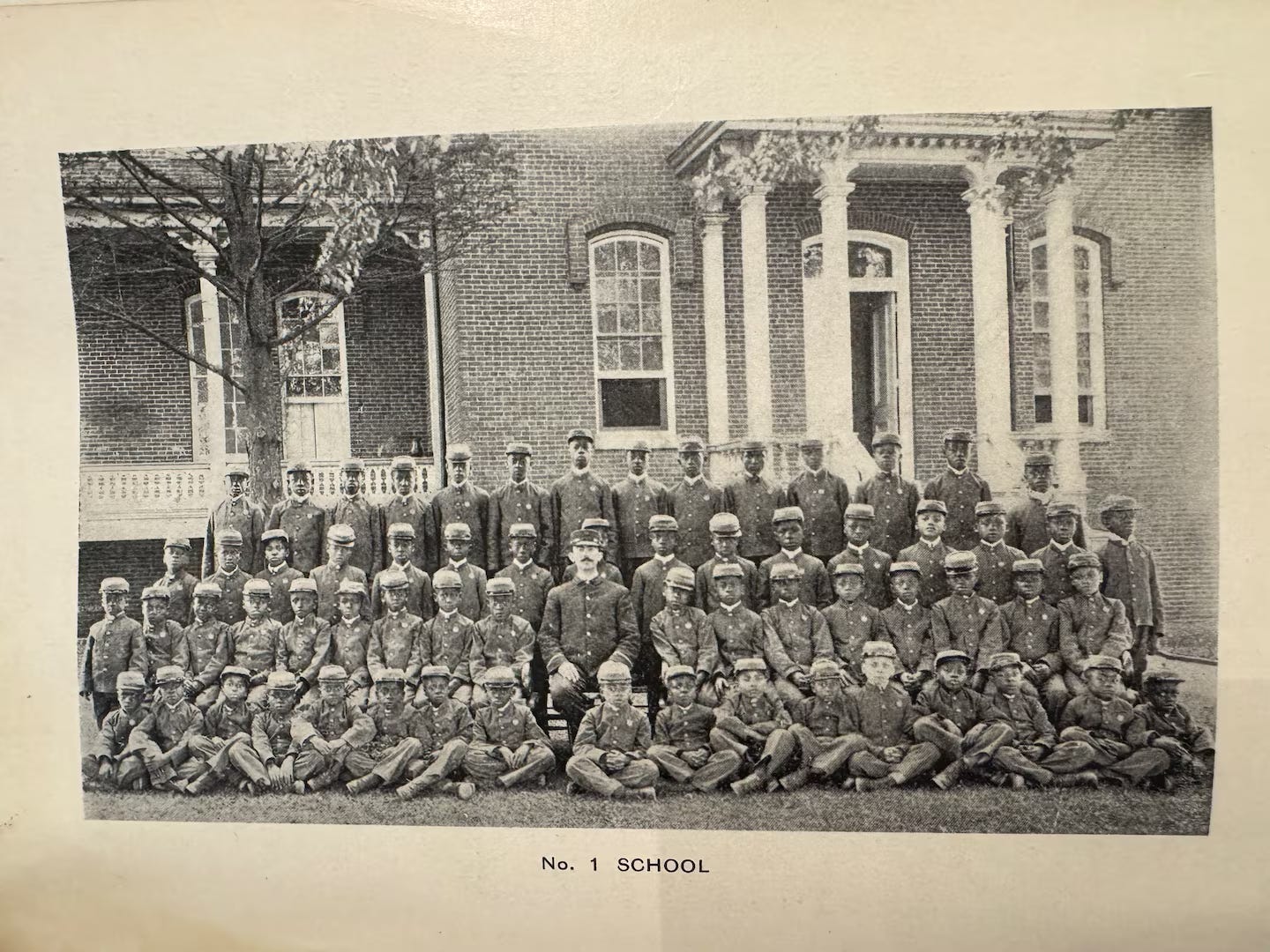
Operated for decades under a system of forced labor, severe physical abuse, and neglect before the state took full control in 1937.
.
Established on 752 acres of a former plantation donated by businessman Enoch Pratt.Purpose:
.
Created to remove Black children from adult prisons, though it functioned primarily as a source of cheap labor through convict leasing. Children as young as five were sent there for offenses ranging from theft to “vagrancy” or being “incorrigible”.
.
Boys worked six days a week in fields, workshops, or were “paroled to service” for private families until age 21.
.
Discipline: Children endured beatings with three-ply leather whips, rubber hoses, and wooden clubs.
..
Reports from the 1920s and 30s described the facility as a “hell hole” with overcrowded, unsanitary conditions and “disease-breeding” environments.
.
Many succumbed to tuberculosis (consumption), pneumonia, heart failure, and exhaustion.
.
Lack of Notification: Families were rarely notified of deaths; in some cases, staff falsely claimed missing boys had simply run away. An estimated 230 to 300 boys are buried in two wooded sections near the facility, often marked only by cinder blocks.
–
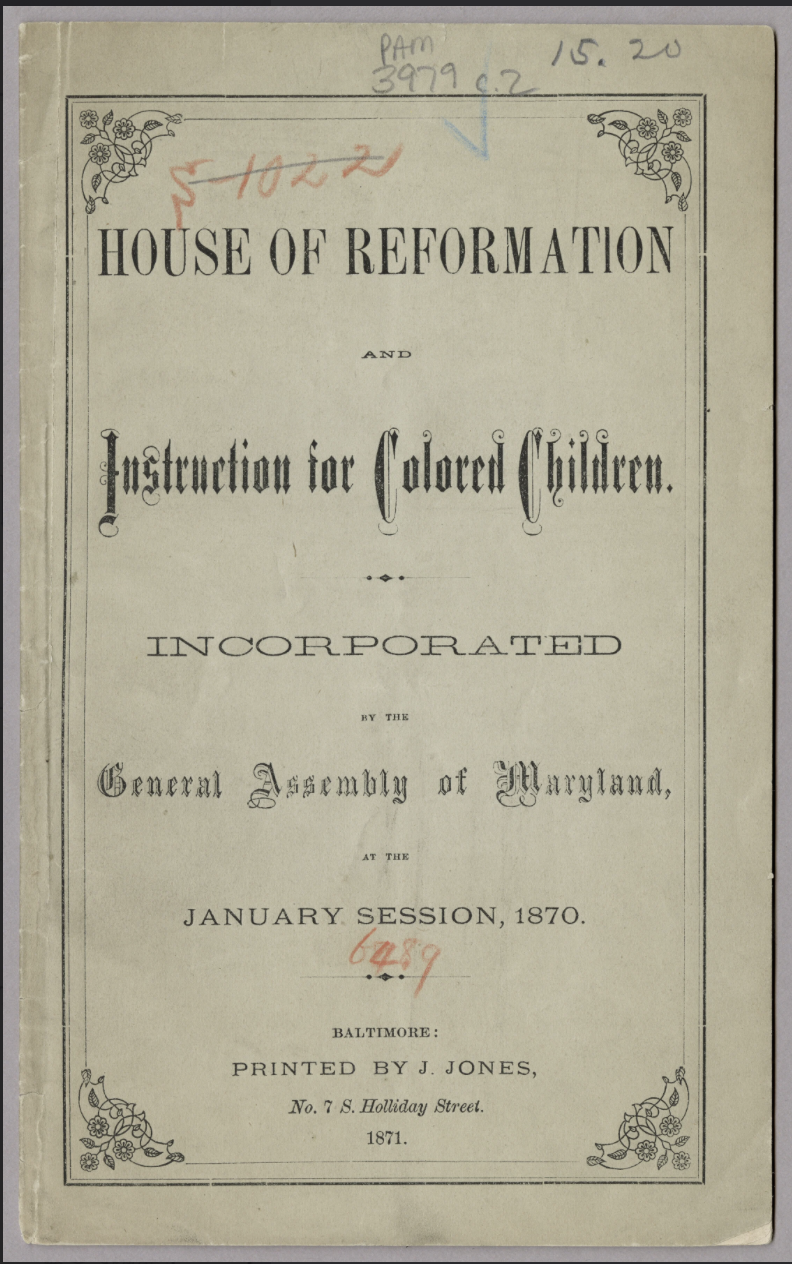
Pamphlet containing a copy of “An Act to Incorporate a House of Reformation and Instruction for Colored Children” presented at the January Session, 1870, of the General Assembly of Maryland. Also includes excerpts from reports in favor of the establishment of such an institution from the Grand Jury and the Warden of the Penitentiary and Board of Visitors to Baltimore City Jail.
An appeal to the public for funds to establish a reform school for African-American boys in Maryland in the wake of emancipation, conceived as an alternative to the deplorable and corrupting circumstances of prison, with a view to creating a better educated and more productive labor force.
As observed in the opening address to the public, at the time of publication Maryland had a reform school for white boys, known as the “House of Refuge,” but no similar institution for African-American boys. The Legislature had recently passed an act of incorporation for such a school, but funds were lacking. It is noted that a visit to the Penitentiary reveals that “four hundred and fifteen colored persons are incarcerated therein, and of this number eleven are children under twelve years of age, and one of them but five years old, so small as to be able to creep through the prison bars.”
A recent “Visitors to the Jail” report noted that in 1870 some 2,335 Black youths had passed through the prison doors, having been apprehended “for violation of the Peace and for Drunkenness,” “Larceny,” “Vagrancy,” etc.
These crimes included such trivial offenses as stealing three loaves of bread, stealing 23 cts., etc., and many of the prisoners were children between the ages of five and sixteen. Maryland being dependent upon the large Black population for labor, much of which had formerly been enslaved, the argument is made here “that a better use should be made of them than supporting them in our prisons.”
In addition to the four-page “Address to the Public,” the pamphlet includes a list of the school’s officers and the Act of Incorporation.
“We need to be mindful of never, ever allowing something like this to happen again,”
Maryland probes racist incarceration of children
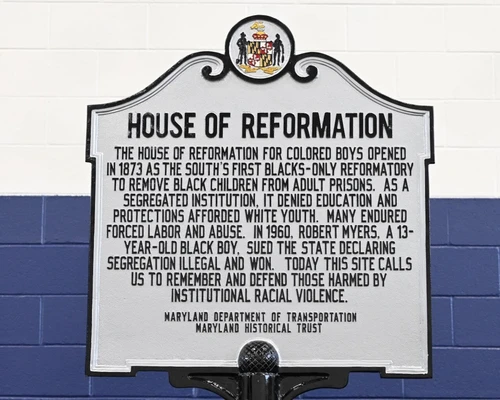
House of Reformation marker unveiled Wednesday at the Cheltenham Youth Detention Center in Prince George’s County. The marker will be placed nearby at the corner of Frank Tippett and Surratts roads. (Photo by William J. Ford/Maryland Matters)
–
About the House of Reformation Deaths
- Location: The facility was located in Prince George’s County, Maryland. The burial site is in a wooded area bordering the now-manicured Cheltenham Veterans Cemetery.
- Timeframe: The 230+ deaths occurred between 1870 and 1939, with many boys as young as 10 years old being sent to the facility for minor offenses such as “vagrancy,” “incorrigibility,” or being orphans.
- Causes of Death: Common causes identified in records included tuberculosis, pneumonia, exhaustion, and physical abuse.
- Unmarked Graves: Many children were buried without proper coffins or headstones, often marked only by simple concrete cinder blocks, which became overgrown with vegetation over the decades.
- Forced Labor: Inmates were often leased out to local farmers for labor, subjected to brutal physical punishments including whipping with leather whips and rubber hoses.
Maryland leaders look to preserve history of Black boys who died at former reform school.
–
Recent Investigations and Memorialization (2025–2026)
- Discovery: The forgotten cemetery was identified through the “Forgotten Children Initiative,” a research project focused on uncovering lost burial grounds of incarcerated children.
- Historical Marker: On May 6, 2026, Governor Wes Moore unveiled a historical roadside marker at the site to honor the victims and acknowledge the state’s role in the abuse, stating, “Loving our state does not mean lying about its history”.
- State Action: The state of Maryland has allocated funding for further investigation, including archaeological surveys to map the graves and potential forensic analysis to identify the boys.
- Ongoing Probe: Lawmakers, including the Legislative Black Caucus of Maryland, are working to restore the burial site and ensure the stories of these children are permanently acknowledged. ‘
–