‘This is where they came to die’
–
🏛️ Institutional History
- Founding: Incorporated by the Maryland General Assembly in 1870 after Baltimore businessman Enoch Pratt donated 752 acres for the site.
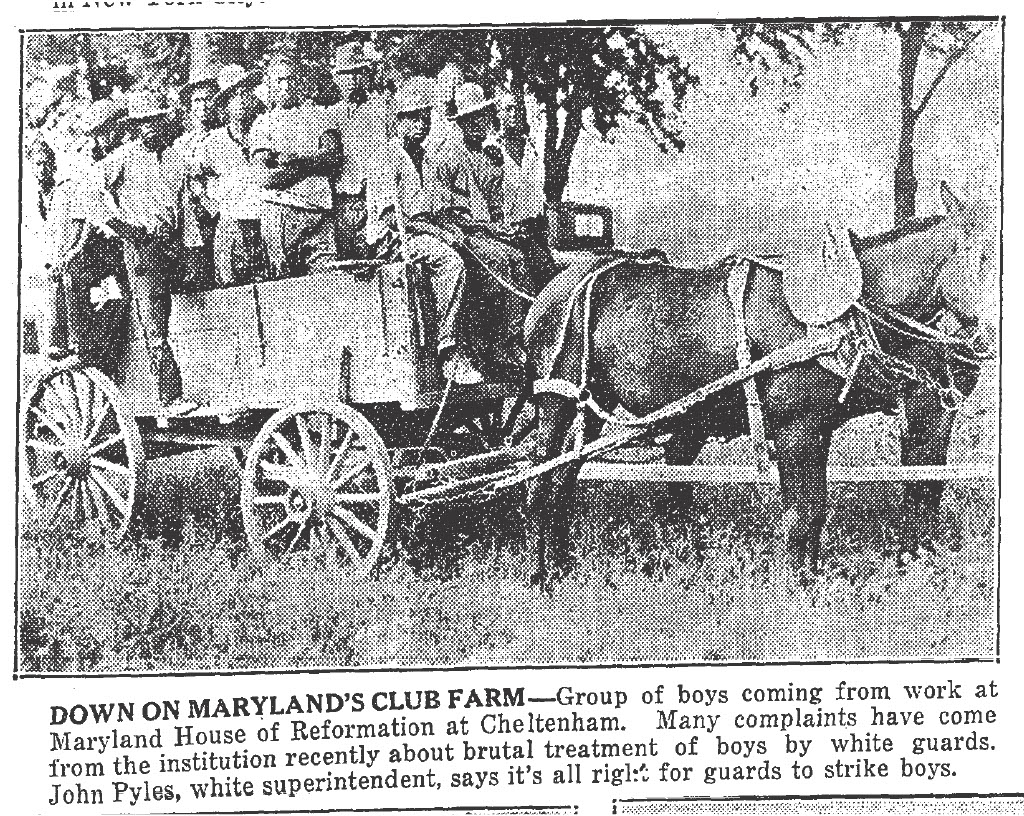
- Purpose: While ostensibly for “discipline and instruction,” it functioned as a pipeline for forced labor, where boys as young as five were leased to local farms.
- Evolution: The facility underwent several name changes, becoming the Cheltenham School for Boys(1937), Boy’s Village of Maryland (1949), and finally the Cheltenham Youth Detention Center (1992), which remains operational today.
- Desegregation: The institution remained strictly segregated until 1961, following a landmark court case supported by Thurgood Marshall.
–
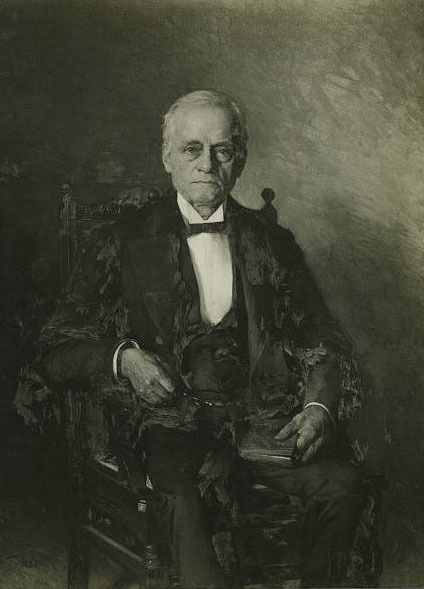
Baltimore businessman Enoch Pratt was well known for his philanthropic endeavors, including the founding of Enoch Pratt Free Library in 1882.
Enoch Pratt donated 700 acres in Prince Georges County to found the House
of Reformation and Instruction for Colored Children (Cheltenham). Before
this time African-American boys, some as young as eight years old, who
committed crimes were routinely confined in jails and the state penitentiary. A former plantation in southern Prince George’s County, to be used for the school. Pratt served as president of the school’s board for a number of years, and was also instrumental to the establishment of Baltimore’s public library system, believing “a free circulating public library open to all citizens regardless of property or color” to be the city’s greatest need.
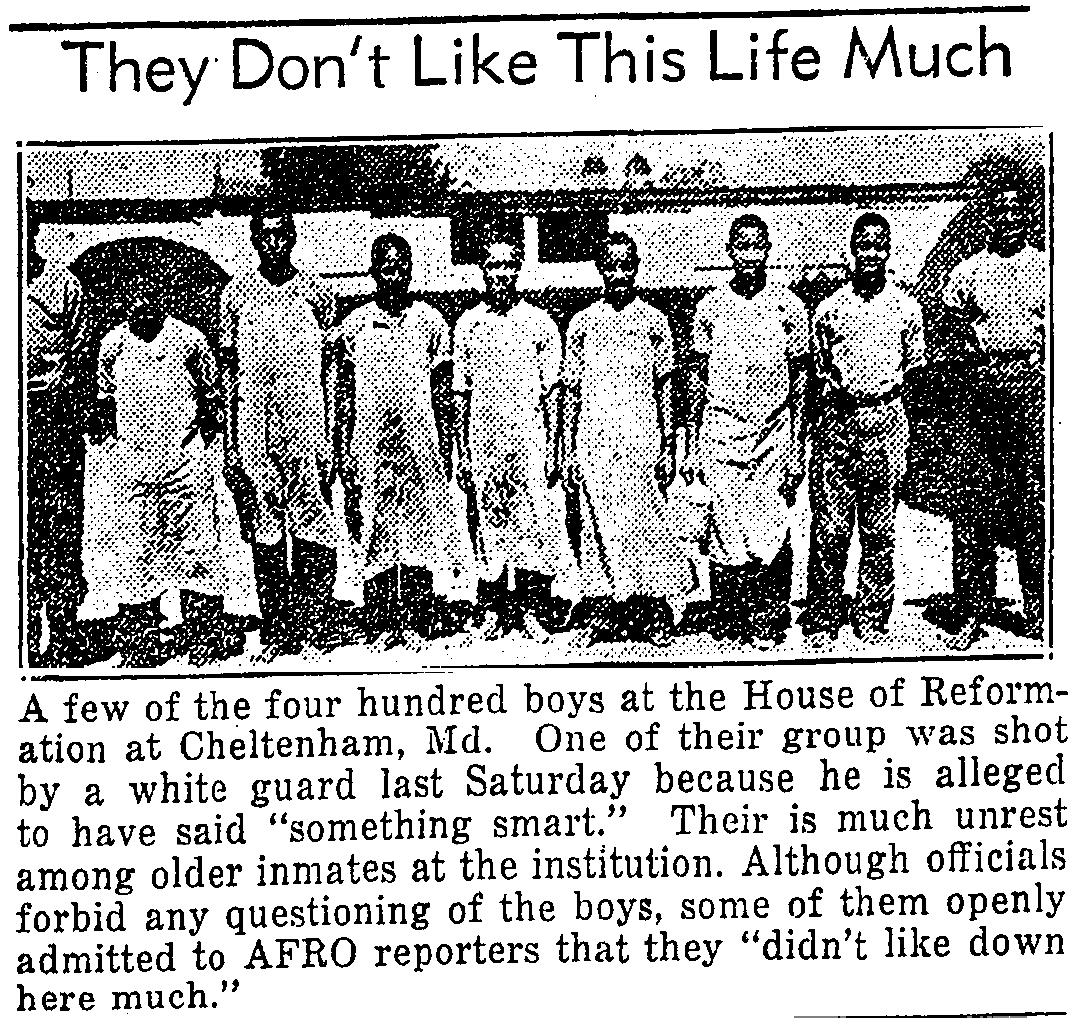
This image from the Sept. 8, 1934 Afro-American describes conditions at Cheltenham. Image: Afro-American
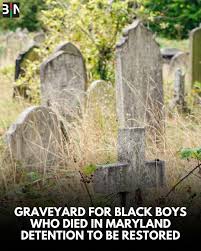
“An abandoned graveyard in Maryland is finally being restored to honor the 230 Black boys buried there, who died while confined to the House of Reformation and Instruction for Colored Children.
The House of Reformation and Instruction for Colored Children was a state-run juvenile detention facility located in Prince George’s County that operated from the late 19th to early 20th century.
According to a Washington Post investigation, many Black children were sent to the House of Reformation for minor offenses, subjected to forced labor, and endured harsh conditions before dying in custody.
The Maryland cemetery containing the remains of boys who died between 1870 and 1939 was rediscovered last year by the state Department of Juvenile Services.
Governor Wes Moore’s administration has pledged $250,000 in the next budget to begin the restoration, which includes uncovering more unmarked graves, repairing headstones, and creating a memorial.
“We need to be mindful of never, ever allowing something like this to happen again,” State Senator Michael Jackson said.”
Lost Shoes: the Forgotten Children Initiative
“
“The death count at the House of Reformation for Colored Boys at Cheltenham, a juvenile detention center whose violent past is under state investigation, was nine times that of its White counterpart, the House of Refuge for Juvenile Delinquents or Charles H. Hickey, Jr. School, according to a Capital News Service analysis.
CNS examined historical documents and known death certificates to show 243 deaths at Cheltenham compared to 26 at Hickey between 1860 and 1942, a period when the two facilities had the same number of residents. The CNS calculations surpass prior published estimates. No news organization has compared the Cheltenham deaths to the Whites-only Hickey school.”
–
“Joshua Rovner, a senior research analyst with The Sentencing Project, said the juvenile justice system has dehumanized children of all races for centuries.
“We really have a basic problem with how we treat children who are incarcerated,” Rovner said.
Rovner said any number of deaths at a state facility should be alarming.
“If we see children dying, we need to panic about that,” Rovner said. “We need to be outraged whether that number is 100 or 10 or 1.” – CAPITAL NEWS SERVICE
–
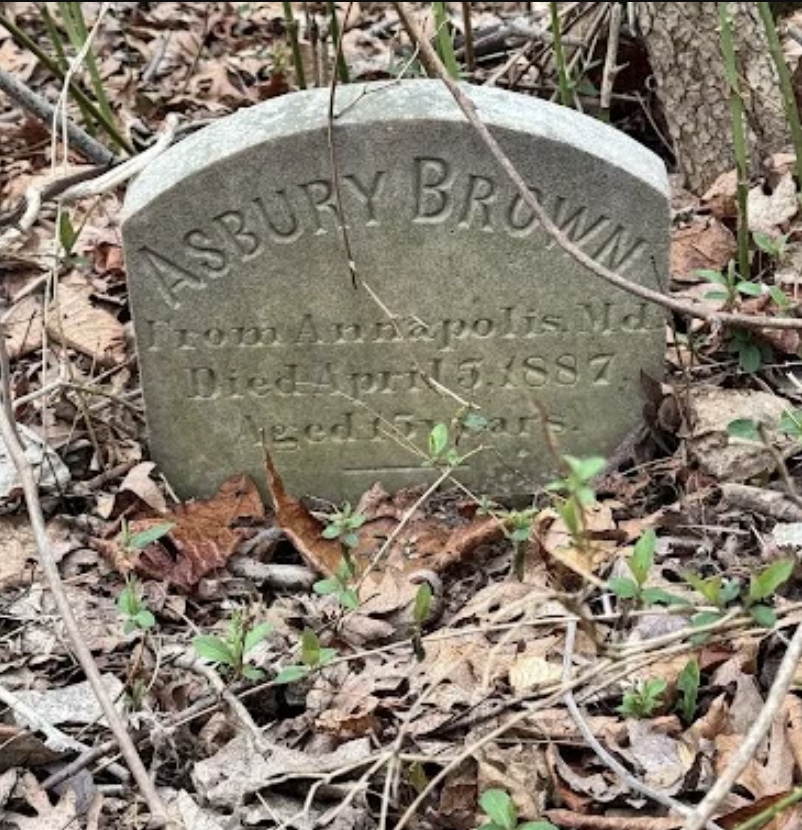
Grave of Asbury Brown at the Maryland House of Reformation and Instruction for Colored Children burial site. Photo by Marc Schindler.
“
“…Youth were buried in this grave site from the late 1800s until 1939. While most of their causes of death are listed as natural ones like tuberculosis, one has to wonder given the abuse these young people were subject to and how devalued their lives were by the state.
Harry Brown, a man who escaped from the House of Reformation as a child, told The Afro-American in 1934 that he helped conduct some of the burials, and that he knew “of no effort to embalm the bodies or to notify parents or guardians of the boys’ deaths.” He also stated, “on one occasion… parents came to inquire about a boy and were told that the boy had run away; but the truth is that I had helped bury them the night before.”