John Hope Franklin
American historian, Educator, and Civil Rights Activist
[1915-2009]
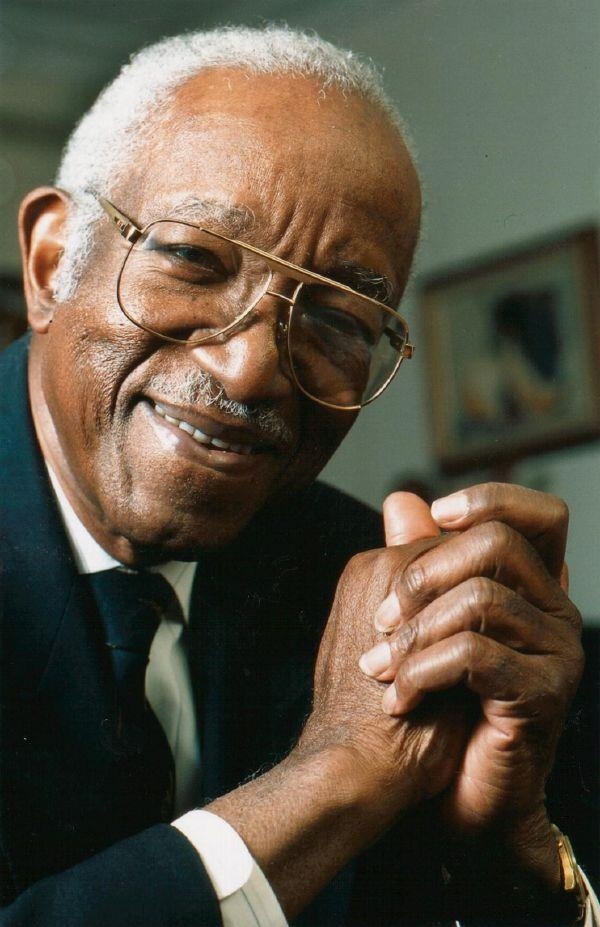
by Dale Ricardo Shields
“We must go beyond textbooks, go out into the bypaths and untrodden depths of the wilderness and travel and explore and tell the world the glories of our journey;”
― John Hope Franklin
John Hope Franklin (January 2, 1915 – March 25, 2009) was an American historian of the United States and former president of Phi Beta Kappa, the Organization of American Historians, the American Historical Association, and the Southern Historical Association.
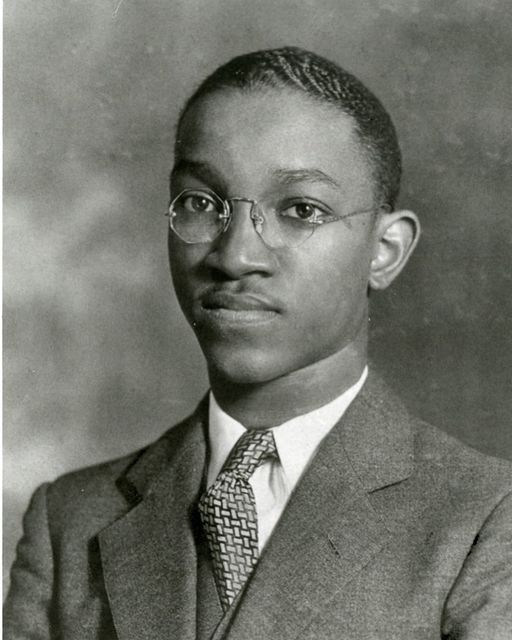
Franklin is best known for his work From Slavery to Freedom, first published in 1947, and continually updated. More than three million copies have been sold. In 1995, he was awarded the Presidential Medal of Freedom, the nation’s highest civilian honor.”
- Early Life: Born in Rentiesville, Oklahoma, on January 2, 1915, to a lawyer father and educator mother, he was deeply shaped by the color-conscious world of the early 20th century.
- Education: He earned his B.A. from Fisk University in 1935 and completed his M.A. and Ph.D. at Harvard University by 1941.
- Academic Leadership: Franklin held numerous prestigious teaching positions, becoming the first person of color to chair a major history department at Brooklyn College in 1956. He also chaired the history department at the University of Chicagoand later taught at Duke University.
- Civil Rights Activism: In the early 1950s, he served on the NAACP Legal Defense Fund team that developed the historical research for the landmark Brown v. Board of Education case. He also marched with Dr. Martin Luther King Jr. in Selma.
- Major Honors: He received the Presidential Medal of Freedom in 1995 from President Bill Clinton and served as president of the American Historical Associationand the Organization of American Historians.
- Legacy at Duke: His influence remains central to Duke University through institutions such as the John Hope Franklin Center for Interdisciplinary and International Studiesand the Franklin Humanities Institute.
- 1915: Born January 2 in Rentiesville, Oklahoma.
- 1935–1941: Graduated from Fisk University (1935); earned M.A. (1936) and Ph.D. (1941) from Harvard University.
- 1947: Published the first edition of
, now considered the definitive text on African American history.
- 1953: Served as a researcher for the NAACP Legal Defense Fund, contributing historical context for the landmark Brown v. Board of Education case.
- 1956: Became the first African American to chair a major history department at a predominantly white institution, Brooklyn College.
- 1964–1965: Joined the faculty at the University of Chicago and marched with Dr. Martin Luther King Jr. in the Selma to Montgomery marches.
- 1976: Selected by the NEH to deliver the Jefferson Lecture, the highest federal honor for achievement in the humanities.
- 1979: Served as president of the American Historical Association (AHA), the premier professional organization for historians.
- 1983: Appointed the James B. Duke Professor of History at Duke University.
- 1995: Awarded the Presidential Medal of Freedom by President Bill Clinton.
- 1997: Appointed by President Clinton to chair the advisory board for the President’s Initiative on Race.
- 2006: Received the John W. Kluge Prize for lifetime achievement in the study of humanity.
- 2009: Passed away on March 25 in Durham, North Carolina, at age 94.
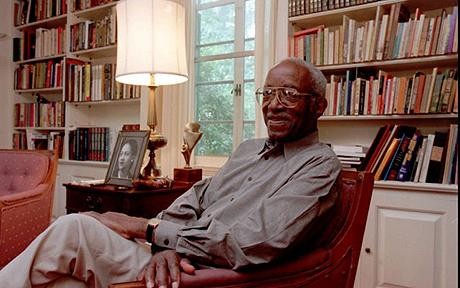
* John Hope Franklin died on March 25, 2009, at the age of 94, Franklin was the doyen of African American history. However, as Franklin claimed, “the history of Black people in America is American history.” And that it”not separated so that it isn’t accorded the respect that it deserves from other scholars.”
Franklin lived through America’s most defining twentieth-century transformation, the dismantling of legally protected racial segregation. A renowned scholar, he explored that transformation in its myriad aspects, notably in his 3.5 million-copy bestseller, From Slavery to Freedom. And he was an active participant. Born in 1915, he, like every other African American, could not but participate: he was evicted from whites-only train cars, confined to segregated schools, threatened-once with lynching-and consistently met with racism’s denigration of his humanity. And yet he managed to receive a Ph.D. from Harvard, become the first Black historian to assume a full professorship at a white institution, Brooklyn College, be appointed the chair of the University of Chicago’s history department, and, later, John B. Duke Professor at Duke University. He has reshaped the way African American history is understood and taught and become one of the world’s most celebrated historians, garnering over 130 honorary degrees. But Franklin’s participation was much more fundamental than that.
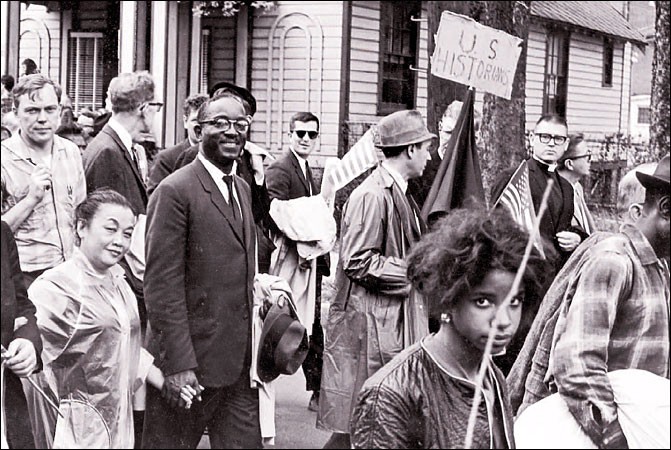
From his effort in 1934 to hand President Franklin Roosevelt a petition calling for action in response to the Cordie Cheek lynching, to his 1997 appointment by President Clinton to head the President’s Initiative on Race, and continuing to the present, Franklin has influenced with determination and dignity the nation’s racial conscience. Whether aiding Thurgood Marshall’s preparation for arguing Brown v. Board of Education in 1954, marching to Montgomery, Alabama, in 1965, or testifying against Robert Bork’s nomination to the Supreme Court in 1987, Franklin has pushed the national conversation on race towards humanity and equality, a life-long effort that earned him the Presidential Medal of Freedom, the nation’s highest civilian honor, in 1995.