OWEN DODSON
Owen Dodson (1914-1983) himself was a renowned African-American poet, playwright, teacher, and director who chaired the drama department at Howard University for many years and influenced Black theatre.
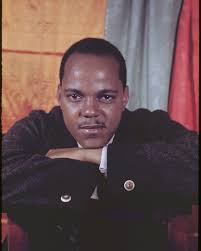
James Van Der Zee [Photography]
Glenda Dickerson considered herself a “disciple” of Owen Dodson, the legendary poet, novelist, and chair of the Howard University drama department.
The relationship between the two and the Owen Dodson Lyric Theatre (sometimes associated with the Atlanta University Center Lyric Theatre) is defined by their shared commitment to a ritualistic, “total theatre” approach to the African American experience:
- Mentorship and Influence: Dickerson was a student of Dodson at Howard University. She adopted his signature style of using “poetic drama, choreography, music, and iconic sets” to create works that functioned as a communal catharsis for Black audiences.
- The Owen Dodson Lyric Theatre: This namesake entity reflects Dodson’s legacy in integrating high-art forms like opera and poetic drama into the Black theatrical canon. For instance, the Atlanta University Center (AUC) Lyric Theatre premiered a production of Street Scene in 1970, a work that featured a libretto by Langston Hughes and exemplified the “total theatre” philosophy both Dodson and Dickerson championed.
- Thematic Parallels: In her professional career, Dickerson continued to explore the Ancient Greek and Egyptian myths (such as Isis and Osiris) that had “magnetized” Dodson during his tenure as a director and educator.
The Owen Dodson Lyric Theatre refers to a performing company and a concept of “whole theater” that used all the arts to make positive statements, rather than a single physical theatre location you can visit.
Legacy: Dickerson carried these principles through her teaching at institutions like Rutgers, Spelman, and the University of Michigan, where she developed her “Nu Shu” (feminist/womanist) theatrical style, which was deeply rooted in the formalist and poetic foundations laid by Dodson.
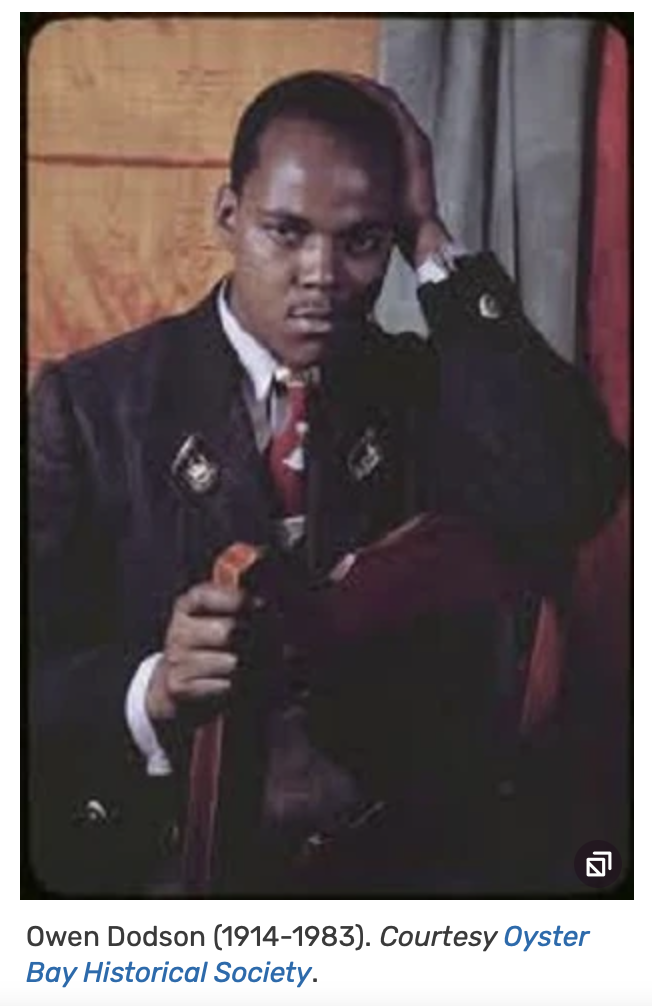
James Van Der Zee [Photography]
- Early Life & Education: Born in Brooklyn, New York, Dodson earned his B.A. from Bates College (1936) and an M.F.A. in playwriting from the Yale School of Drama (1939).
- Academic Career: He served as the chair of the Drama Department at Howard University from 1947 to 1969, where he mentored notable students such as Amiri Baraka and Ossie Davis.
- Military Service: He enlisted in the U.S. Navy during World War II (1942–1943), where he wrote plays and poems addressing the Black naval experience.
- Poetry: His first collection, Powerful Long Ladder (1946), was widely praised. He also collaborated on The Harlem Book of the Dead (1978) with photographer James Van Der Zee.
- Plays: Notable dramas include Divine Comedy (1938) and Bayou Legend (1948). In 1944, his pageant New World A-Coming was performed at Madison Square Garden.
- Novels: He wrote the semi-autobiographical novels Boy at the Window (1951) and its sequel Come Home Early, Child (1977).
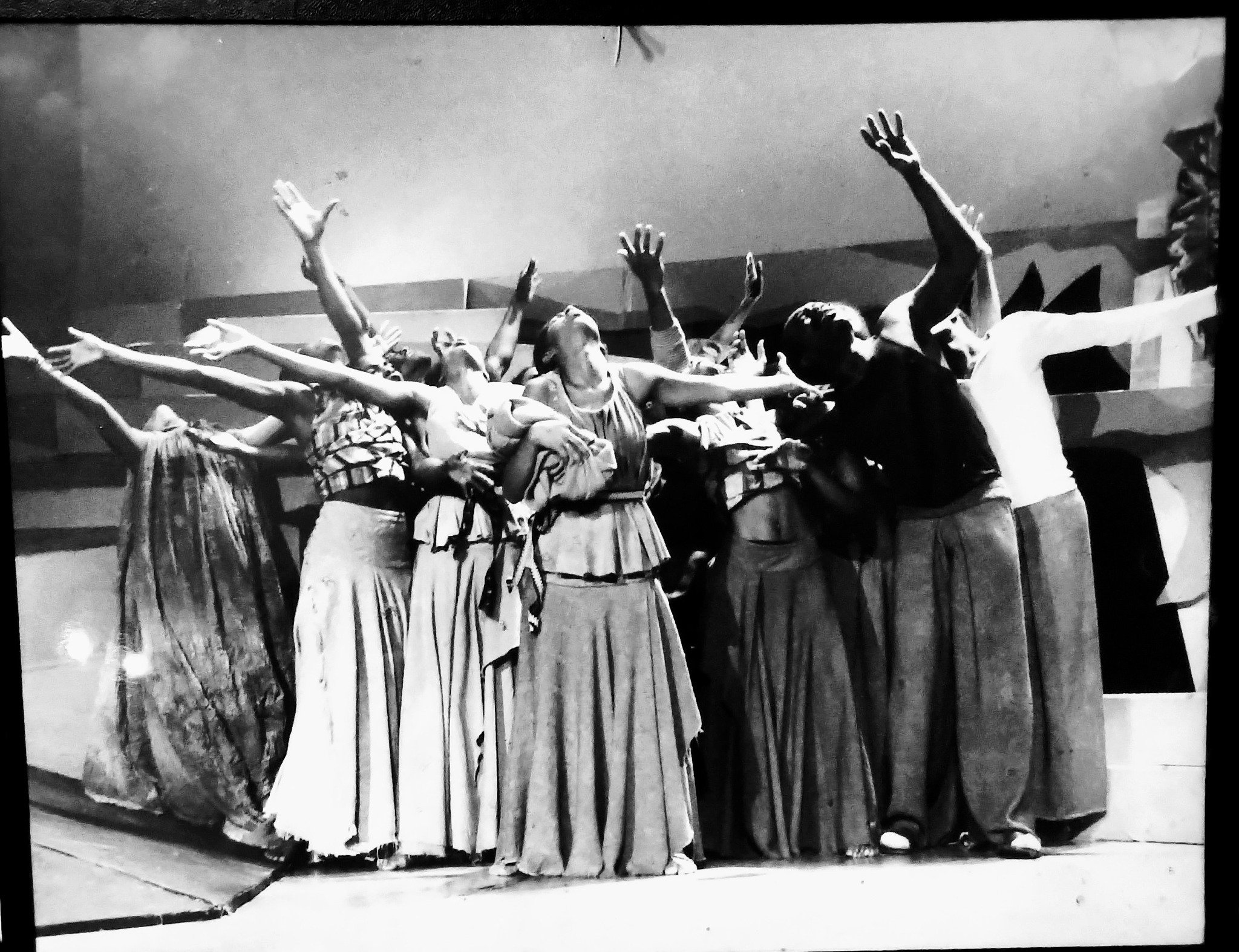
Glenda Dickerson-directed adaptation entitled “Owen”s Song,” a brilliantly staged tribute to the beloved masterful writer, teacher, and Howard University Drama Professor Owen Dodson. A show-stopping ritual dance number featuring the entire DCBRC Dance Company.
“ The Trojan Women” Howard University’s Drama Department (1971)
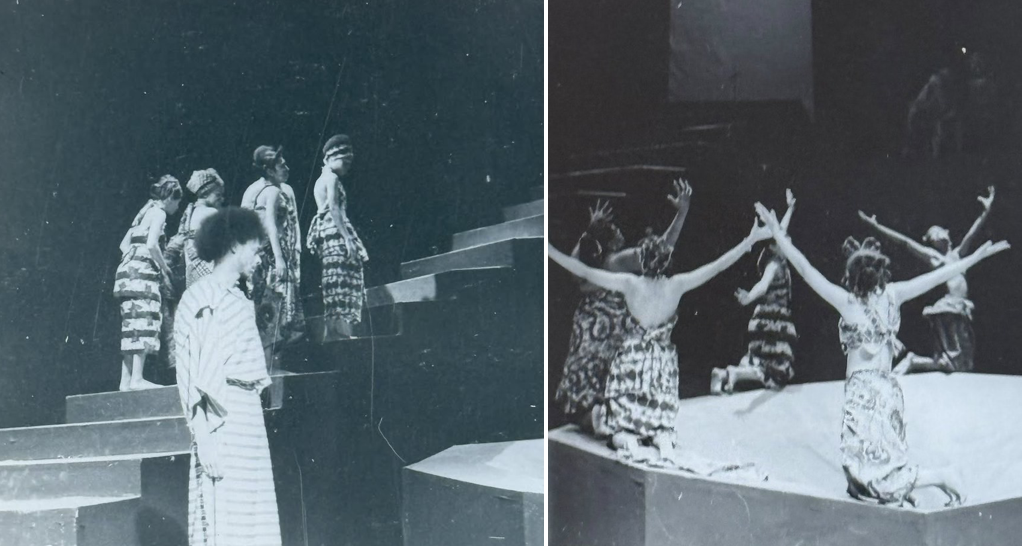
Magic and Lions (1978)
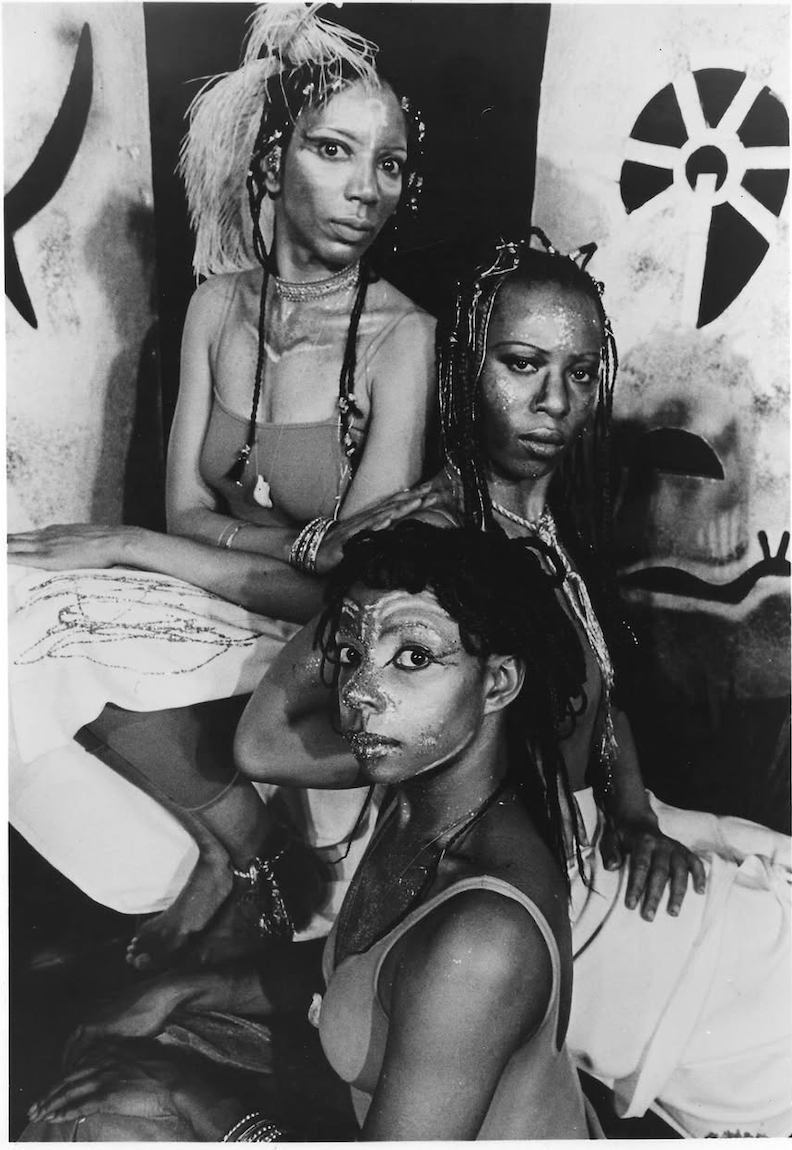
Freda Scott Giles, Al-Yasha Anderson Small, and Carol Pennyfeather.
FREDA SCOTT GILES
Freda Scott Giles’ essay, “Glenda Dickerson’s Nu Shu: combining feminist discourse/pedagogy/theatre”,
Contemporary African American Women Playwrights, (Routledge).
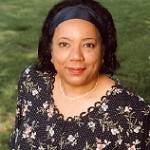
Dr. Freda Scott Giles is an associate professor emerita at the University of Georgia (UGA), where she specialized in African American theatre, history, and directing. As of 2026, she remains a prominent figure in the academic and artistic community, recently directing Linnentown: The Musical, which premiered in April 2024.
Academic Career and Research
Dr. Giles retired in 2014 from UGA’s Department of Theatre and Film Studies and the Institute for African American Studies.
Specialization: Her research focuses on the Harlem Renaissance, specifically the first non-musical African American plays produced on Broadway.
Publications: She is a founding editor of Continuum (now the BTN Journal), an open-access journal for African/Diaspora theatre.
Education: She earned her Ph.D. from the City University of New York Graduate School, an M.A. from Teachers College, Columbia University, and a B.A. from the University at Albany.
Artistic and Community Work
Beyond academia, she is an accomplished actor and director.
Directing: Notable recent projects include Linnentown: The Musical (2024) and the virtual production Breathe (2020).
Film Credits: Her IMDb credits include roles in Three Can Play That Game (2007) and Boycott (2001).
Leadership: She has served on the boards of the Georgia Museum of Art and the Morton Theatre, and is a past president of the Athens Branch of ASALH.
Honors and Awards
Smitty Award (2021): Recognized for her contributions to the Georgia Museum of Art.
Founders Day Lecture (2019): Selected to give this prestigious annual lecture at UGA.
Giles Award: UGA’s Institute for African American Studies honors students annually with an award named in her honor.
DR. FREDA SCOTT GILES on Glenda Dickerson
*1966 BFA Howard University
MA Speech and Theatre Arts, Adelphi University
Director
1971 Wine in the Wilderness (Alice Childress)televised, Emmy Award nomination
1972: “For My People” WTOP TV, Washington, D.C. (Peabody Award)
1973-1976 Head of Drama Dept., Duke Ellington High School for Performing Arts, Washington, D.C.
Other academic appointments: Fordham University; Mason Gross School of the Arts, Rutgers University; Head, Dept. of Drama and Dance, Spelman College, Atlanta, GA; Center of World Performance (head), University of Michigan, Ann Arbor.
Creator/Director
1970 The Unfinished Song
1972 Jesus Christ Lawd Today
1977 Magic and Lions (poetry by Ernestine Jackson)
1978 Owen’s Song
Director
1980 Reggae (Galt MacDermot ) Broadway
1981 NO (poetry and stories by Alexis DeVeaux)
Creator/Director
1984 Tar Baby, a paradigm for our time
1988 Eel Catching in Setauket
1992 Wellwater: Wishes and Words, a Living Portrait of Newark’s People
1992 Ana Bel’s Brush: A Live Oak Drama
1992 Glenda Dickerson is Spreading Lies: a Space Shuttle for Black Women
1992 co-author with Breena Clarke, Re/Membering Aunt Jemima: A Menstrual Show
1995 Zora and Lorraine and Their Signifyin Tongues
1996 Folksay: A Living Exhibit (aka Talkstory of Style ad Substance; a site –specific historical work performed during the Atlanta zolympics
2000-2006: Transforming Through Performing Project at the University of Michigan, Ann Arbor
2001 Kitchen Prayers: a Performance Dialog on 911 and Global Loss
2003 Identities on Trial: A Kitchen Protest Prayer
2004 Sapphire’s New Shoe: the Kitchen Table Summit
2006 DVD: What’s Cookin in the Kitchen? A Planetary Portrait, 9/11/01-9/11/04
2005 (co-author with Lynda Gravatt) Barbara Jordan: Texas Treasure (Alley Theatre, Houston, TX)
“Glenda Dickerson’s Nu Shoe: Combining feminist discourse/pedagogy/theatre in Contemporary African American Women Playwrghts, A Casebook, edited by Philip C. Kolin (New York: Routeledge, 2007, pp 132-149)): – Dr. Freda Scott Giles
“[Glenda] Dickerson is unwavering in her determination to cast the creative imaginations and histories of Black women as reflective of the universal experience of humanity, thus giving voice to those who are silenced by sexism and racism while deconstructing and demolishing objectification, as formed through stereotypes of African American women. She is persistent in insisting that the political and social realities of woman of color be foregrounded on a resonant plane of myth and imagery.” (134)
- Journal Details: The article appeared in the Winter 1999 issue (Volume 18.4) of the periodical.
- Subject Matter: In the piece, Giles explores the work and perspectives of playwrights Pearl Cleage and Glenda Dickerson through the lens of womanist drama and experience.
- Significance: Giles asserts that the work of these two women exemplifies “womanist drama,” utilizing language that speaks directly from and about the African American woman’s experience.