Achievements and Praises
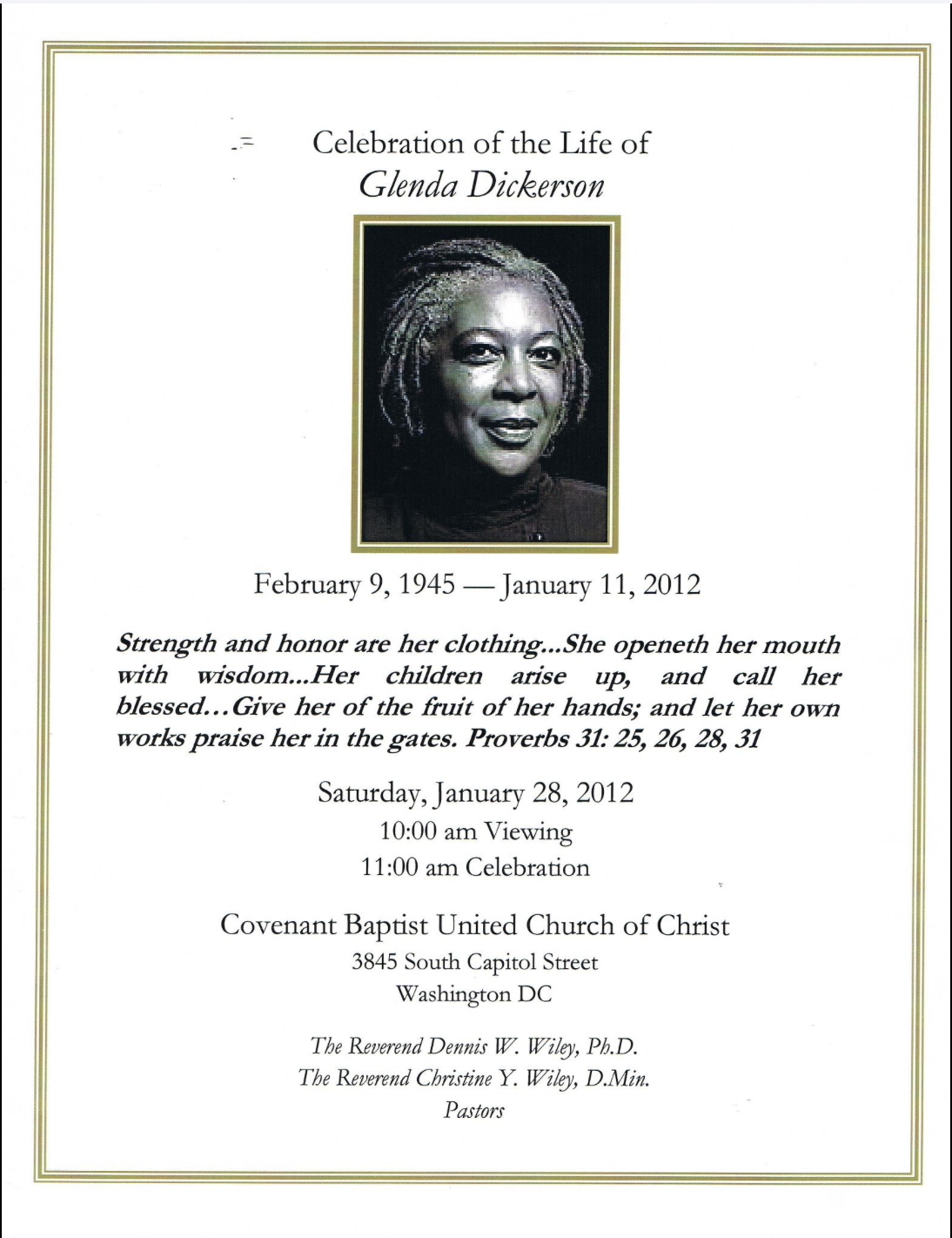
In 2011, Dickerson received the inaugural Shirley Verrett Award from the University of Michigan, established to honor artists advancing diversity and excellence in opera and theater in tribute to the late soprano Shirley Verrett. The award specifically recognized her lifelong commitment to amplifying voices of women of color through directing, education, and adaptation, positioning her as a pivotal figure in breaking barriers for underrepresented artists. Scholars and theater practitioners have lauded Dickerson’s interventions in Black feminist theater, crediting her critical writings and productions with subverting stereotypes and centering womanist perspectives in mainstream discourse. Her role as an educator and organizer was similarly praised for mentoring generations of Black theater artists, fostering institutional support for African American dramatic works. Upon her death in 2012, peers and obituaries underscored her status as a “catalyst” in African American theater, noting the profound impact of her boundary-pushing adaptations and advocacy.
Criticisms and Limitations
Critics occasionally noted a lack of refinement in some of Dickerson’s early productions, such as her direction of a 1979 Negro Ensemble Company piece, which Mel Gussow described in The New York Times as “a short, perplexing exercise in wool-gathering.” Similarly, her 1986 staging of the biographical musical Madame Zora at the American Place Theatre drew commentary that both the script and Dickerson’s production “would benefit from additional work,” particularly in tightening the narrative and enhancing dramatic focus amid its folksy, episodic structure. A broader limitation in Dickerson’s career involved her strategic pivot after initial commercial theater successes toward academic and community-based works, which, while deepening her influence in educational and Black feminist circles, restricted her visibility and output in mainstream Broadway or large-scale professional venues. This focus on experimental, folklore-infused adaptations—often prioritizing womanist themes over conventional dramatic arcs—could render her pieces challenging for audiences seeking linear storytelling, though such critiques were infrequent and typically overshadowed by acclaim for her innovations. No major controversies or systemic flaws marred her oeuvre, with scholarly assessments emphasizing her pedagogical and artistic integrity despite these niche constraints.
Posthumous Impact and Recognition
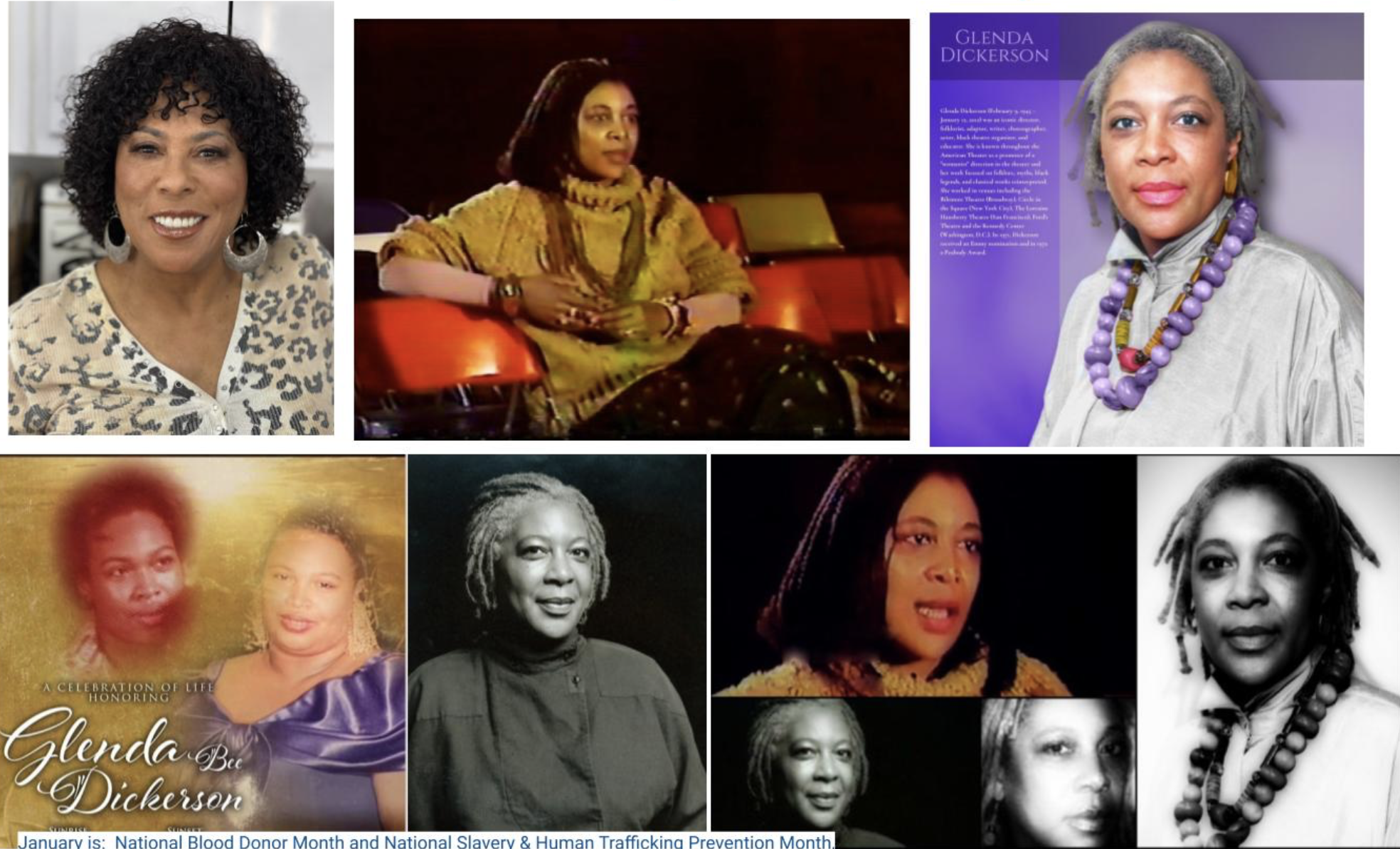
Following her death on January 12, 2012, Glenda Dickerson received immediate recognition from the African-American theater community through a memorial tribute held on April 30, 2012, at the National Black Theater in Harlem, New York. The event, running from 7 p.m. to 10 p.m., featured performances and readings by former students from Howard University, Spelman College, and the University of Michigan, alongside tributes from actress Lynn Whitfield, members of Sweet Honey in the Rock (Carol Maillard and Louise Robinson), Dr. Eleanor Traylor, and producer Woodie King Jr., who had enabled her Broadway directing debut with Reggae in 1980. Singer Mutiyat Ade-Salu performed Nina Simone’s “Four Women,” crediting Dickerson’s rigorous mentorship for shaping her artistic discipline. The tribute underscored Dickerson’s enduring impact as the second African-American woman to direct on Broadway and her role in innovating black theater by integrating folklore, womanist themes, and ensemble-driven techniques that challenged conventional perceptions of African-American performance.
Participants emphasized her legacy in elevating women of color in the arts, with former collaborators and students highlighting how her adaptations, such as those drawing from Zora Neale Hurston’s folklore, continued to influence contemporary directing practices. No major posthumous awards have been documented, though her educational contributions persist through alumni networks at institutions like the University of Michigan, where she taught until her death.
References
https://www.facebook.com/home.php#!/events/208855609230215/
- ^ Contemporary Black Playwrights and Their Plays by Bernard L. Peterson, Jr, Greenwood Press, 1988, ISBN 0-313-25190-8, pg 144-146
- ^ American Musical Theatre: A Chronicle, 2nd Ed. by Gerald Bordman, Oxford University Press, 1992, ISBN 0-19-507242-1, pg 702
- ^ “University of Michigan News release”. http://www.ns.umich.edu/index.html?Releases/2000/Aug00/r080300. Retrieved February 4, 2010.
- https://www.legacy.com/us/obituaries/washingtonpost/name/glenda-dickerson-obituary?id=5983530
- https://finearts.howard.edu/articles/feb-20th-2pm-it-bega
- https://dh.howard.edu/cgi/viewcontent.cgi?article=1563&context=newdirections
- https://finearts.howard.edu/articles/feb-20th-2pm-it-began-howard-glenda-dickerson-black-arts-movement-and-black-feminist
- https://ovrtur.com/production/2881651#trivia
- https://www.nytimes.com/1980/03/28/archives/theater-reggae-musical-at-biltmore.html
- https://jadt.commons.gc.cuny.edu/2021/04/28/a-return-to-1987-glenda-dickersons-black-feminist-intervention/
- https://www.nydailynews.com/2012/04/26/african-american-theater-world-set-to-honor-late-director-glenda-dickerson/
**
WIKIPEDIA References
- Salzman, J.; Smith, D.L.; West, C. (1996). Encyclopedia of African-American Culture and History: Civ-Gym. Macmillan Library Reference. Retrieved June 20, 2015.
- “Glenda Dickerson Obituary”. Stewart Funeral Home. Retrieved March 18, 2023.
- Dickerson, Glenda (2002). “Transforming Through Performing: Oral History, African-American Women’s Voices and the Power of Theater” (Interview). Interviewed by Fathom. University of Michigan. Retrieved March 18, 2023.
- Long, Khalid Yaya (2019). “Chapter 31: The Black Feminist Theatre of Glenda Dickerson”. In Perkins, Kathy A.; Richards, Sandra L.; Craft, Renée Alexander; DeFrantz, Thomas F. (eds.). The Routledge Companion to African American Theatre and Performance(PDF). Routledge. p. 180. ISBN978-1-138-72671-0. Retrieved March 18, 2023.
- Bernard L. Peterson, Jr, Contemporary Black Playwrights and Their Plays, Greenwood Press, 1988; ISBN0-313-25190-8, pp. 144-146.
- Gerald Bordman, American Musical Theatre: A Chronicle, 2nd Edition, Oxford University Press, 1992; ISBN0-19-507242-1, p. 702.
- “Czech Republic President Havel to receive honorary doctorate”. Retrieved March 18, 2023.
- “The University of Michigan Action Request”(PDF). University of Michigan Regents. Retrieved March 18, 2023.
- “CWPS Newsletter, Fall 2014”(PDF). University of Michigan Center for World Performance Studies. Retrieved March 18, 2023.
- Elam, Harry Justin; Alexander, Robert (1996). Colored Contradictions: An Anthology of Contemporary African-American Plays: Harry J. Elam, Robert Alexander: 9780452274976: Amazon.com: Books. Plume. ISBN0452274974.
- Perkins, Kathy A.; Uno, Roberta (1996). Contemporary Plays by Women of Color: An Anthology (9780415113786): Kathy A. Perkins, Roberta Uno: Books. Routledge. ISBN0415113784.
- “Shirley Verrett tribute and award presentation slated for Nov. 6”. University of Michigan. Retrieved January 28, 2012.
- “University of Michigan Memorial Site: Notable Deaths & Obituaries”. The Washington Post. January 27, 2012. Retrieved January 27, 2012.
- “Women of Color in the Academy Project (WOCAP) News”. Center for the Education of Women. Retrieved January 27, 2012.