Career
Robert Hooks is regarded, variously, as a gifted artist who has broken color barriers on stage, in film, and on television. A leading man when there were few African American matinee idols. He originated roles on the New York stage in such classics as Dutchman, A Taste of Honey, and Where’s Daddy? for which he won the Theatre World Award. He was the first African American male lead on a television drama, the original N.Y.P.D.
In 1968, Hooks was the host of the new public affairs television program, Like It Is.
Famously, Hooks, along with Douglas Turner Ward, founded The Negro Ensemble Company (NEC). He then brought Gerald Krone in as Production Manager. The NEC is credited with the launch of the careers of many major Black artists of all disciplines, while creating a body of performance literature over the last thirty years, providing the backbone of African-American theatrical classics. This important theater company has produced plays by Charles Fuller, Wole Soyinka, Peter Weiss, Derek Walcott, Samm Art Williams, Leslie Lee, Joseph A. Walker, and many others.
Additionally, Hooks is the sole founder of two significant Black theatre companies: the DC Black Repertory Company, and New York’s Group Theatre Workshop, which was created to mentor the talents of New York’s disadvantaged youth. He brought in Dr. Barbara Ann Teer to help teach classes and develop the workshop.
Robert Hooks work as a Cultural Architect helped create a professional canon for Black voices and launched the careers of numerous major stars.
AMERICAN THEATRE | Robert Hooks: Always About the Ensemble
Founded Institutions
Negro Ensemble Company (NEC): Established in 1967 in New York with Douglas Turner Ward and Gerald Krone, the Negro Ensemble Company became the premier Black theatre organization in the U.S., training over 4,000 artists including Denzel Washington and Samuel L. Jackson.
DC Black Repertory Company: Founded in 1971 in Hooks’ hometown of Washington, D.C., this company served as a cultural outlet and community empowering force following the 1968 riots, launching stars like Debbie Allen.
Group Theatre Workshop: A New York-based workshop Hooks started in his own living room to mentor neighborhood youth in acting, which eventually became the training arm for the NEC.
Significant Achievements
Performance Career: Hooks made his Broadway debut in A Raisin in the Sun and achieved critical acclaim for his role in the original production of Amiri Baraka’s Dutchman.
Pioneering Roles: He was the first Black male lead of a network drama series in N.Y.P.D..
Awards: Recipient of the NAACP Image Award for Lifetime Achievement and the 2025 Helen Hayes Tribute award for his contributions to the D.C. arts community.
Hooks’ vision was to ensure Black stories were told from a Black perspective, moving theater toward a “continuum” of professional work rather than isolated productions.
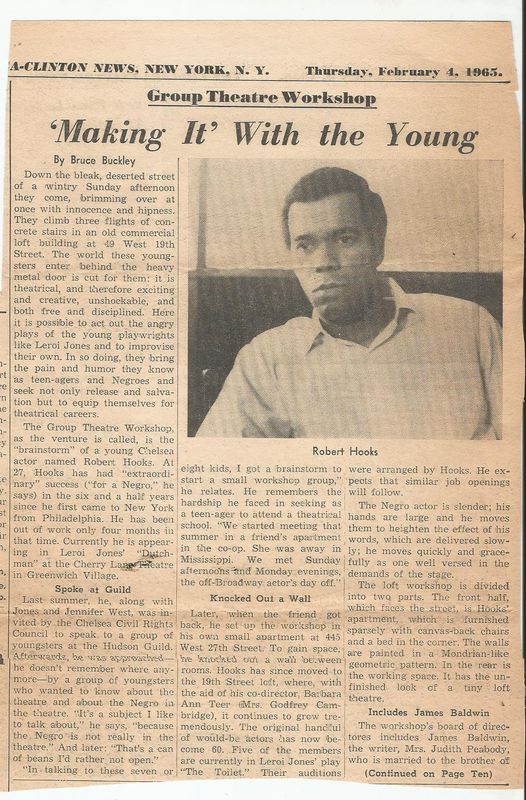
“This was our Group Theatre Workshop! culled from the underprivileged communities of New York’s five working-class boroughs. The first-ever teenager’s theatre arts group! Many students went on to big success in the entertainment industry! Every major American city should have such an outlet for its hungry young talent!“
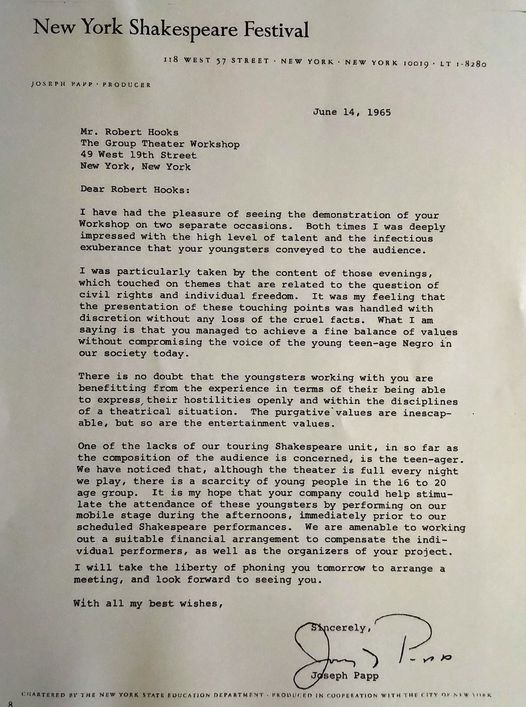
“The Group Theater Workshop (the first and ONLY Black teenage theatre company in America…ever!) Here is what a top professional New York theatre producer (and creator of the NY Shakespeare Festival) thought of this dynamic young theatre group.”
“During my career as a professional artist (Broadway, Off-Broadway, Television and Film,) my most satisfying accomplishments have been establishing and building three major Black theatre institutions.
The very first in 1964 was a company of three dozen young theatre hopefuls from the mean streets of New York City.
We called ourselves The Group Theatre Workshop, and I held classes in my Chelsea apartment.
This precious letter is from the visionary Joseph Papp praising the young group’s showcase performances he had recently witnessed, and then inviting the talented group to join his Shakespeare Festival’s summer mobile unit (for their first salary and an Actors Equity card) performing in the afternoons for younger audiences while touring the city with the feature evening Shakespeare production of “Henry V” where… incidentally… Joe Papp cast this Black actor as Henry V!“
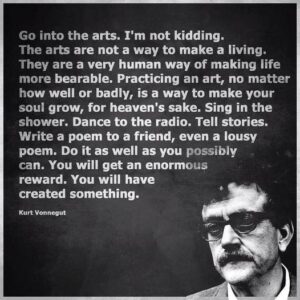
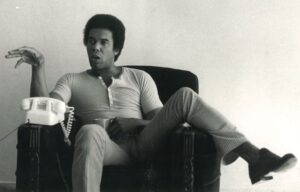
Saturday morning classes were held in the living room of my Chelsea apartment (circa 1964.) The Kurt Vonnegut quote, James Baldwin, Gwendolyn Brooks, Langston Hughes, poems, and many other Black literary materials ‘lit up’ the excitement of these workshop sessions at our new Group Theatre Workshop.
“All of it was informal (as you can see here! where I guess I should have been standing front and center ) but Oh! so vitally important to the young wannabee thespians getting the chance to show their talents. Everything was free to those New York youngsters who wanted to learn the art of acting and of the new and burgeoning Black theatre movement!“
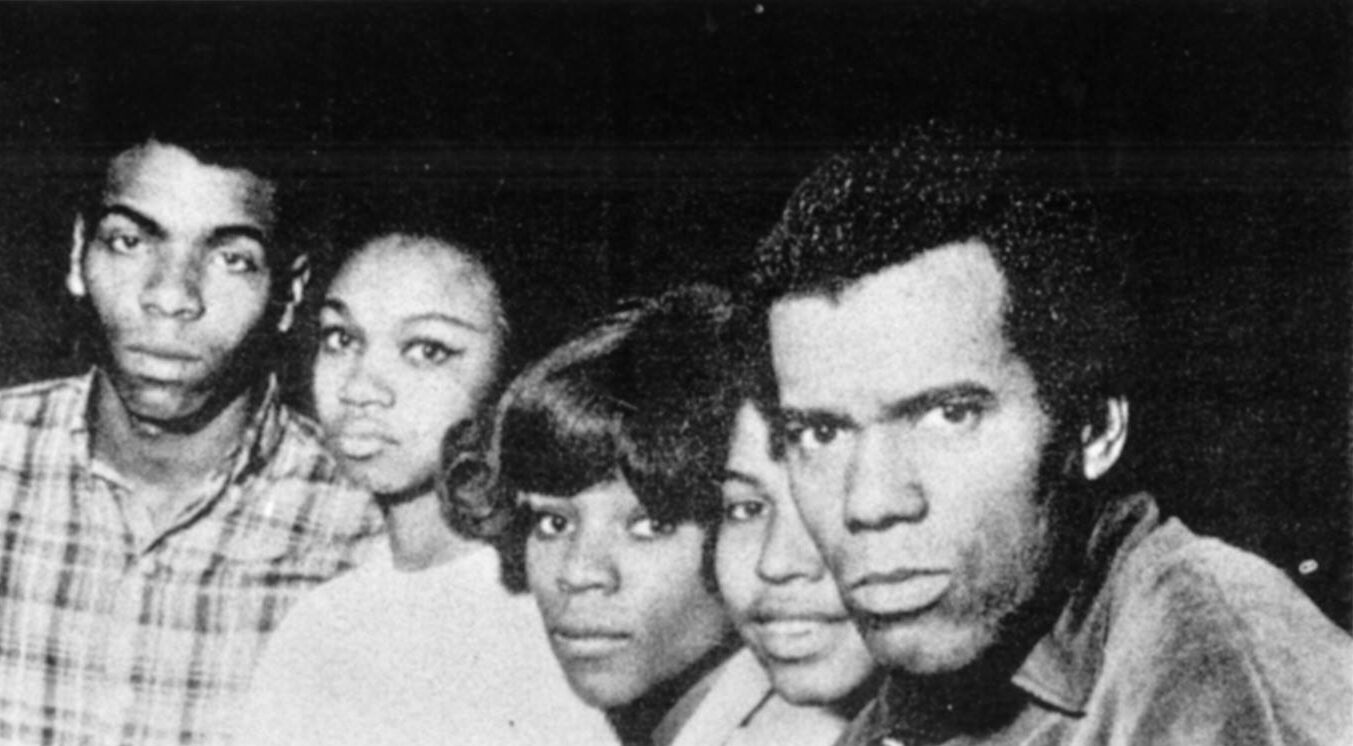
“Here are some young artists/students from my very first drama company… The Group Theatre Workshop (circa 1964…a tuition-free arts program and the precursor to the Negro Ensemble Company…and also the model for its stellar training arm). From left to right.. Bostic Van Felton, Hattie Winston, Maxine Griffith, Pamela Jones, and me. These four young artists, together with thirty other teenagers from the mean streets of New York, changed their own lives even as they sowed the seeds of change for others.”
Barbara Ann Teer
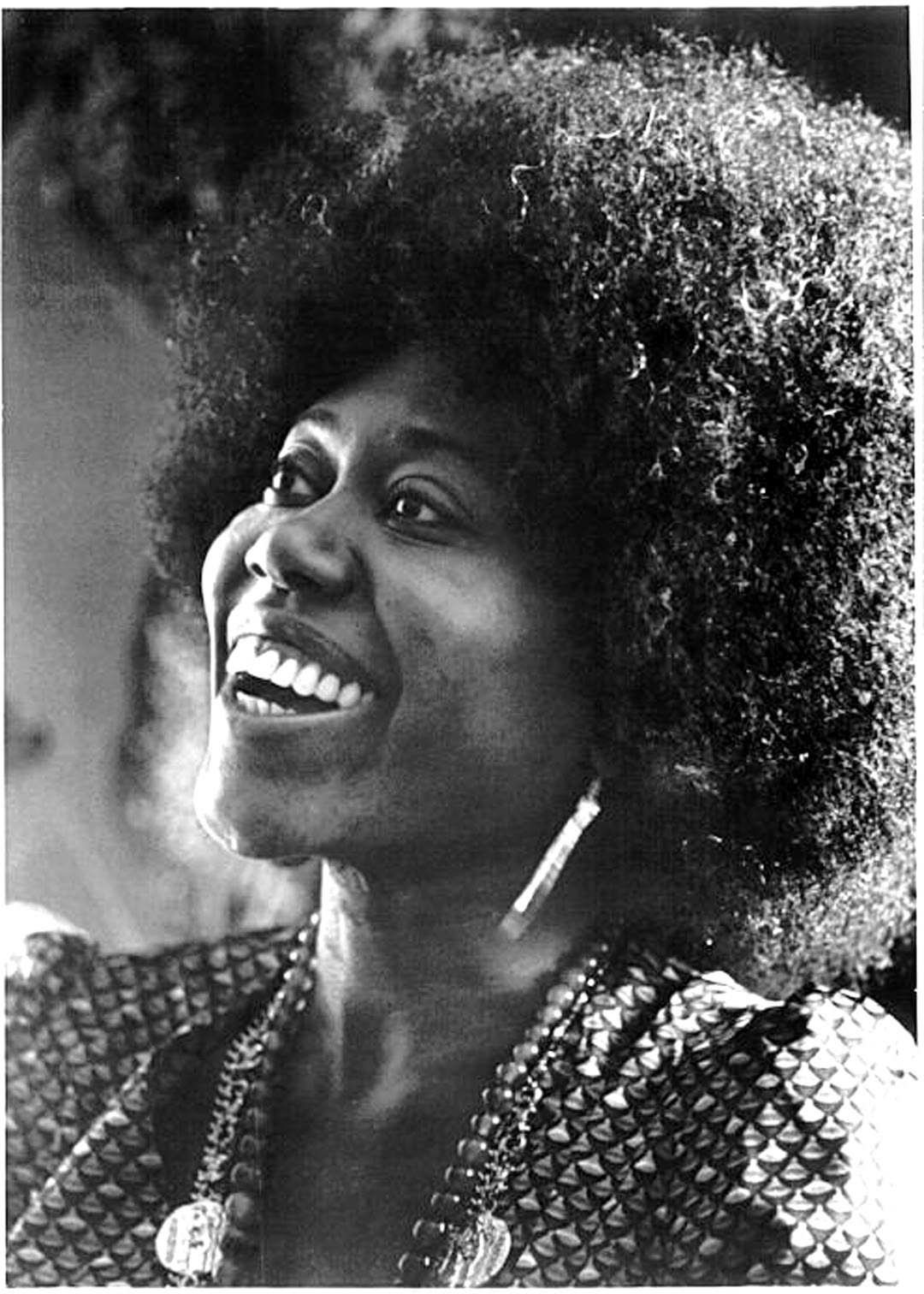
Founded 1968 by the trailblazing Dr. Barbara Ann Teer (pictured), National Black Theatre is the longest continually run Black theater in New York City and the nation’s first revenue-generating Black art complex, which still stands as a cultural pillar today.
For over five decades, NBT has championed Black creativity and empowerment. In the past three seasons alone, we’ve received four New York Times Critics’ Picks, underscoring our place as one of the most critically celebrated cultural institutions in the country. Our productions have broken barriers in Black storytelling, including James Ijames’ Fat Ham, the Pulitzer Prize–winning and Tony-nominated play, and Purlie Victorious, which earned Kara Young her first historic 2024 Tony Award and reaffirmed NBT’s growing impact while shaping national consciousness through art and activism.
From Harlem to Broadway and beyond, they continue to uphold our founding principles of ownership, self-determination, and human transformation, leading the way for generations of Black artists to thrive.
Barbara Ann Teer and Robert Hooks
Pivotal figures in the Black Arts Movement, collaborating to create institutional spaces for Black performers during a time of limited representation in mainstream theater.
The Group Theatre Workshop (GTW)
In 1963, Hooks and Teer co-founded the Group Theatre Workshop in New York City.
-
Mission: The workshop aimed to train Black performers and provide jobs, serving as a response to the stereotypical roles often offered to actors of color.
-
Foundation of the NEC: This workshop provided the “nucleus” of actors that eventually led to the 1967 founding of the Negro Ensemble Company (NEC), which Hooks established alongside Douglas Turner Ward and Gerald S. Krone.
-
Key Productions: One of their most notable collaborations was the musical “We Real Cool,” based on Gwendolyn Brooks’ poem. It gained significant attention and was performed as a traveling show by the Public Theater’s Mobile Unit.
Barbara Ann Teer (1937–2008)
Teer was a dancer, actor, and visionary who grew disillusioned with the “stereotypical roles” available to Black actors.
-
National Black Theatre (NBT): In 1968, she founded the National Black Theatre in Harlem. It was the first revenue-generating Black theater arts complex in the United States and remains a cultural landmark.
-
Teer Technology of Soul: She developed a unique acting methodology rooted in West African traditions and “God-consciousness,” emphasizing the performer as a “liberator” rather than just an actor.
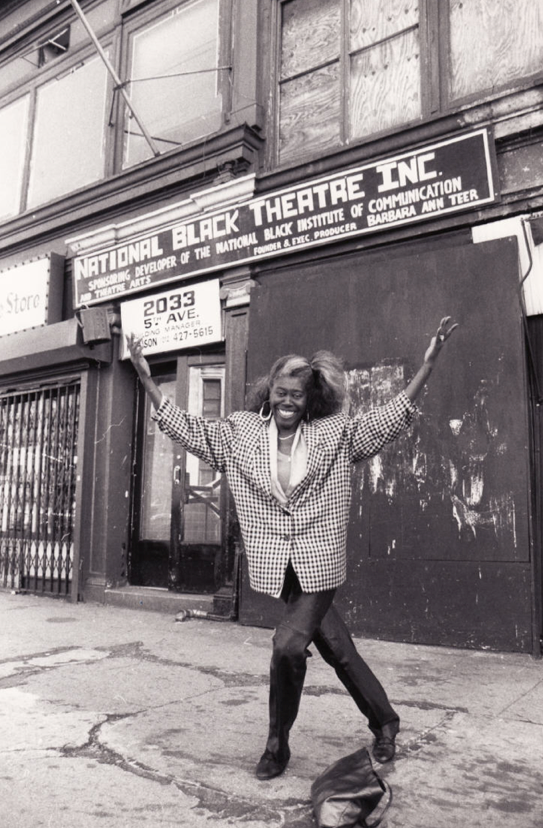
Barbara Ann Teer
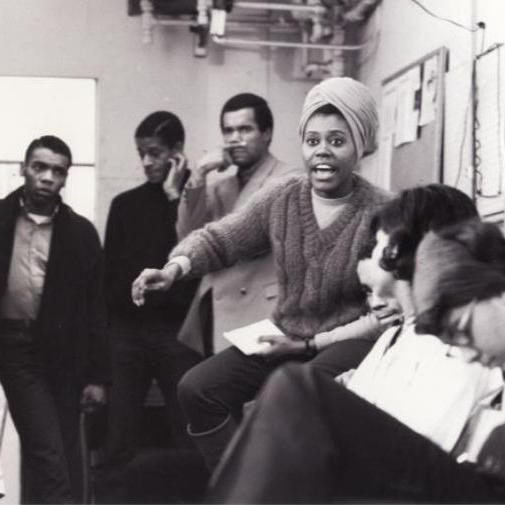
Bostic Van Felton, Antonio Fargas, me, and Barbara Ann Teer (instructing a class.) The Group Theatre Workshop grew large in number and even performed professionally for the New York Shakespeare Festival with a special production of Gwendolyn Brooks’ ‘”We Real Cool”, and later the GTW became the nucleus for the Negro Ensemble Company’s Training Program (circa 1967).
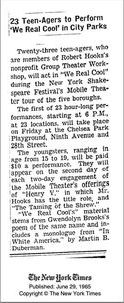
23 Teen-Agers to Perform ‘We Real Cool’ in City Parks
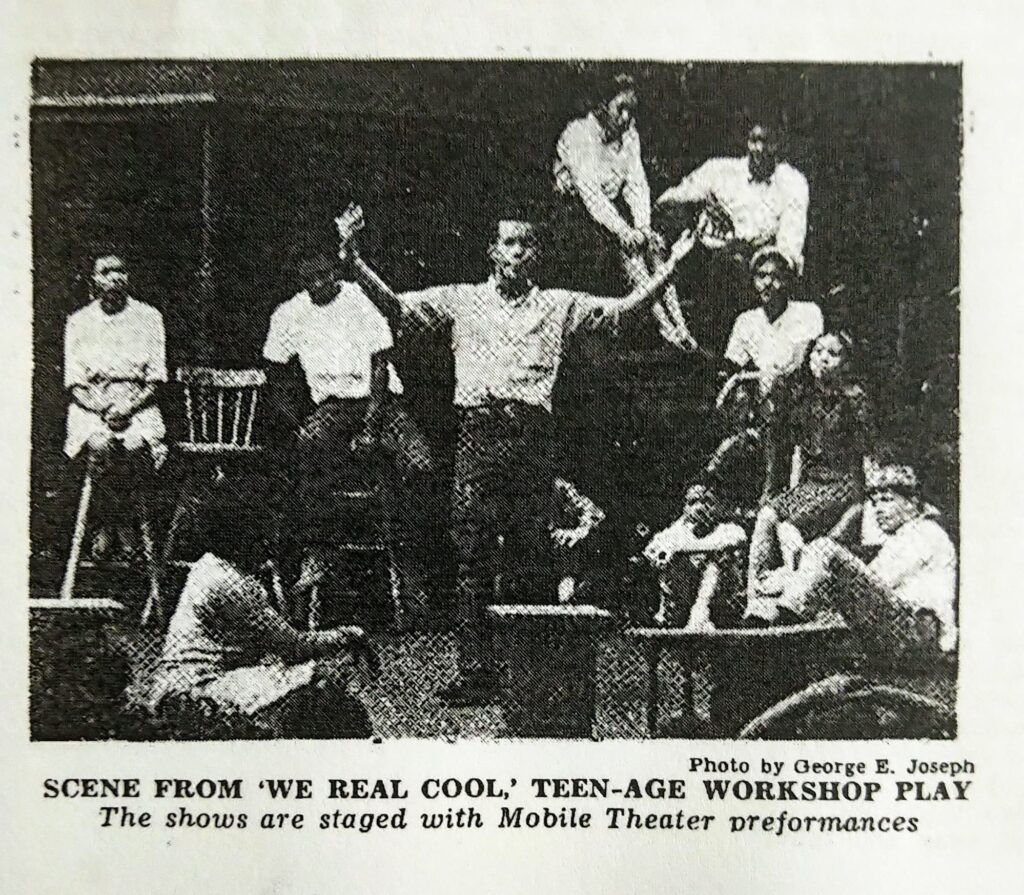
This is a rare image from a performance by The Group Theatre Workshop (GTW), my very first theatre company (circa 1964) featuring 25 teenage New York artists. In the summer of 1964 these young teenage artists, a part of the brand new Group Theatre Workshop (GTW), were getting a performance chance of a lifetime. The opportunity to perform in the New York professional theatre arena as youngsters! Which created a historic opportunity for these young theatre acolytes of color to move forward and find their possible careers in the arts. The show I produced and directed — “We Real Cool” by Gwendolyn Brooks –toured with Joe Papp’s New York Shakespeare Festival Public Theater, where I was starring as “Henry V” in the evenings, while GTW performed “…Cool” in the afternoons for the neighborhood youngsters. I also arranged for union salaries from Papp for all the young GTW actors. Some in the cast were: Hattie Winston, Antonio Fargas, Monti Ellison, Daphne Reid (then Daphne Maxwell), James Long, Hampton Clanton, Bostic Van Felton, Tina Nurse, Margo Chan, and other talented Workshop teens!

23 Teen-Agers to Perform ‘We Real Cool’ in City Parks
Twenty-three teenagers, who are members of Robert Hooks’s nonprofit Group Theater Workshop, will act in “We Real Cool” during the New York Shakespeare Festival’s Mobile Theater tour of the five boroughs.
June 29, 1965
From: Robert Hooks – December 17, 2014

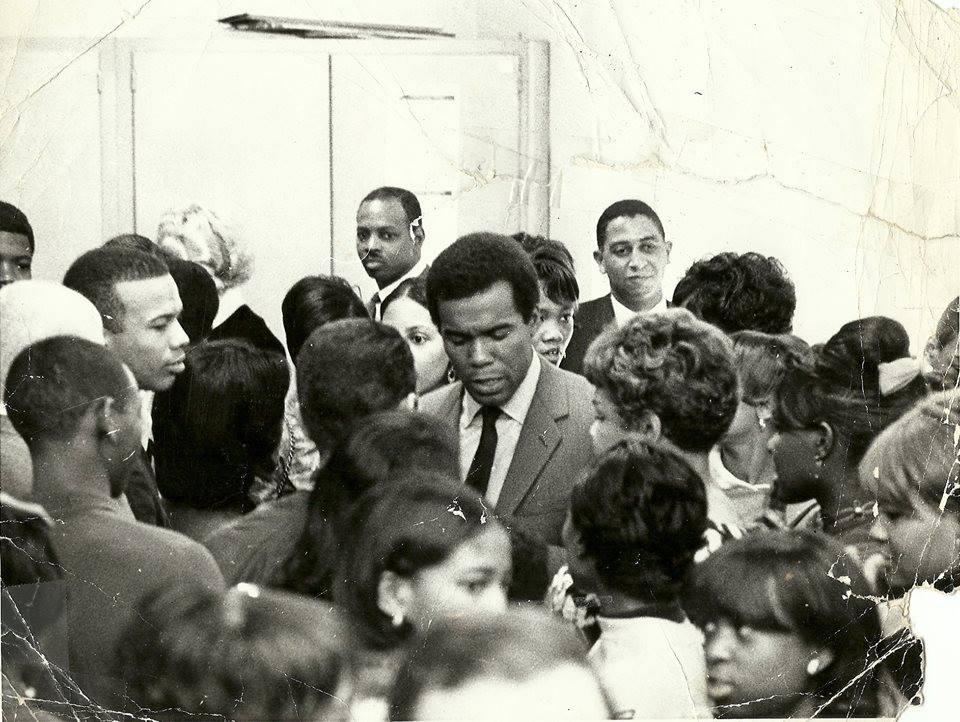
Photo courtesy of Howard University
Per Dale Shields who chose this photo to illustrate the important principles stated below: Robert Hooks…Sometimes… if you look at a photograph… it speaks volumes. Teach the children. Share your stories. Pass on our history. “Each one, teach one.” {Each One Teach One is an African-American Proverb. The original author is unknown.} This phrase originated in the United States during slavery, when Africans were denied education, including learning to read.
Many, if not most slaves were kept in a state of ignorance about anything beyond their immediate circumstances which were under the control of owners, the lawmakers, and the authorities. When a slave learned or was taught to read, it became his duty to teach someone else, spawning the phrase “Each one, teach one.” In the first half of the 20th century, the phrase was applied to the work of a Christian missionary, Dr. Frank Laubach, who utilized the concept to help address poverty and illiteracy in the Philippines. Many sources cite Dr. Laubach as creating the saying, but many others believe that he simply used it to advance the cause of ending illiteracy in the world.
In the 1996 novel Push by Sapphire as well as the 2009 movie Precious the expression is used as the name of an alternative school that the principal character is attending after being expelled from public school.”}
It was 1958. I was living in Philadelphia, studying acting and theatre, and seeing many plays coming through town on their way to Broadway. To my supreme delight, opening at the Walnut Street Theatre came the first all-Black play destined for Broadway. Lorraine Hansberry’s “A Raisin in the Sun.” Of course, I was there on opening night and was viscerally blown away at what was unleashed on that stage. A Black family story, with strong nuanced roles for Black actors, that I could deeply relate to as a Black man and as an aspiring actor. Backstage afterwards I met most of the Raisin cast members, and was so thrilled that finally I had something to encourage the fire in me to be a professional thespian. The two actors I immediately felt a connection with were Lonne Elder, III and Douglas Turner Ward, both highly intelligent and caring artists. They were just excellent in this extraordinary play, Lonne in a feature role, and Doug playing a smaller role while understudying Sidney Poitier. And it was such a pleasant surprise to discover they were both amazingly brilliant playwrights and highly political. After moving to New York and YES… Even joining that cast on Broadway, we became very close friends. Some called us The Three Musketeers! But what brilliant writers they both were! Masterful! Douglas had written his two one-act “comedies” “Happy Ending” and “Day of Absence.”
Lonne had created his profound Harlem family drama “Ceremonies in Dark Old Men.” By that time I had accomplished my own dreams as not only a successful actor, but a professional play producer and creator of opportunities for others. I am deeply proud to have been the original producer of several works authored by two of the most important men in my lifetime! LONNE, DOUGLAS, BOBBY! THE THREE MUSKETEERS!

“It was 1958. I was living in Philadelphia, studying acting and theatre, and seeing many plays coming through town on their way to Broadway. To my supreme delight, opening at the Walnut Street Theatre came the first all-Black play destined for Broadway. Lorraine Hansberry’s “A Raisin in the Sun.” Of course, I was there on opening night and was viscerally blown away at what was unleashed on that stage. A Black family story, with strong nuanced roles for Black actors, that I could deeply relate to as a Black man and as an aspiring actor. Backstage afterwards I met most of the Raisin cast members, and was so thrilled that finally I had something to encourage the fire in me to be a professional thespian. The two actors I immediately felt a connection with were Lonne Elder, III and Douglas Turner Ward, both highly intelligent and caring artists. They were just excellent in this extraordinary play, Lonne in a feature role, and Doug playing a smaller role while understudying Sidney Poitier. And it was such a pleasant surprise to discover they were both amazingly brilliant playwrights and highly political. After moving to New York and YES… Even joining that cast on Broadway, we became very close friends. Some called us The Three Musketeers! But what brilliant writers they both were! Masterful! Douglas had written his two one-act “comedies” “Happy Ending” and “Day of Absence.” Lonne had created his profound Harlem family drama “Ceremonies in Dark Old Men.” By that time I had accomplished my own dreams as not only a successful actor, but a professional play producer and creator of opportunities for others. I am deeply proud to have been the original producer of several works authored by two of the most important men in my lifetime! LONNE, DOUGLAS, BOBBY! THE THREE MUSKETEERS!”
*~*
HOW IT ALL STARTED…
Dear Dale… Hopefully, because you have a ready-made historical platform, you having this ‘accurate’ information might move us forward, toward correcting the persistent, misinformation of the founding of The Negro Ensemble Company.
Peace, Robert
Robert Hooks, The Negro Ensemble Company
And the Actual Sequence of His Causes
That Led to The Birth of the NEC
“
In the summer of 1956 during the Montgomery Bus Boycott, the political and social Black protest against racial segregation in Montgomery Alabama’s public bus system. Then, New York newspaper journalist/theatre playwright, Douglas Turner Ward, writing a special piece on the event and observing the daily actions of the courageous Black citizens simply STOP taking the bus! Not a single Black person took the bus to work, or wherever, ..EVERY DAY!
The White townspeople, use to the Black domestic (and other) assistance simply LOSS THEY MINDS!! Douglas Turner Ward (the playwright in him) had a brilliant thought for a play. Not just ‘a play’ but a statement on the issues of the cracker/racial mentality in the deep South facing Blacks. I was working with Douglas and read his, now classic double bill Comedies “Happy Ending” and “Day of Absence” I have never read plays so absolutely brilliant in all aspects of staged theatre presentation, in all my life! ‘You laugh til you cry’ at the satirical brilliance of this talented and ‘Oh so wise and intelligent playwright. A master of theatre and playwrighting.
All the White characters in Day of Absence” The theatre ‘TWIST”
Douglas employed for the comedy was…ALL the White characters in the play would be performed by Black actors “IN WHITE FACE” (kind of a reverse ‘minstrel show’) simply a genius concept..SATIRE HEAVEN!!!…Here are two scenes from the original production of Day of Absence, Two years BEFORE the creation of the NEC…(Top photo) Left to right Barbara Ann Teer, Adolph Caesar, Douglas Turner Ward, Arthur French and Lonne Elder III…Bottom photo) Robert Hooks and Barbara Ann Teer. Two years later we created the Negro Ensemble Company.
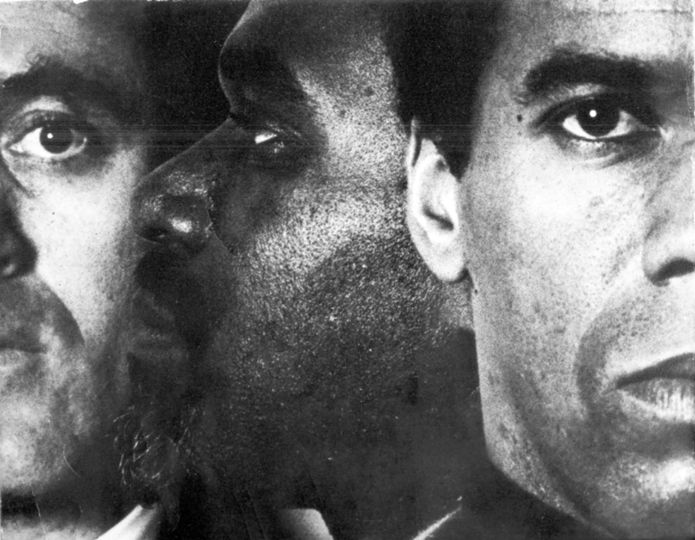
“The Negro Ensemble Company was fortunate in having phenomenal theatre photographer Bert Andrews on our staff. Bert insisted on composing this classic close-up of the three founders (NEC circa 1967). Left to right: Administrative Director Gerald S. Krone, Artistic Director Douglas Turner Ward, and Executive Director/Producer Robert Hooks. We wanted to create something more than just a theatre company that produced new plays, but rather a cultural institution comprised of a producing entity (presenting 4 to 5 mostly original plays per season), an acting company employing 15 top Black professional performing artists, and vibrant free training programs for actors, writers, directors, designers, and aspiring theatre administrators. With an initial three-year Ford Foundation grant of a million and a half dollars, the three of us were determined to build a new and completely autonomous theatre institution, one where we three were always in complete control of our destiny in the world of national and international theatre production and training. The immense scope and ongoing influence of the NEC can be grasped on its Wikipedia page (https://en.wikipedia.org/wiki/Negro_Ensemble_Company). Suffice it to say there is barely any TV show, film, or major theatre production from the 1960s into the present, that does not reflect talent (in front of or behind the lights) that did not pass through or be affected by the creation of the Negro Ensemble Company.”
“It was 1965. I had just produced my first professional plays Off-Broadway, Douglas Turner Ward’s hilarious satirical double bill “Happy Ending” and “Day of Absence.” Playing to standing room only every night, and the talk of New York theatre, the New York Times asked Doug (the now “chosen” Black playwright) to write an article about Black playwrights. Instead he wrote a scorching mandate directed to the controlling White theatre establishment. The Ford Foundation then contacted US… and thus was born the groundbreaking Negro Ensemble Company!“


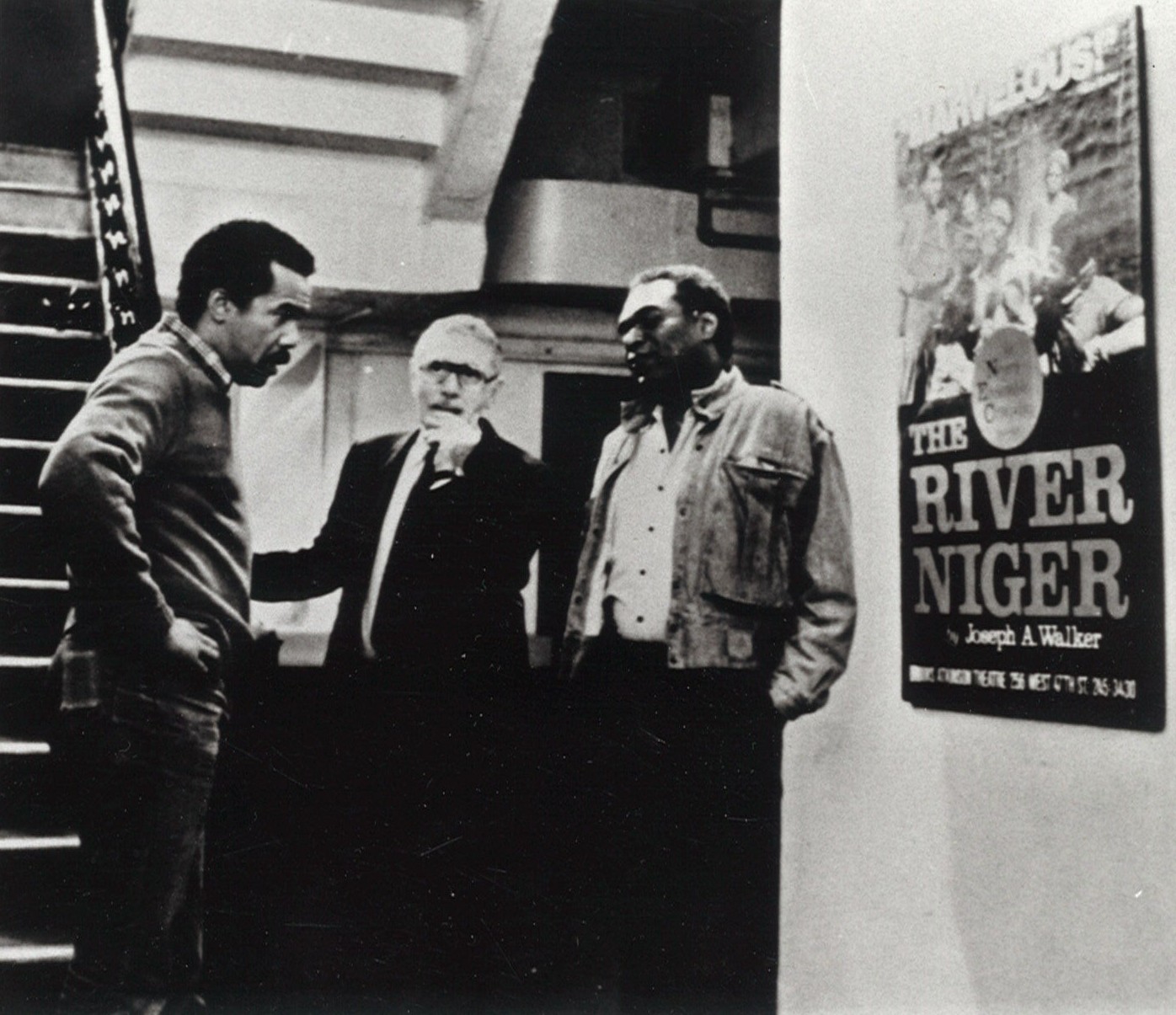
We would always end our production and strategy meetings spending parting time in the Lobby of our home campus The St. Marks Playhouse, the Theatre Center we all knew and loved so well. – NEC creators. (left to right) Robert Hooks (Executive Director/Producer) Gerald S.Krone (Administrative Director), and Douglas Turner Ward (Artistic Director).
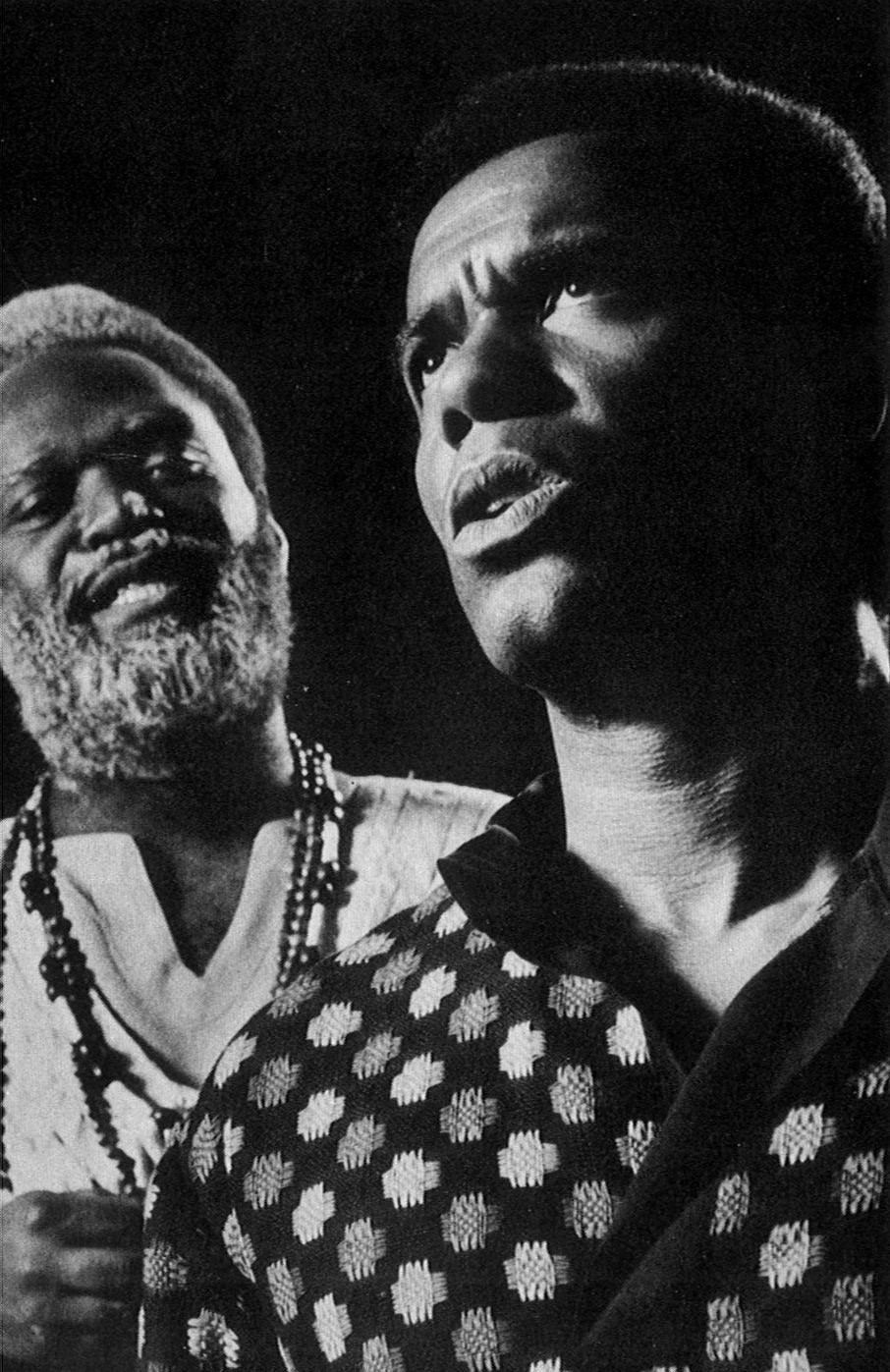
“Though I had decided NOT to perform in any of the plays at our new Negro Ensemble Company (NEC), after all, we did create the company to provide performance platforms and training opportunities for other Black artists. However, in our first season (circa 1967-68) I was encouraged to perform in the third play in our inaugural season, “Kongi’s Harvest” by Wole Soyinka. It was also the first and only time Douglas Turner Ward and I acted together on stage at our legendary theatre institution. – NEC founders Douglas Turner Ward, (left) and Robert Hooks (right), performing in Kongi’s Harvest”.…”(NEC photo by Bert Andrews)

“I was co-starring in Leroi Jones (later Amiri Baraka’s) brilliant play “Dutchman”, a smash hit Off-Broadway. The cast, director and playwright were invited to the 1964 World Theatre Festival happening in West Berlin Germany, my first international acting journey. Leroi, Jennifer West, and director Ed Parone were there to perform the play and participate in many panel discussions. However, In the evenings Jennifer, Leroi and I were allowed to cross through the infamous Berlin Wall (manned and gun guarded checkpoint) between Communist East Berlin and our host West Berlin.
Every night for a week I saw five different plays presented by (and still my belief) the greatest theatre ensemble company in the world, Bertolt Brecht’s Berliner Ensemble Company. I’ve never been so moved in a theatre, sitting and watching fifteen brilliant actors performing five different plays (same actors, playing different roles) night after night. It blew my mind! So three years later when Douglas, Gerald and I created the now world famous Negro Ensemble Company. I totally convinced my two partners our new company’s LOGO had to resemble the amazing Berliner Ensemble Company’s LOGO…AND HERE YOU HAVE IT!! And it makes me very proud!”
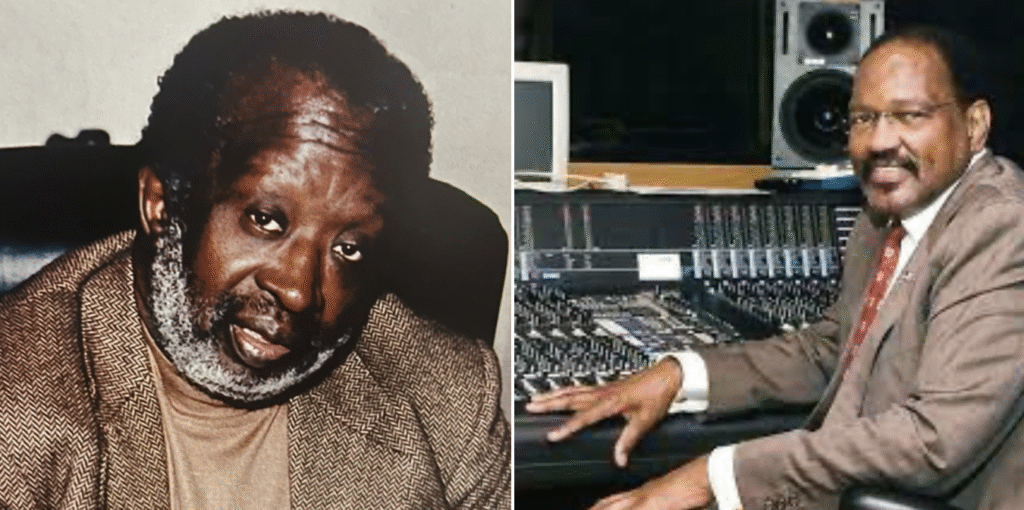
The late, legendary business mogul Clarence Avant. He and his early partner Al Bell hold an historic place in America’s professional Black theatre movement. In 1965 when I decided to produce Douglas Turner Ward’s brilliant comedies “Happy Ending” and “Day of Absence” (that led to the creation of The Negro Ensemble Company) I had to go out and raise the financing to mount them. I only had to make ONE stop to raise my complete budget. My dear friend Juanita Poitier sent me to Avant and Bell, who had successfully launched their Stax Record company. They agreed to invest in my plays, and put up the entire budget, and I became the first Black actor/producer on the New York stage, and Clarence Avant and Al Bell became the first Black investors to completely back a professional Black play in Off Broadway history. The two music entrepreneurs later (after I recouped their investment on Ending and Absence) backed another of my productions, “The Reckoning”, also written by Ward. If not for investments from the two business giants, the Black theatre movement would have taken much longer to grow successfully.
NEGRO ENSEMBLE COMPANY documentary 1 of 3
Negro Ensemble Company documentary 2 of 3
Negro Ensemble Company documentary 3 of 3
~*~
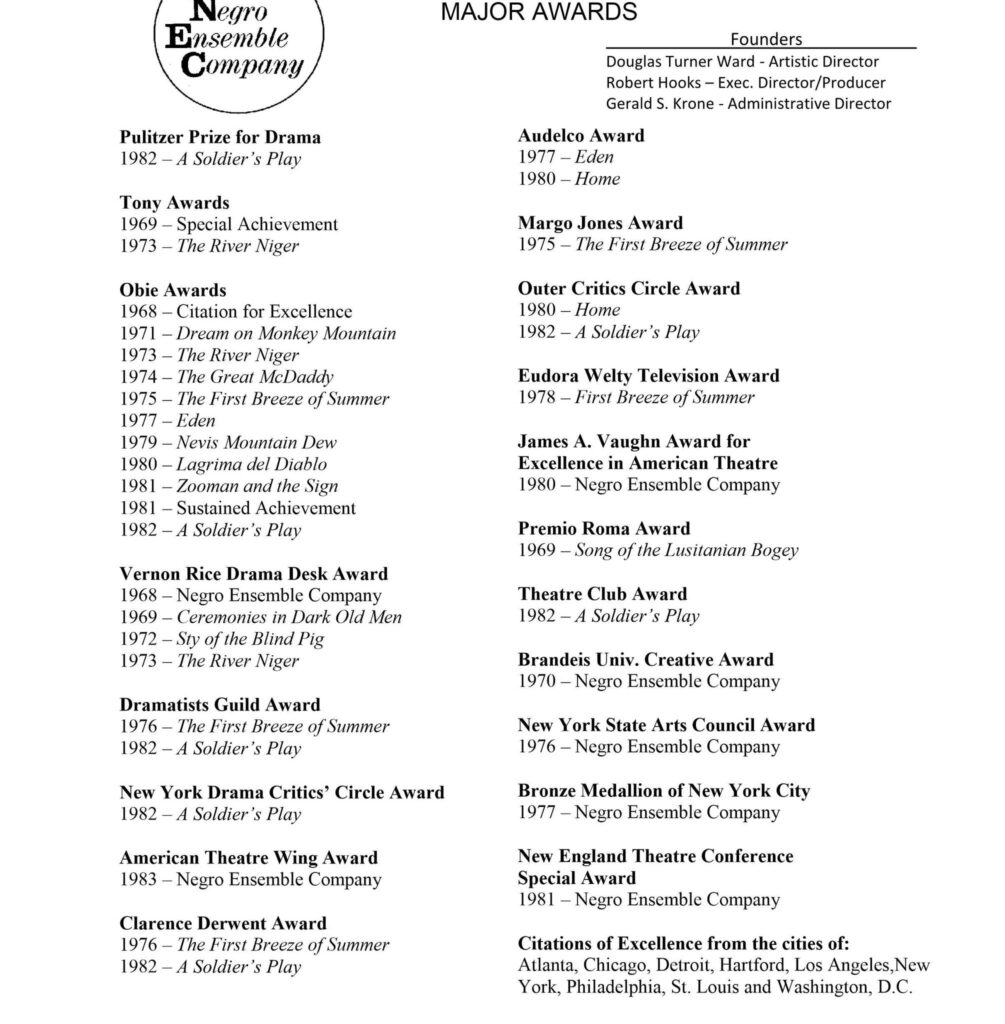
A friend asked what were some of the important theatre awards the world-famous Negro Ensemble Company (NEC) had garnered over the years. Well, here’s an early list I have on hand. However, there are several more prestigious theatre Awards not included here, that were bestowed on NEC into the 21st century. Trust me, no other Black American theatre company has such a list.
While “Happy Ending” & “Day of Absence” were not produced by the NEC until the 1969-70 season, MY INDEPENDENT 1965 PRODUCTION OF THEM led to the creation of the NEC in 1967.
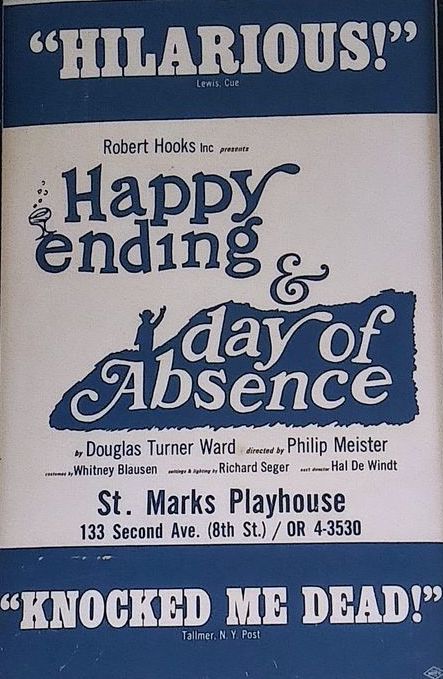
“A piece of important Black history… These two brilliant one-act plays were solely responsible for the creation of the world-famous Negro Ensemble Company!… And also influenced and fueled the beginning of the Black Theatre Movement in America!”
“This was the play that started everything for me as a New York stage producer (circa 1965). Two plays, actually. Douglas Turner Ward’s two one-act comedies “Happy Ending” and “Day of Absence.” The two hilarious political satires took New York theatre audiences and critics by storm. “Knocked Me Dead!” said NY Post theatre critic Jerry Tallmer. And every other major theatre critic had similar praise for Ward’s debut stage work. The comedies’ success became the nucleus for the creation of the now legendary Negro Ensemble Company in 1967.’
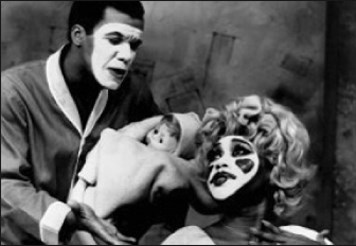
“Day of Absence“ by the late, great Douglas Turner Ward. “Absence” and its companion piece “Happy Ending” (circa 1965,) were the two plays that led to the creation of the famed Negro Ensemble Company TWO YEARS LATER. Here, in whiteface, are characters John and Mary, me, and the brilliant artist Barbara Ann Teer. Happy Ending and Day of Absence left audiences howling with laughter, but getting Ward’s message regarding White prejudice in America!
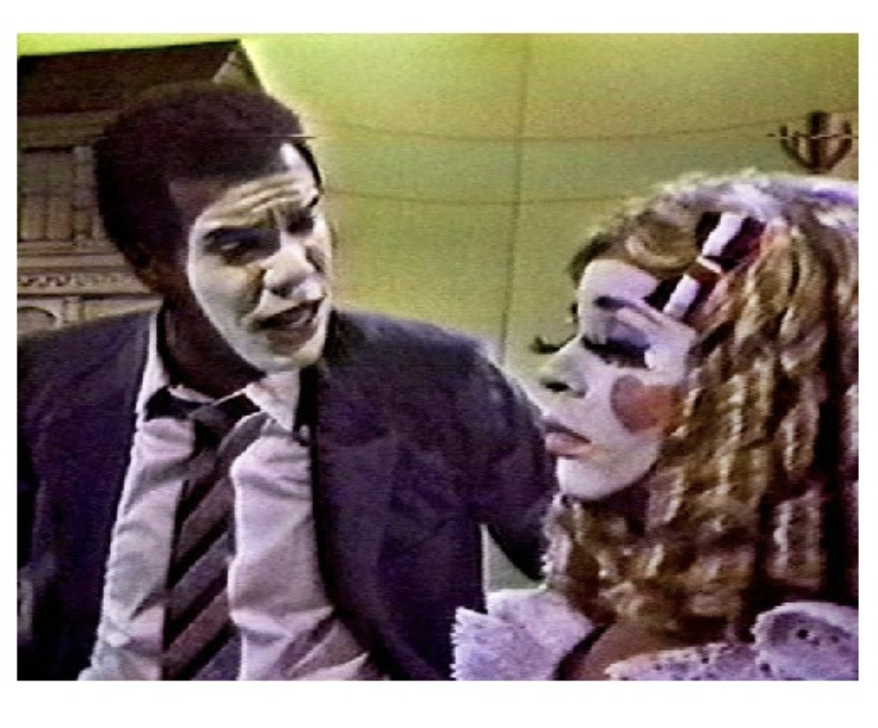
“Absence.” the 1969 NEC revival, are producer/actor Robert Hooks and the brilliant Judyann Elder in white face as “John and Mary.”

“Happy Ending” (from the 1965 ORIGINAL production-left to right) are Frances Foster, Robert Hooks and Esther Rolle
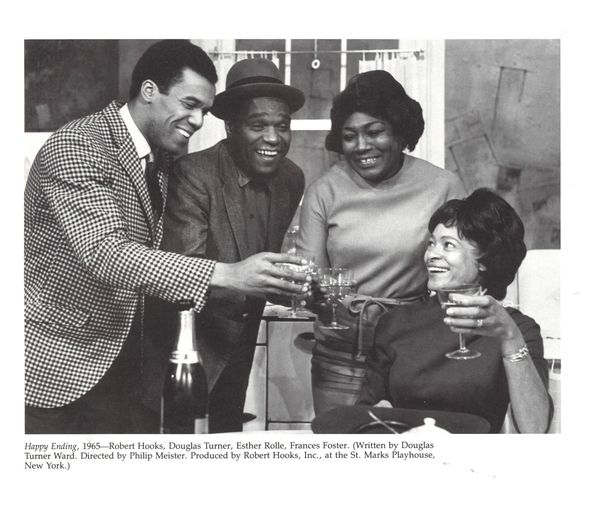
This is the play that started it all! ..The movement that is! “1965: This is from my production of “Happy Ending” (with its hilarious satirical companion play “Day of Absence”) by Douglas Turner Ward that was the true genesis for the creation – in 1967 – of the now legendary Black theatre institution The Negro Ensemble Company. The seed was planted three years before this when I created my very first theatre company – The Group Theatre Workshop (GTW, a company of young, aspiring New York actors, dancers, writers, and theatre designers) out of my Chelsea apartment where they did scene study, movement and other daily workshops. (I was soon evicted for tearing down a wall to create a stage for them!) All while I was performing in “Dutchman” at the time. In this scene from Happy Ending are Me, Douglas, Esther Rolle, and Frances Foster! An amazing beginning to a historic Black theatre movement in America!“
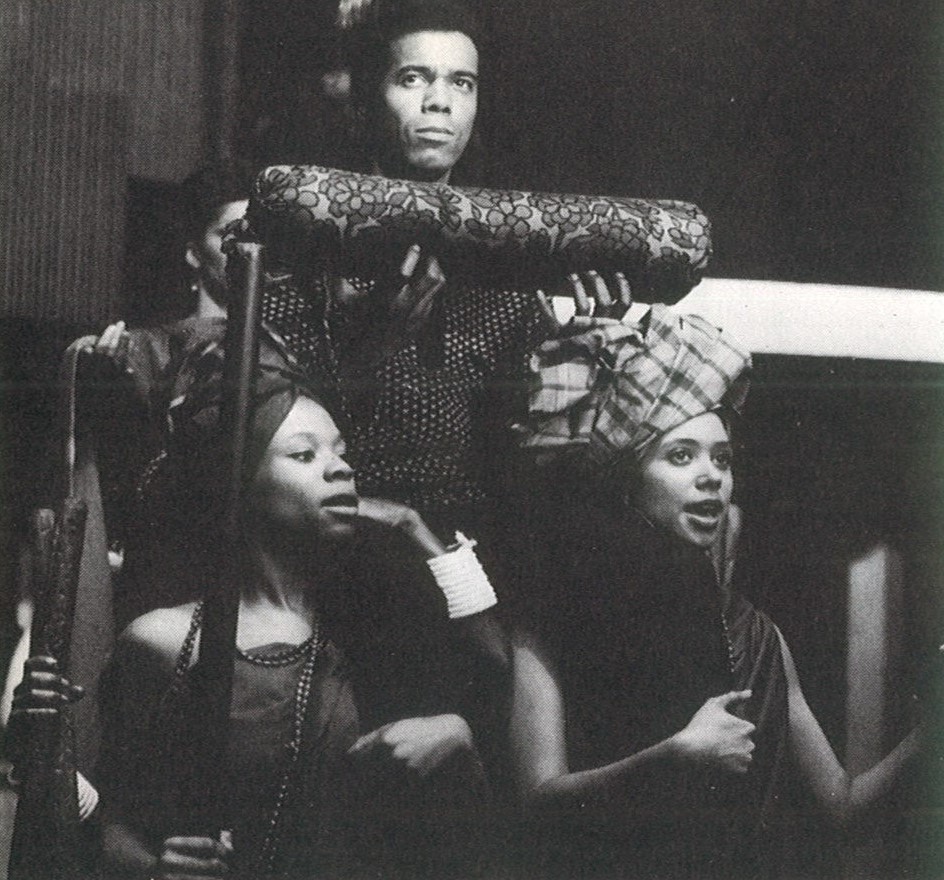
In the Negro Ensemble Company’s inaugural season (circa 1967-68,) we premiered Nigerian playwright Wole Soyinka’s brilliant play “Kongi’s Harvest”. A tremendous successful, critically acclaimed run, which was later produced as a feature film directed by Ossie Davis. The play, featuring the entire NEC acting Ensemble was Directed by Michael Schultz, with Dance Direction by Louis Johnson, Sets by Edward Burbridge, Costumes by Jeanne Button, Lighting by Jules Fisher, and Music by Pat Patrick.
[Seen in the Bert Andrews photos here are Robert Hooks, Maxine Griffith, and Denise Nicholas.]
“Sweet Love Bitter“

“Here are scenes from the rarely seen film “Sweet Love Bitter“, ( adapted from the John Williams novel “Night Sing” ) circa 1967. The story of Jazz great Charlie Parker and his relationships outside of his brilliant alto sax greatness in the jazz world. How this wonderful Herb Danska directed film escaped recognition on the recent Documentary on comedian Dick Gregory is a mystery to me. Gregory brilliantly portrayed the tortured Charlie Parker. I played the Miles Davis character and Bird’s best friend in the film. In addition to Dick Gregory and me, the film also included Don Murray, Diane Varsi, and Jerri Archer. Music by Mal Waldron and Chick Corea, A recent documentary on Dick Gregory completely leaves out any mention of this amazing dramatic film performance, yet it shows Gregory in a silly comedy role as a bathroom towel valet from a comedy film he did later in his career. But I was proud to share the screen with this incredible artist and political activist Dick Gregory!”

Sweet Love, Bitter (aka It Won’t Rub Off, Baby!) (1967) Jazz Noir
Robert Hooks Interviews Douglas Turner Ward for Lincoln Center Library -1987
THE SEQUENCE
In 1964 I founded The Group Theatre Workshop for young artists. I was running the classes in my apartment, so I enlisted Barbara Ann Teer to assist me. This group of sincere teens also included Hattie Winston, Antonio Fargas, and Daphne Maxwell Reed.
To assuage the curiosity of parents and neighbors regarding the activity in my apartment. In the summer of 1964, I decided to mount a one-night Monday showcase (at The Cherry Lane Theatre where I was then appearing in “Dutchman”). The evening included Gwendolyn Brooks’ “We Real Cool.” I wanted to end the evening with a play. I asked Douglas Turner if could I present his short one-act “Happy Ending” featuring my students (rounding out the evening ).
To my eternal surprise somehow Jerry Tallmer, the head theatre reviewer for the NY Post had heard about this showcase and attended the evening. He wrote a glowing review of the young students! He was very impressed with the concept and writing of the play. This gave me the impetus to persuade Douglas to allow me to get the option rights from the White producer who had been unable to raise funds to produce the two incendiaries, excoriating one-acts “Happy Ending” & “Day of Absence”.
I raised the entire budget from just two individuals – Clarence Avant and Al Bell, the founders of Stax Records – making this production THE FIRST PRODUCTION BY A BLACK AUTHOR, BLACK PRODUCER, WITH BLACK MONEY, THAT WAS EVER PRODUCED ON THE NEW YORK STAGE! (It was Juanita Poitier, Sidney’s first wife, who set me up with them.)
Due to the blazing success of MY 1965 production of both Doug’s one-acts mounted at the St. Marks Playhouse (which in 2 years would become the home of the NEC), Doug then became the next anointed Black playwright, (as I was filming Otto Preminger’s “Hurry Sundown” and continued to run the New York production office from the film location). Doug was invited by the New York Times to write an editorial for their Sunday theatre section, the brilliant article “Theatre in America – For Whites Only” (1966). That, in turn, caught the attention of the Ford Foundation’s McNeil Lowry, which prompted him to approach ‘US’ inviting us to write a proposal for “an ideal Black theatre company.”
I am very proud that I presented that evening with my students in 1964, where I introduced Douglas’ Happy Ending because, without the addition of his play, it would have never been reviewed.
I then assumed the role of the producer, because of Mr. Tammer’s review, presenting both one-act plays. that production turned the spotlight on The Negro Ensemble Company. My title was Executive Producer. Douglas Turner Ward was the Artistic Director. Gerald Krone was the Administrative Director.
And the three of us then produced ALL the plays from then on together as a company.
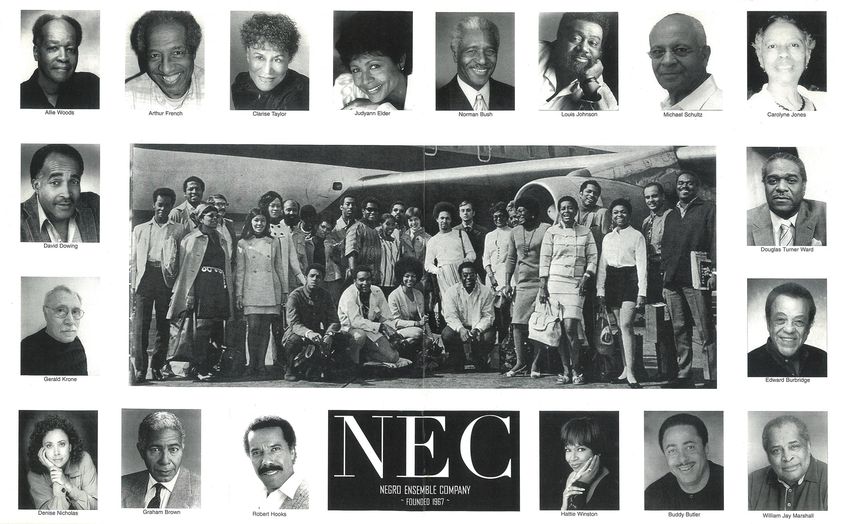
Here are the NEC artists arriving back stateside after a successful (and in the U.K. violently controversial) European and African Tour (circa 1970). One of the touring plays was the incendiary “Song of the Lusitanian Bogey” which attacked colonialism. The world theatre audiences had never seen anything like it! It was a momentous moment in Black world theatre history. Negro Ensemble Company – Classic! Seen in staff photographer Bert Andrews’ set-up photo, is NEC ‘s European touring company (thirty five strong!) before boarding their plane. The tour was of course successful and well praised by the European artists and foreign theatre press….THIS AFTER ONE SEASON!!
“It was 1968, the Negro Ensemble Company (NEC) had just completed its very successful inaugural season of four exciting new plays. Before starting the next season, the company was invited to tour Europe performing in London and other European cities before returning to New York to present their second main-stage season at NEC’s St.Marks Playhouse, the company’s home theatre and training campus in New York’s East Village.
“The thinking was that there was no place in New York or anywhere else of theater for Blacks. So we wanted to create an organization where we could produce four or five plays a season and create opportunities for all these wonderful actors and playwrights and choreographers and music folk. In April 1968, I got a call from Mayor Walter Washington to come down and help the city after Dr. King was assassinated. We truly needed something after Martin was killed.
We renovated an old movie house on Georgia Avenue and Emerson Streets called the Old Colony Theatre. It was just a gorgeous facility, and we had some fantastic people working with us: Debbie Allen, Glenda Dickerson, and of course, Peggy Cooper [Cafritz] and Clifford Alexander, and people like that were on board.
We were doing all original plays, but we were continually in debt. We were doing great work on stage, and the audience was coming as well. But you know, we didn’t have a full house, and the ticket prices were not high so that we couldn’t make much money at the box office. The grants dried up. And I think that we just couldn’t get the support that I thought we were going to get from the Black elite. They thought the company was going to be in Southwest, down around the Arena Stage or downtown Washington. But I had no intention of doing that. I wanted the company to be in the Black community, which is where we were and were always going to be. Don’t get me wrong, we had a lot of Black support from the community. But the influential Blacks who could help the company out financially — or at least cause the company to be more financially stable — were not to be found. And that was one of the key reasons the company had to close.”
– WASHINGTON POST [ Roxanne Roberts 2018]
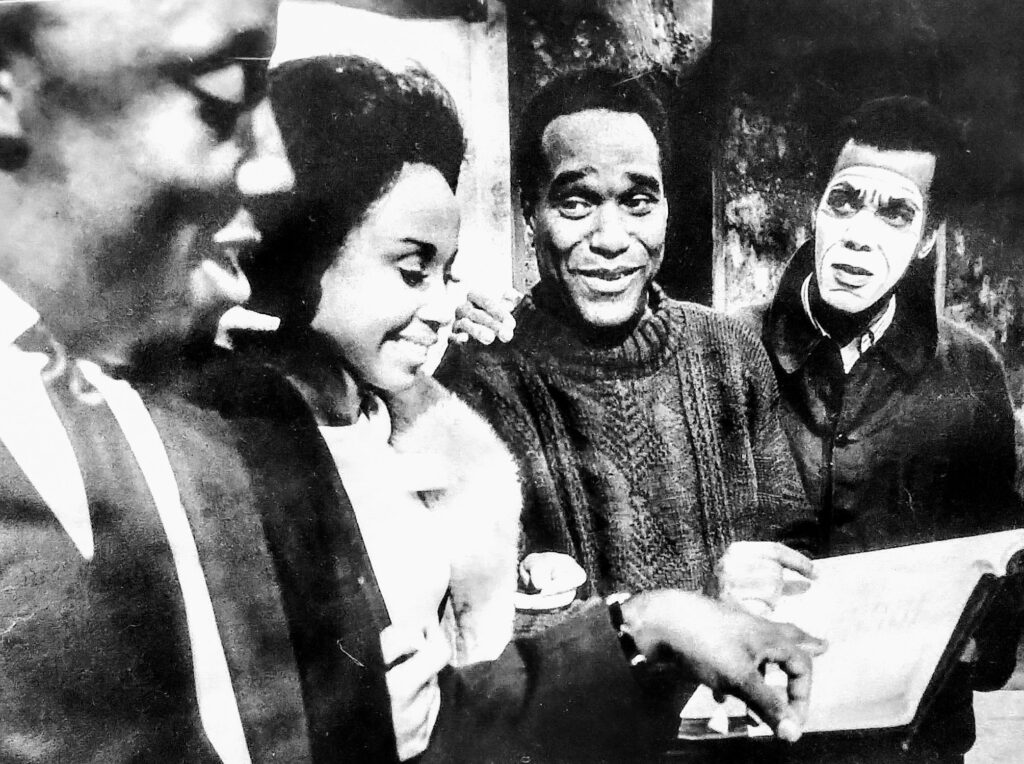
“Here’s a classic throwback photo (circa 1966)- when actor-comedian Godfrey Cambridge and lovely Broadway star Diahann Carroll visited the set of “Day of Absence”. Here, catching me and Douglas Turner Ward not quite out of our whiteface make-up. A Bert Andrews photograph was taken a year before the founding of the Negro Ensemble Company!”
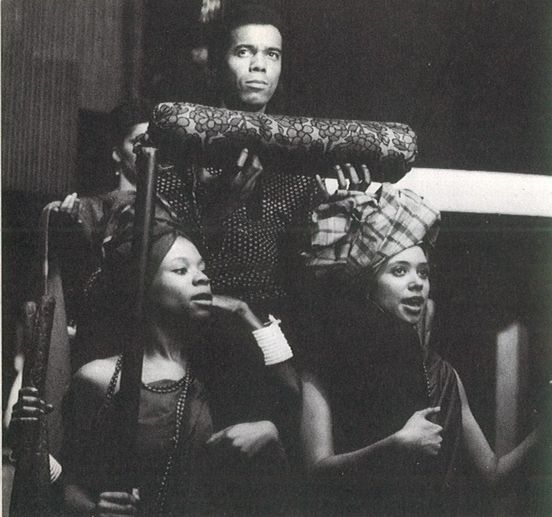
“When Douglas, Jerry, and I were finalizing the Negro Ensemble Company (NEC)’s acting company structure, I made it clear to them that I would not be acting in our productions because we were creating acting roles for other performers NOT ourselves. However, Douglas insisted I act in one of the plays in NEC’s inaugural season. He wanted me to play ‘Daoudu in Wole Soyinka’s ‘Kongi’s Harvest’, so of course, I had to say yes! And it was a fabulous experience playing this wonderful young African and working with our brilliant 15-actor permanent ensemble players. Here I am in one of the gorgeous pageantry scenes as Daoudu, together with young talented Maxine Griffith and the fabulous Denise Nicholas! Directed by Michael A. Schultz, choreography by Louis Johnson, sets by Edward Burbridge, costumes by Jeanne Button, lighting by Jules Fisher, and Music by Pat Patrick. Personally, I was honored to act aside from these amazing NEC ensemble performers! And out of all the many NEC productions, I only performed in ONE other play!”
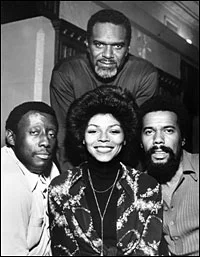 The great and bold playwright Lonne Elder, III’s powerful award-winning drama “Ceremonies in Dark Old Men” (runner-up for the 1969 Pulitzer Prize in Drama) was produced successfully in the Negro Ensemble Company’s second professional season, then was immediately picked up by ABC as a televised ABC Theatre Special. Here are four of its stars, Douglas Turner Ward (standing) and (L to R) Godfrey Cambridge, Rosalind Cash, and Me, (btw, the amazing Glynn Turman co-starred with us in this historic televised production!). ABC’s Nielsen ratings went through the roof. Also, the original production at the St. Mark’s Playhouse, home to the NEC, was directed by Edmund Cambridge (circa 1969).
* HISTORY *

The records of the Negro Ensemble Company (NEC), 1967-1993 document the work of the most successful African-American theatrical company in the United States to date. In addition to information about the productions, the records also document the growth of the company through the development of its administrative structure and of the funding base that keeps a theatrical company alive. The collection is divided into three series, thirteen subseries, and eighteen sub-subseries.
BIOGRAPHICAL/HISTORICAL INFORMATION
The Negro Ensemble Company was founded in 1967 as the indirect result of an article written by playwright/actor Douglas Turner Ward at the request of the New York Times. In the August 1966 article entitled, “American Theatre: for Whites Only? ” Ward called for theatre from the Black point of view with Black playwrights writing of their experience for primarily, though not exclusively, the Black audience, as well as the establishment “of a permanent Black repertory company of at least off-Broadway size and dimension”, to decide, promote and oversee their creative destiny. (At the time Ward was starring in the production of two of his one-act plays, Happy Ending and Day of Absence, which was produced by actor Robert Hooks. Ward enjoyed a very successful 500-performance run at the St. Mark’s Playhouse, in the East Village, New York City, where Gerald Krone, general manager of the playhouse, was the manager of the show.)
After reading the article, an executive of the Ford Foundation contacted Ward to ask exactly what he had in mind. As the story goes, Ward sat down with friends and colleagues Robert Hooks and Gerald Krone to discuss the establishment of a repertory company that would produce work germane to Black life, with a training company for both actors and technicians, thus promoting Black professionals in front of and behind the scenes. As a result, the Negro Ensemble Company’s mission statement declared its purpose “to provide a forum for the continuous, fully professional, theatrical exploration of themes relevant to Negro life in America through the presentation of mostly new plays, with an emphasis on those by Negro writers; and as a secondary mission to train Negroes in all areas of the theatrical profession. ”
Based on the proposal that Ward, Hooks, and Krone developed, on May 14, 1967, the Ford Foundation announced a grant to establish the Negro Ensemble Company with Ward as artistic director, Hooks as the executive director, and Krone as the administrative director. The grant for $434,000, paid over three years, was to be used to found and develop a Black repertory company to present works on social themes, expand opportunities for experienced Black theatre artists, and offer professional training to potential new talent with materials that emphasized Black identity.
The attempt in the early years of the company to fulfill this goal resulted in several productions billed as “An Evening of Music and Dance”, but the principal interest, available skills, and majority of funds would go into theatre productions and training programs in all aspects of the theatre profession: acting, playwriting, directing, design, and technical areas.
The Training Program
As one of the core goals of the Negro Ensemble Company the training program was the first unit to be established in the Fall of 1967. From the start, it had several components: Young people between the ages of sixteen through mid-twenties were offered beginner classes. A similar workshop was offered for more advanced students and young professionals who were extending and developing their acting skills. Fifteen of the original young professionals came out of Robert Hooks’ Group Theatre Workshop, which had been developed in New York City in the summer of 1964. Classes for the resident company and a workshop to develop new playwrights and directors rounded off the program.
Through these classes and workshops, which included acting, dance, speech, and related disciplines, the NEC began grooming an apprentice company. Additionally, training in management and administrative areas of the theatre was offered in on-the-job training. Students were also trained in scenic and costume design. One of the company’s ambitions was to dip into the talent trained in its workshops, but realizing that it could never employ all of its students, it was understood that the program was raising a generation of black talent to go out into the larger theatre world. Instructors for the workshops included Paul Mann from Yale University, for the professional troupe; Lloyd Jones for the 38 young professionals; Ron Mack led the approximately 22 beginners; Christian Linkletter coached voice; Louis Johnson instructed students in dance; and Lonnie Elder III coordinated the Playwrights’ Workshop. Other instructors involved in the training program over time included Percival Borde, Chuck Vincent, Steven Carter, Michael A. Schultz, Gilbert Moses, Wilma Moses, Edward Burbridge, Lauren Jones, Otis Salled, Hal deWindt, Morse Donaldson, and Kris Keiser. Many of these people were known in the theatre world as professionals in their own right, and many became known because of their association with NEC.
In 1971, with the end of the initial 3-year Ford grant to NEC and difficulty in developing additional funding sources, the resident troupe and training programs were cut back severely. Only the Playwrights’ Workshop and on-the-job training were reinstituted after a short break. Ward would later state that over 3,000 students, at all levels, were trained in theatre arts over the life of the program – which was no small contribution to the field.
The Resident Company
NEC conducted a nationwide search for what would become the resident company. The first season’s class included Norman Bush, Rosalind Cash, David Downing, Francis Foster, Arthur French, Moses Gunn, William Jay, Judyann Jonson, Denise Nicholas, Esther Rolle, Clarice Taylor, Hattie Winston, and Allie Woods. Edmund Cambridge served as production stage manager. Members were given alphabetical billing and received the same salaries. The season was twenty-six weeks long; productions ran five weeks, with one week of previews, and eight performances a week.
In the 1968/69 season, Samuel Blue, Jr, Damon Brazwell, Mari Toussaint, Anita Wilson, Julius W. Harris, and stage manager James S. Lucas were added to the company when several of the members left to go on to other projects and successes. Those who remained became very familiar faces to the company’s audiences and would go on to national success in television and film in addition to the theatre. When financial woes forced the Negro Ensemble Company to discontinue the resident company, possibly in the mid-70s (records do not reflect the actual date), open casting for plays became the norm. The resident company was re-instituted for a short time during the 1978-1979 season and consisted of Graham Brown, Aldoph Caesar, Laverne Scott Caldwell, Michele Shay, Olivia Williams, Francis Foster, Barbara Montgomery, Leon Morenzie, and Samm-Art Williams. Glenda Dickerson, Dean Irby, and Horacena J. Taylor were the resident staff directors. Wynn Thomas (scenery), Alvin Perry (costumes), and Larry Johnson (lighting) were the resident staff designers. However, the uncertain financial condition of the company never allowed the resident troupe to be sustained for long periods.
The Playwrights’ Workshop
The Playwrights Workshop was established to develop and encourage black writers. Playwrights submitted works-in-progress to the workshop where they were read and critiqued by professional playwrights at weekly meetings. Lonnie Elder, III was the first director of the workshop but resigned in 1969 to move to Los Angeles to pursue his career there. The NEC produced several of Elder’s highly praised plays including Ceremonies in Dark Old Men, which went on to become the first production of the company’s “Negro Classics” series. It is not clear from the records who succeeded Elder as director of the workshop. Many new plays and playwrights emerged from the Playwrights Workshop, among them Companions of the Fire by Ali Wadud, Daughters of the Mock by Judi-Ann Mason, and Nevis Mountain Dew by Steven Carter. In addition, several playwrights who became successful in the 1980s and 1990s participated in the workshops including Charles Fuller (Pulitzer Prize winner for A Soldier’s Play), Samm-Art Williams (Home), Steven Carter (Eden, Nevis Mountain Dew), Paul Carter Harrison, Gus Edwards, Derek Walcott, and others (See the appendix for a list of playwrights and plays).
In the 1979-1980 season, a regular Monday night reading program was initiated. The Monday Night Readings Series became so successful at drawing an audience that it was expanded. Staged readings were added and the program was renamed “Developmental Stages”. This program became a regular part of the season’s productions, adding many new readings to each season as budgetary constraints forced the company to do fewer full productions with shorter runs.
The Seasonal Plays: Broadway and Tours
The company formally inaugurated its first season in 1967-1968, following a preparatory period of three months involving an intensive regimen of rehearsals. Ward’s goal had been to develop a program that would have permanence in the theatre world. For that to happen, he believed the company would need diversified challenges, so he established a rigorous performance schedule. The season opened with Peter Weiss’ Song of the Lusitanian Bogey, followed by Summer of the Seventeenth Doll by Ray Lawler, Kongi’s Harvest by Wole Soyinka, and Daddy Goodness by Richard Wright. While not deliberately choosing a theme for the season, these productions focused on the theme of the oppression and exploitation of Black people.
That first season NEC received high praise for both its acting and writing talent. Reviewers hailed the company’s variety, strength, and sensitive direction, saying that the actors were clear and consistent, never missing a nuance of mood or a chance for comedy. Criticism, however, was voiced over the fact that two of the four playwrights, (Peter Weiss and Ray Lawler) were White, raising the question of whether or not the company was truly Black-run, and pointing to the fact that one of its three founders was White. Artistic director Doug Ward defended his choice of the Weiss and Lawler works because the material held to the Black experience and the author’s race was not critical. Nevertheless, from that point on Ward chose to stage scripts written only by Black writers.
During the first decade, the company explored themes of the Black man’s (African) struggle by producing many works by African playwrights, such as Akakowe, Ododo, Kongi’s Harvest, and The Imprisonment of Obatala, later called “Plays from Africa“. The choice of African subject matter and theme enabled the company to show the connection between the Black struggle in Africa and here in the United States.
In the following seasons, as the Playwrights’ Workshop began to produce an abundance of quality material that spoke from the experience of Black people, there was more than enough work upon which the artistic director could draw. Productions such as Ceremonies in Dark Old Men, Colored People’s Time, Nevis Mountain Dew, The Sty of the Blind Pig, The Great MacDaddy, Eden, and Home brought to the forefront common issues, situations, and struggles that faced Black America. Additionally, historical dramas such as The Brownsville Raid, the “We” plays, and A Soldier’s Story became favorites in the company’s lineup.
Broadway
While most of the Negro Ensemble Company’s success was on the off-Broadway stage, they also enjoyed several Broadway runs, beginning with The River Niger in 1973-1974, which ran for 280 performances at the Brooks Atkinson Theatre. It was nominated for and received two Tony awards: the 1974 Tony Award for Best Play, and a Tony Award for Special Achievement in Theatre. A nomination for Douglas Turner Ward for “Best Supporting Actor in a Play” was also garnered, but Ward turned it down because he felt it was listed incorrectly, insisting his character was not merely a supporting role.
The next show to move from the St. Mark’s Playhouse to a Broadway locale was The First Breeze of Summer which opened in June 1975. It ran for six weeks and received favorable reviews, “Genuine, engaging, refreshing, and welcome” from New York Magazine and WCBS-TV. It was also nominated for the 1976 Tony Award for Best Broadway Play. The third NEC production to move to a Broadway venue was Home, by Samm-Art Williams. It played 280 performances at the Cort Theatre in 1980 and was nominated for two 1980 Tony Awards, for “Best Play” and “Outstanding Actor in a Play” (for leading man, Charles Brown).
Tours
In 1969, NEC made its international debut as the result of an invitation to participate in the World Theatre Season at the Aldwych Theatre, London, England, and then at Italy’s “Premio Roma” Festival. This would be an honor for any theatre company, but particularly so for NEC as it was only in its second season. At the festival, the company was awarded the “Premio Roma Award for Artistic Excellence and Production” for Song of the Lusitanian Bogey. The Negro Ensemble Company was a triumph at home and abroad!
During the fall of 1971, the company launched its first national tour with The Sty of the Blind Pig. The next summer the troupe again traveled internationally, accepting invitations to perform at the Bermuda Theatre Festival followed by the 1972 Olympic Games Arts Festival which was held in conjunction with the Munich Olympic Games. The company presented both The Sty of the Blind Pig and The Dream on Monkey Mountain at both these festivals.
Over the next twenty years, the company took its cast and crew on tours across the country and around the world several times. Productions that went on national tours included The River Niger, 1974, Nevis Mountain Dew, 1979; Home 1980-1981 and 1982; Colored People’s Time, 1983-1984; Ceremonies in Dark Old Men, 1985-1986, 1986, and 1987; Two Can Play, 1987-1988; From the Mississippi Delta 1988-89 and 1990; and various productions of the WE quartet of plays, separately or together between 1988 and 1991. International tours included The Great MacDaddy which visited the Virgin Islands in 1977; The Sty of the Blind Pig which toured the cities of Melbourne, Perth, and Adelaide in Australia in 1976; and Home, which played London in the 1985 season and various cities in Asia in 1987.
By far, A Soldier’s Play was the longest-running tour mounted by the Negro Ensemble Company. It began with a four-week engagement at the Empire Performing Arts Center in Albany, NY in February 1982, followed by another 4-week engagement at the Mark Taper Forum in Los Angeles in August 1982. Between 1982 and 1984 there followed several links in a chain of first-class national tours, ending in a bus and truck production during the spring of 1985. In 1984 the company was once again invited to perform at an Olympic Arts Festival, this time in Los Angeles, where they performed A Soldier’s Play, followed by an appearance at the Edinburgh International Festival in Scotland. This property was also made into a film titled A Soldier’s Story in 1984, starring NEC regulars Adolph Caesar and Denzel Washington.
In addition to the long-term engagements of A Soldier’s Play, other NEC productions had similar arrangements. The Isle is Full of Noises was produced at the Hartford Stage during the 1981-82 season, Two Can Play entertained audiences in Cincinnati, OH for a six-week engagement in 1986, and Lifetime on the Streets was mounted at the SUNY Purchase campus in Purchase, NY in 1991. Television
The Negro Ensemble Company was able to bring several of their productions to a broader audience by accepting the invitation to air their productions on television. In May 1974, PBS broadcast Philip Hayes Dean’s Sty of the Blind Pig. The cast included Mary Alice, Maidie Norman, Scatman Crothers, and Richard Ware. Advance articles for the production called it a “powerful” and “moving” drama and generally gave the production favorable reviews.
The following year (January 1975) the NEC produced its performance of Ceremonies in Dark Old Men on the ABC-TV series “ABC Theatre Presents“, also to very favorable reviews which hailed the performance as “well written; the direction, well done and the acting simply superb”. Other reviews and advance articles mentioned that the Negro Ensemble Company was an award-winning company with “landmark” performances that reflected Harlem (Black) life. The cast included Douglas Turner Ward, Glynn Turman, Godfrey Cambridge, Rosalind Cash, J. Eric Bell, and a special appearance by Robert Hooks as “Blue Haven”
Similarly, in January 1976, The First Breeze of Summer won critical praise when it was broadcast on PBS’s “Theatre in America” series which showcased the country’s outstanding regional and resident drama companies. Frances Foster, Moses Gunn, Barbara Montgomery, Ethel Ayler, and Reyno headed the original cast. Reviews hailed the performance as a “Warm, touching portrait”, “moving”, “a compassionate domestic drama with relevance beyond the specific Black experience detailed”, “a naturalistic and deeply engaging work”, and a “portrayal of real blacks”
Financial History
Fundraising was the linchpin of the Negro Ensemble Company’s existence. Throughout its existence and despite box office successes, contributions from foundations, government entities, benefits, and individuals provided the majority of the capital needed to run the company. During the early years, the Ford Foundation and the National Endowment of the Arts (NEA) were the sole funders. In time, Douglas Turner Ward and Gerald Krone succeeded in attracting other contributors, among them National Broadcast Company (NBC), Philip Morris Companies, Inc., Robert Sterling Clark Foundation, Inc., Shubert Foundation, Inc., FEDAPT (Organizational Assistance for the Performing Arts), New York Department of Cultural Affairs (NYDCA), and New York State Council of the Arts (NYSCA). Although NEC experienced both financial and critical successes in the following decades, records do not indicate if the company’s productions were financially successful during the first five years.
The company’s fiscal and corporate structure began to take shape in the 1970s. Toward this end, the institution of an “active” board of directors and the establishment of the Development Department were formalized. The company also instituted regular fiscal audits and computerized record keeping. This provided the structure needed to formalize the company’s relationship to future funders and increase the amounts of the grants. Both the Ford Foundation and the NEA were critical to those efforts. At the start of the 1970s, the Ford Foundation required that NEC provide certified audits and seek other means of support to continue to be eligible for Ford Foundation grants. To meet these requirements, the company held several benefits, and sought and received grants from corporations such as Conde Nast Publishers, Inc., Nosutch Foundation, and Time, Inc., among others.
The formation of an active board, which would actively participate in fundraising, occurred in the company’s fourth year. Community and business leaders were invited to serve. But, as with many arts organizations, the board never fully succeeded in raising enough financial support to sustain the company.
Managing Director Gerald Krone was responsible for fiscal matters and worked closely with Fund Raising Director Frederick Garrett, who also held the title of administrative director in the late 1960s and early 1970s. Together with Douglas Turner Ward, they handled fundraising responsibilities. A formal development component was not established until fiscal year æ79, as the result of a special NEA grant. Alternately called the Development Unit, the Development Office, and/or Department, its function as outlined in a 1978 grant proposal was to aid the company in achieving permanent institutional stability. Before the establishment of this department, NEC’s efforts to broaden its financial base without a development staff or plan had been inconsistent.
Despite the steps taken by the NEC to improve its financial base, by the end of the 1970s, the financial situation had deteriorated significantly. The company was refused a $20,000 Rockefeller grant because it “had no five-year plan, no broad-based members and questionable administrative policy”. NEC also had a severe deficit, and to stabilize the company, the staff went unpaid for three months.
In the 1980s, NEC underwent major changes. The company received grants that aided in the institution of marketing, subscriptions, and group sales departments. The phenomenal success of A Soldier’s Play in 1983 bolstered the company’s reputation, and it was during this time that the company moved uptown to the Broadway theatre district with the expectation that the move would lead to increased ticket sales. Financial problems, however, continued to plague the company and forced them to cancel their entire 20th anniversary season in 1987 and significantly reduce their operations.
At the beginning of the 1979-1980 season, NEC had started on an encouraging note. The company was awarded an NEA 4-year Institutional Advancement Grant. This grant enabled the company to work towards improving the range and production of each play; acquire a 500-seat theatre as a permanent home; reduce cash flow crisis syndromes; and improve the overall financial management of the company. That year, the company hired its first comptroller, John Berrera, in a continued effort to solidify its corporate structure. NEC also struggled to maintain and upgrade its operations and increased salaries (the last raises had been in 1972).
Concurrently, the Developmental Unit had been funded by the NEA as well, under a special NEA grant called the “Development grant, ” which commenced in 1979. Initially, the Unit was dependent upon NEA as its sole funder. Under the grant guidelines, it was understood by both the granting agency and NEC that the Unit would take two to three years to be completely effective and that NEA would maintain a major financial commitment to the Unit during that period. However, the fiscal year 1980 request for the Development Unit grant was refused because of changes in staff and grant panels that took place at the Endowment. Immediately, Managing Director Gerald Krone met with NEA staff, and in light of their original commitment, the agency agreed to extend the original grant that covered production costs through November 1979.
By 1981, other changes were looming. In September NEC moved its administrative and production staff to a new office, located at 165 West 46th Street, and began using Theatre Four on 55th Street, which eventually served as the home theatre for its upcoming season. Krone resigned as managing director, staying on as a board member and consultant, and General Manager Leon Denmark took over his position. The position of Marketing Director was instituted and Tshaye Llorens was hired to fill the position. Under her direction, subscriptions were formalized for the first time.
The company’s financial situation nonetheless remained problematic. Although in the 1980-1981 season, NEC received increased foundation, corporate, government, and individual support (Ford Foundation’s contributions to the company totaled $2. 6 million at the time), and had held two successful benefits “Salute to Negro Dance Classics” and “Salute to Negro Music Classics“, financial problems persisted. NEC could not meet its production goals, budget, or deadlines to pay off loans and business creditors. In October 1980, Krone informed the board that the financial crisis impeded the company’s ability to mount productions that season. By December, the situation had not significantly improved. The company’s credit was endangered, and it was forced to operate on a cash-only basis. Tours and expenses were severely cut and productions were delayed while the company waited for income from grants, some of which was used to pay off outstanding loans. At the same time, the company’s annual budget continued to rise and by 1981, it was $1.4 million.
Although NEC had moved to Theatre Four, which had a seating capacity of 299 seats, the company believed that the space was insufficient and that they needed a larger theatre to capitalize on popular productions. The company commissioned a feasibility study in February 1981, conducted by the Carl Shavers Company to assess whether NEC was “in a position to raise sufficient funds needed to obtain a larger space”. At that point NEA support was uncertain, they had limited support from earned and contributed income, and renovation of a theatre would cost $1 to $3 million.
The suggested strategy by Shaver’s representative Walter Reeves was tripartite: step up annual fundraising geared around a 3-year plan to encourage key leaders in the community to lend their support; actively develop the board of directors; and enlarge the company’s subscription program. Although it is not entirely clear from the records how the company responded to the recommendations, in 1983 the subscription program became formalized, and members of the artistic and political communities often lent their names to fundraising efforts in the years to follow. NEC remained at Theatre Four until 1991, as their funding situation did not substantially improve to allow them to move into a larger theatre.
In fiscal year 1982, the company continued to operate in the red, primarily due to a large working capital deficit left from the previous fiscal year. The company sought to reduce outstanding bills by canvassing the board for donations, hosting benefits, and negotiating with creditors to reduce outstanding balances throughout 1982. Concurrently, the company experienced an increase in membership (which rose to 1,500) and increased box office sales due to the phenomenal success of A Soldier’s Play (ASP), their biggest box office success. Profits from the production helped the company stabilize and replenish its cash on hand. The company was able to end fiscal year 1983 without a large deficit due to the play’s success. Additionally, they received a significant amount of money from the sale of the movie rights of ASP to Columbia Pictures in 1983.
Despite this success, however, fiscal year 1983 had begun with a $25,000 deficit. Contributing to the company’s financial woes was the cancellation of Colored People’s Time, another box office success in the 1981-1982 season, due to playwright Leslie Lee’s withdrawal of his permission to mount the play, and a concomitant loss of potential profits from the tour which would have been used to reduce the deficit. To cut back on expenses, the company laid the staff off for three weeks, which was followed by more cuts later that year.
By February 1983, the actual deficit had increased to $179,570 due mainly to a substantial reduction in box office revenue projected for the entire subscription season; a small profit originally projected for an extension of ASP; and a reduction of unearned income. As a result, administrative staff was laid off for another month. Board member William Aiken lent NEC an accountant from his company, Main Hurden, on a volunteer basis to bring the company’s finances up-to-date. To save further on expenses, the company used the same set structure from previous productions for that season’s productions. Only three plays, rather than the usual four, with fewer actors, and a six-week run for each play, were produced for the 1982-1983 season.
At the onset of the 1983-1984 season, financial matters improved greatly due to the ASP tour. Profits from the production underwrote the expenses for the local season. By mid-season, the company’s budget was balanced due to the production’s higher-than-forecast grosses. The company produced a benefit to send the cast and crew of ASP to the 1984 Olympic Arts Festival in California, hosted by Patti LaBelle. Subscriptions also benefitted from ASP. The Subscription Department, which was created in 1983, was most active during the 1983-1986 seasons and targeted its audience by developing a Discount Voucher Program for schools, organizations, and employees of corporate donors, along with taking advantage of conventions, holidays, and anniversary celebrations by offering discounts to productions. The most profitable season for subscriptions was 1983-1984 during the successful run of A Soldier’s Play.
About this time, board minutes reveal that ASP’s success highlighted tensions within the company, particularly between the board and artistic director Douglas Turner Ward. The board stressed that it was important to capitalize on the success of ASP by maintaining the quality of their productions and that Ward’s micro-management of the ASP tour impeded planning for a dynamic local season due, in part, to the inability of the staff to get an approved season of plays in a timely manner. Board members expressed concerns that seasons should be announced in advance and that there be an assurance of an able production staff to carry out the company’s artistic vision. There was a call by the board to restructure the company, specifically for the artistic director to share the responsibilities for planning the seasons, as well as for the addition of a “second stage” for new writers.
Ward responded to the board by pointing out that looking at box office revenue to reduce the deficit was incorrect, and that the board should focus instead on increasing contributions. Although it was recommended that the company host a “blockbuster season” to raise money to reduce the deficit, Ward refused because he would not select plays merely for their commercial value. Records do not reflect whether the schism between Ward and the board was ever resolved.
During the following seasons, some of NEC’s funding sources expressed their dissatisfaction with the company’s financial management. In the 1983-1984 season, the Ford Foundation had demanded that NEC have no deficit at the end of their seasons, and to provide a three-year plan explaining their artistic goals. Later in that same season, it was reported at a board meeting that the foundation had serious reservations about the financial stability of the organization, and was watching NEC very closely. Nevertheless, the foundation continued to help the company by instituting a cash reserve fund for it to remain afloat during financially stressful times. At the same time, steps were taken within the company to monitor its financial status. Comptroller Jay Spach instituted an improved accounting system that enabled management to view current financial figures and, if needed, take immediate action to make the necessary adjustments in spending and other areas.
Even while they were suffering from the loss of confidence from long-time supporters, Managing Director Leon Denmark reported at a board meeting that despite the weak financial status of the company, there were numerous successes during the 1984-1985 season. Two tours, A Soldier’s Play, and Ceremonies in Dark Old Men, had been completed and the revival of Two Can Play was also successful. NEC also made two international appearances, in London and Edinburg. The 4-play subscription had been completed, and the subscription base and income had doubled.
Nevertheless, at the start of the 1985-1986 season, financial problems continued to plague the company. The 1986 fiscal budget projected a $250,000 deficit. Denmark sought to reduce this deficit by raising the amount of corporate and benefit contributions and applying for a grant from the New York City Department of Cultural Affairs. The NEA informed the company that they were cutting a grant for NEC’s 1985-1986 production season by $50,000 due to the “fallen” quality of acting and directing over the years. Though the company challenged this decision, the grant was only partially reinstated.
From 1986 to 1992, records reflect that there was an extreme drop off in activity for NEC beginning with the 1986-1987 season. Though the company hosted the very successful “The Adolph Caesar Performing Arts Award Benefit” in April 1987, the entire season was suspended due to severe financial problems resulting from the deficit that had been accumulating since 1983. Although the Negro Ensemble Company continues to operate into the year 2001, their presence in the theatrical community has been severely reduced. Since 1992, NEC has attempted to produce at least two plays a year, along with playwright workshop readings.
To date, the Negro Ensemble Company was the most successful Black theatrical company in the United States. It was the recipient of over 40 major theatre awards, including a Pulitzer Prize, two Tony Awards, thirteen Obie Awards, and the NAACP Image Award. Their most substantial contribution to the theatrical field was helping to train or launch the careers of dozens of actors, playwrights, directors, and other theatrical professionals, many of whom achieved stardom, such as Denzel Washington and Samuel Jackson. From 1967 to 1992, the NEC produced over 200 productions, which included full-length and one-act plays, and workshops – a tremendous contribution to the theatrical field.
SCOPE AND ARRANGEMENT
The records of the Negro Ensemble Company (NEC), 1967-1993 document the work of the most successful African-American theatrical company in the United States to date.
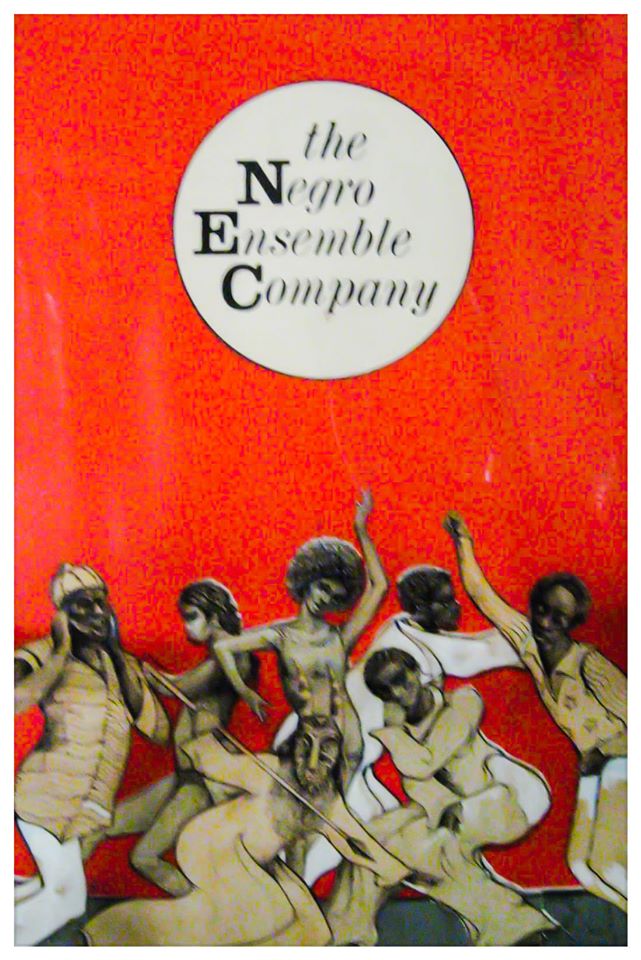
“Louis J. Delsarte, the brilliant painter, muralist, and illustrator passed away. A professor of Fine Arts at Morehouse College where he influenced so many students for futures in the fine arts. But back in 1970, when I produced a fundraising gala for the Negro Ensemble Company at New York’s Winter Garden Theatre, Louis – brought backstage by Godfrey Cambridge – surprised me with this extraordinary collage dedicated to the NEC and featuring a selection of characters from some of our major plays. It hangs in the house today, a daily reminder of this generous, true artist.”
“There was considerable controversy when the newly created Negro Ensemble Company (NEC) announced its inaugural season’s opening production, selecting white German playwright Peter Weiss’ satire “Song of the Lusitanian Bogey”! I immediately heard from a few New York artist friends: “How can the NEC call themselves a Black theatre company and open with a White writer’s work? and why call themselves “Negro” instead of “Black“?
“Those questions had already been anticipated by key NEC founders (especially me), and we were more than happy to confront the controversy that arose from a small number of critics who harbored those feelings about the motives and actions of the new and promising Black arts institution. Our company title “Negro” was selected as a sincere and real homage to the artists of the Harlem Renaissance, Langston Hughes, and the other genius heroes of that historic period, who proudly called themselves Negro. We wanted “Negro” embedded in our company’s title…forever!…As to the white German playwright Peter Weiss’ brilliant play “Bogey”, we selected it because the key founders wanted NEC to be a theatre company that produced plays about the Black experience from around the world, not just here in America, it was our mission and it immediately became clear to the world, who we were!“

“Here’s a classic throwback from the inaugural season at the Negro Ensemble Company (circa 1967-68.) I’m with legendary choreographer Louis Johnson as he creates Stage Movement for our amazing ensemble actors in “Song of the Lusitanian Bogey” our very first play! Louis was with the company for decades providing brilliant choreography and mesmerizing stage movement for our productions. Louis Johnson took leave from New York’s Negro Ensemble Company (NEC) to join me at the brand new DC Black Repertory Company in my hometown of Washington (circa 1970). As we had done with the actors selected for the NEC’s permanent ensemble, these new actors, who now made up the DC Black Rep’s permanent company would need to learn (or relearn) the professional art of “stage movement” for the upcoming season. And Louis, with his brilliant and unique talent for movement for ACTORS WITHIN A DRAMATIC CONTEXT, was the only person I even considered. Some choreographers consider working with non-dancers beneath them. But Louis was a complete artist.”

After they assassinated Dr. King, riots broke out all over America, including in my hometown of Washington DC. I took a temporary leave from NEC and moved back home to help heal our fractured communities there and to start my third major theatre company, The DC Black Repertory Company. Soon after getting that underway, Doug and Jerry called and ask me to come back and put a special benefit together to help feed our dying company coffers, as our Ford Foundation grant was fading fast. I scurried (Metro railed) back to Gotham and put an ALL-STAR Benefit together, AND IT WAS JUST THAT! we raised big bucks that night, and were able to continue work at our burgeoning (and what was NOW being labeled a National Treasure) theatre institution!
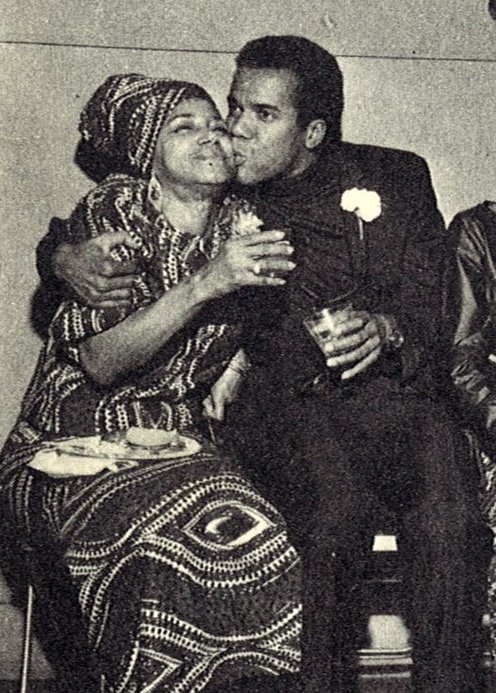
“There is nothing in theatre more pleasing than the ‘backstage celebration’ after the play’s premiere, and just before the big public splash of party glitz for the show’s success! We did a lot of this at NEC!… Seen here (in one of Bert Andrew’s surprise shots) are the brilliant NEC star Clarice Taylor smooching with NEC producer Robert Hooks (that’s me!) ..Photo was taken backstage at the “Kongi’s Harvest” opening in April 1968.”
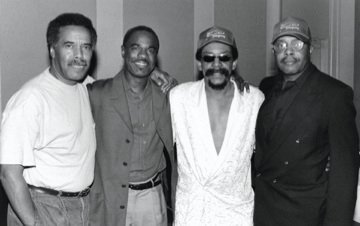
National Black Theatre Festival 1999 with Robert Hooks, Glynn Turman, Larry Leon Hamlin and Roscoe Orman
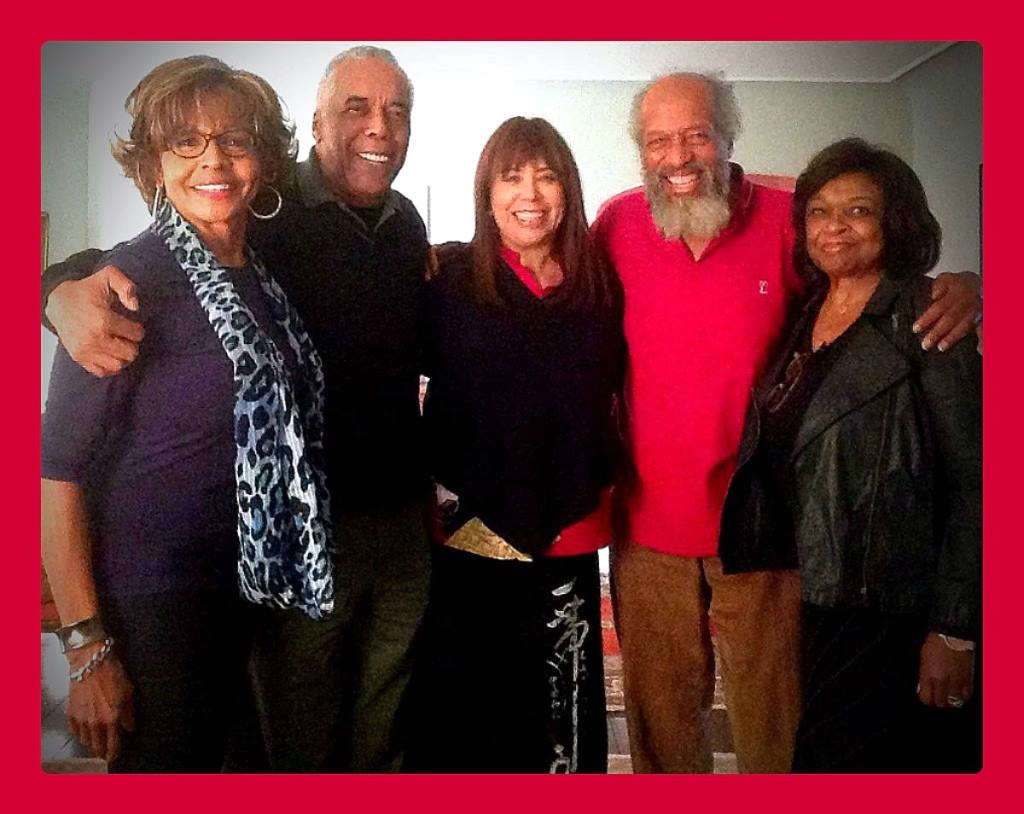
From left to right: Judyann Elder, Robert Hooks, Denise Nicholas, Arthur French, and Hattie Winston, all original members of New York’s world-famous Negro Ensemble Company. Enjoying a reunion lunch honoring Arthur French, in Los Angeles appearing in the must-see production of “The Trip to Bountiful”. Over half a lifetime of friendship in this photo! The only missing West Coast NEC original member was David Downing who, sadly, simply could not be reached for this extra special occasion. A grand and joy-filled reunion was had by all!
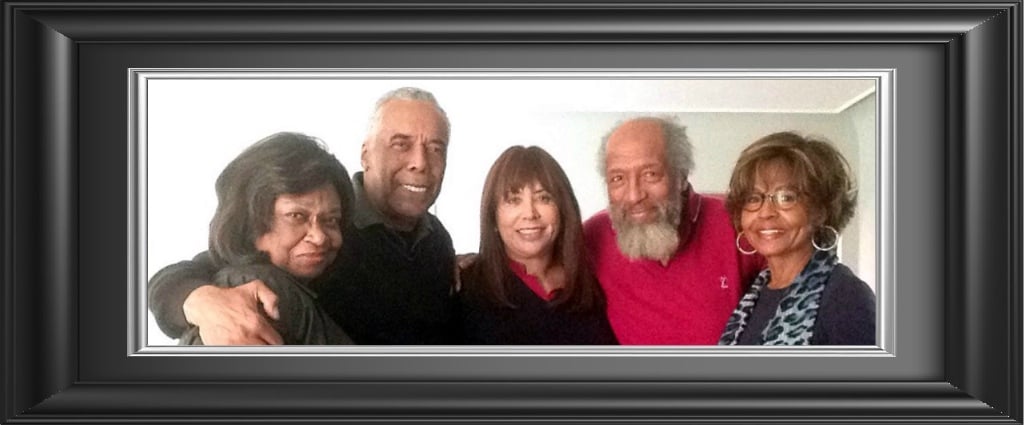
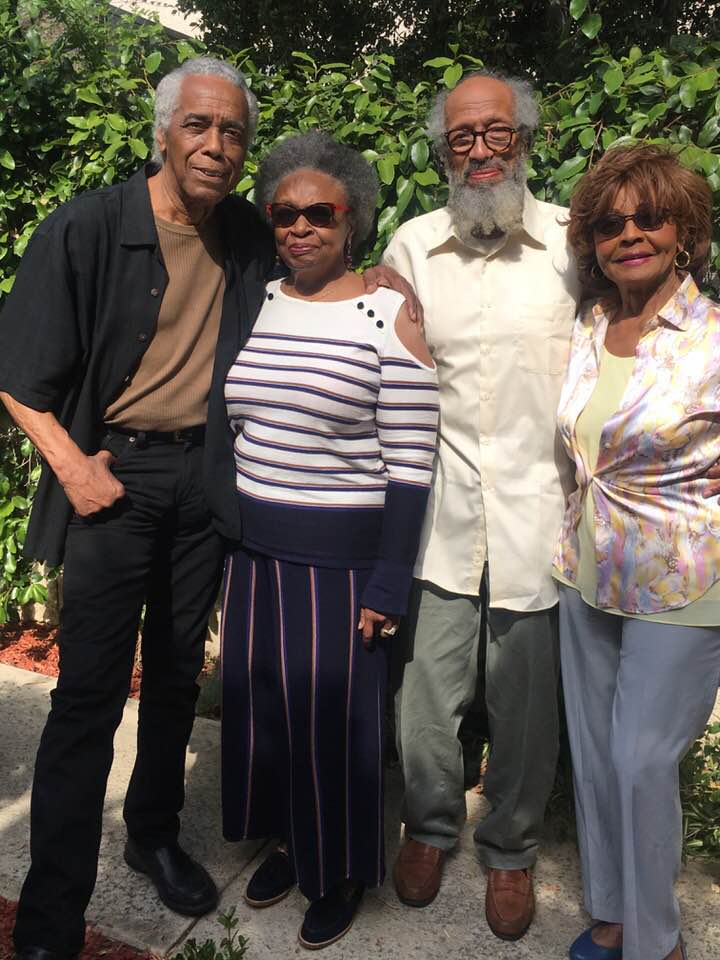
“On Sunday, the day after the brilliant Arthur French was honored and celebrated by the Giving Back Corporations, Judyann, and John had an intimate gathering before he and his son, Arthur W. French III flew home to New York. Here are four original members of that national treasure, the Negro Ensemble Company – Classic, enjoying laughter, memories, and just a great good time! (from L to R) NEC founder (me), and original founding members Hattie Winston Wheeler, Arthur French, and Judyann Elder! Bravo Arthur!”
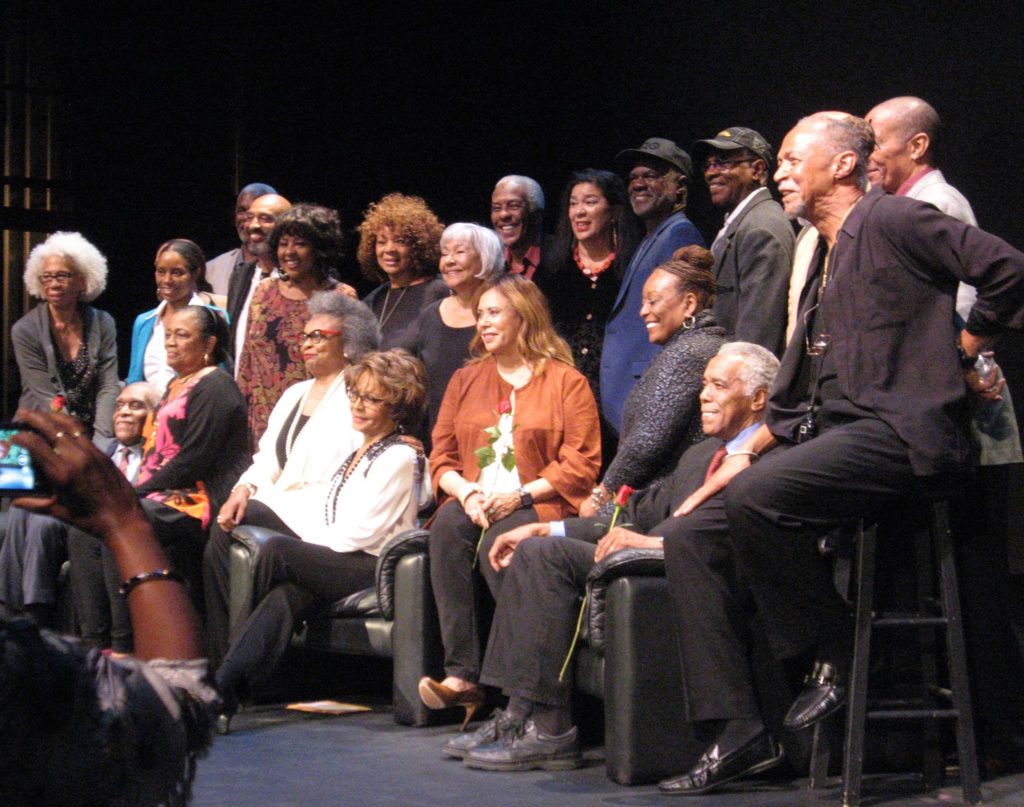
After the Los Angeles tribute to the Negro Ensemble Company – Classic 50th anniversary many of my cherished NEC compatriots gathered on stage for commemorative photos. A deeply moving and meaningful experience for me. And I look forward to seeing other alums at the New York and Atlanta events to come. A powerful time indeed! — with William BT Taylor, Hattie Winston Wheeler, Judyann Elder, Luise Heath, Denise Nicholas, Chester Sims, Nancy Carter, Glynn Turman, and Ed De Shae.
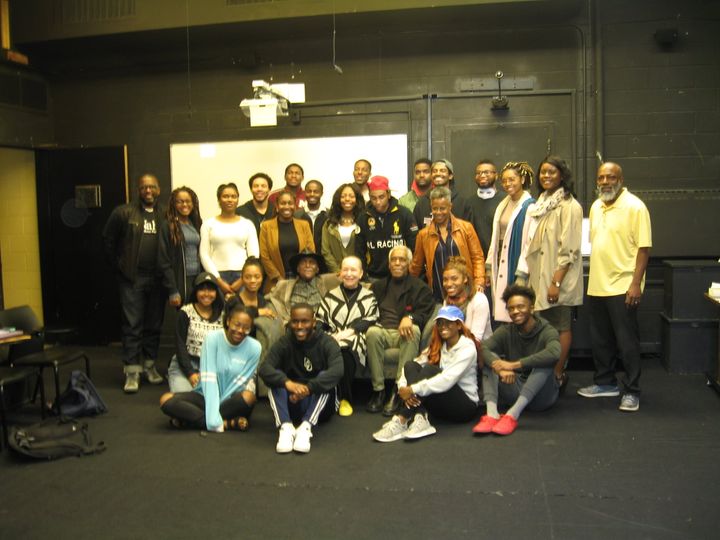
Celebrating the Negro Ensemble Company’s 50th Anniversary on tour stopping in Atlanta. Douglas and I were excited and honored to be invited to legendary Spellman College by pioneer playwright and Department professor DR. Pearl Cleage, and the Spellman Theatre Department. What a great feeling to meet these young aspiring theatre majors, and sit in wonderful discussions with them. And to really be surprised by (and thoroughly enjoy) a specially arranged and splendid staged reading of Ward’s classic satire “Day of Absence” by an awesome group of theatre students! …Here they all are (with Douglas, Pearl Cleage, and me in the middle down front. What a great welcoming for NEC’s founders’ 50th, by this excited young Spellman Theatre Department! And indeed memorable history for me and Douglas!
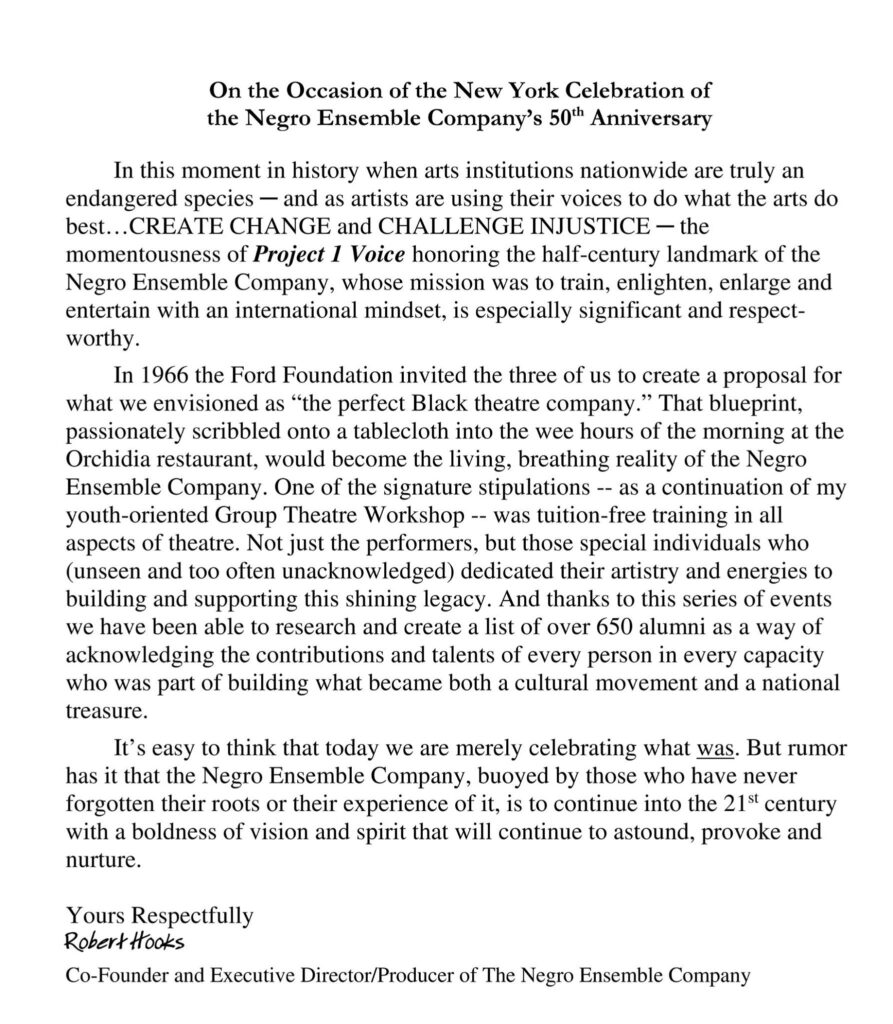
I was not at the NEC 50th New York celebration on Monday, Oct. 2nd. The following is my statement which was read at the event.
On the passing of Douglas Turner Ward [February 22, 2021]
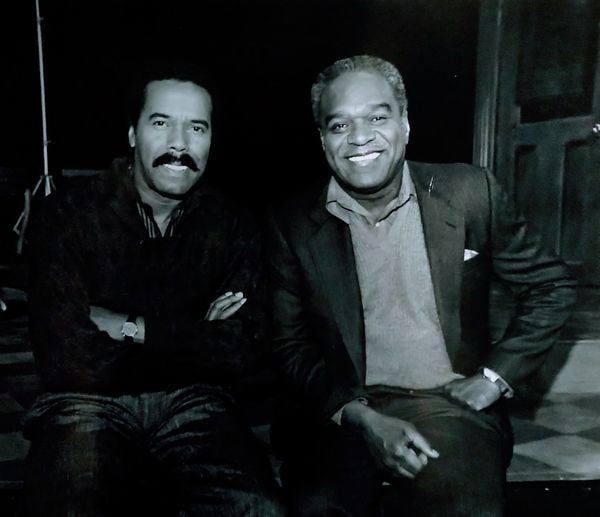
“This is LONG. But 1,000 pages wouldn’t be long enough to characterize the bond between Douglas and I. – Saturday, February 20th, 2021 was one of the saddest days in my life and is certainly a day I will never forget. It was the day I lost the best, longest, dearest friend and colleague any human could ever wish for in a lifetime. It was the day Douglas Turner Ward drew his final breath and passed on to an eternal next plane. What a long, fabulous, extraordinary, and productive friendship and cultural collaboration we enjoyed together for over 60 years.
The seeds of the lifelong friendship that would change my life and Doug’s forever begun unpropitiously. I was 21, living in Philadelphia, and studying acting at the famed Bessie V. Hicks School of Drama, hungry to master the art of acting for the stage and inhaling every creative aspect of stagecraft the school offered. The city of Philadelphia is a fabled Broadway “tryout” town, where producers open their shows in order to mold them to perfection before their actual opening on Broadway.
When the transformative play ended I was the first person to leap from my seat, applauding, bravo’ing, and yelling! I clapped so hard I broke the wrist strap on my watch and someone retrieved it from the floor for me. Couldn’t wait to go backstage. I was bursting with pride and energy! The lines outside the stars’ dressing rooms were too jammed for me to think about waiting to speak to Sidney or Ruby. Then I saw the men’s dressing room was accessible so I went in. I was able to speak with Ivan, Louis, Ed Hall, Lonne, and Douglas! It was a great conversation and they even invited me to their hotel for drinks and to just hang out and talk about acting and the play. They encouraged me to move up to New York and pursue my acting career. After seeing “Raisin” that night, and meeting those amazing and generous actors, I was ready to close out my Philadelphia life and make the move to New York. A few months later my first professional acting job in New York was in that same play that prompted my move. Yes! ”A Raisin in the Sun”! And then, on the road with the national tour, Doug and I and Lonne became inseparable.
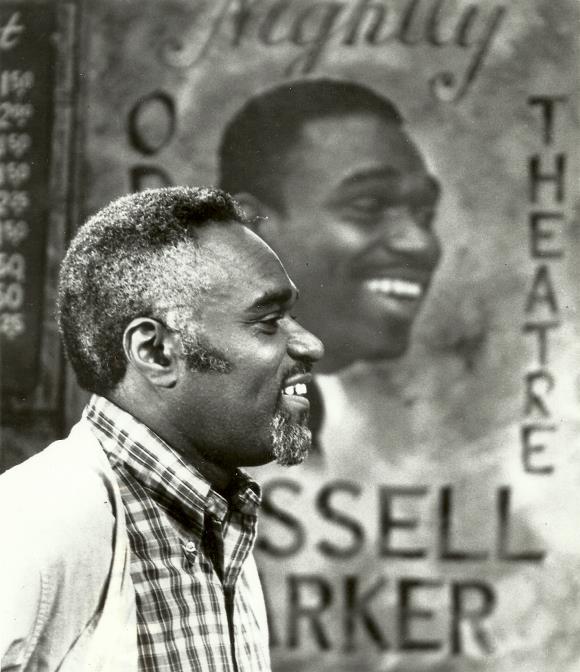
Together, Douglas and I founded the Negro Ensemble Company, a 60-year artistic and cultural collaboration that made history in the arts and changed the face and voice of theatre in America and American Black culture at that time. We also profoundly changed, grew, and evolved from each other. I LOVED …LOVE DOUGLAS TURNER WARD. And I always felt his love for me. My great and brilliant and profound friend.” – Robert Hooks
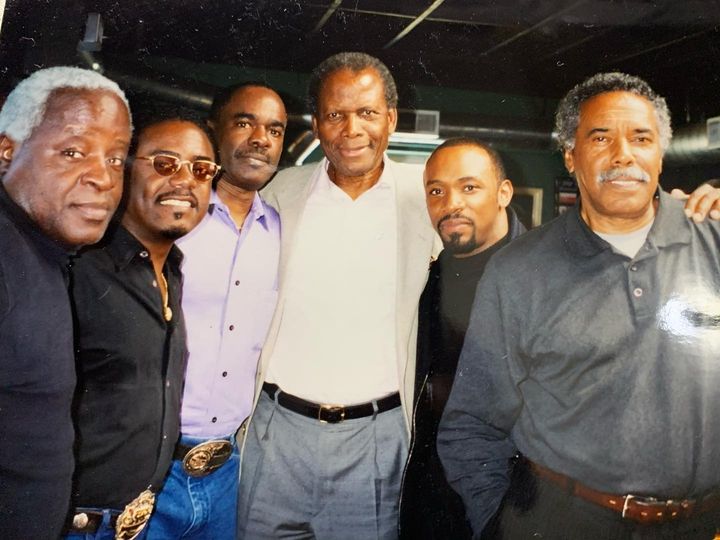
MR. ART EVANS, MR. REGINALD T. DORSEY, MR. GLENN TURMAN, MR. SIDNEY POITIER, AND MR. ROBERT HOOKS.
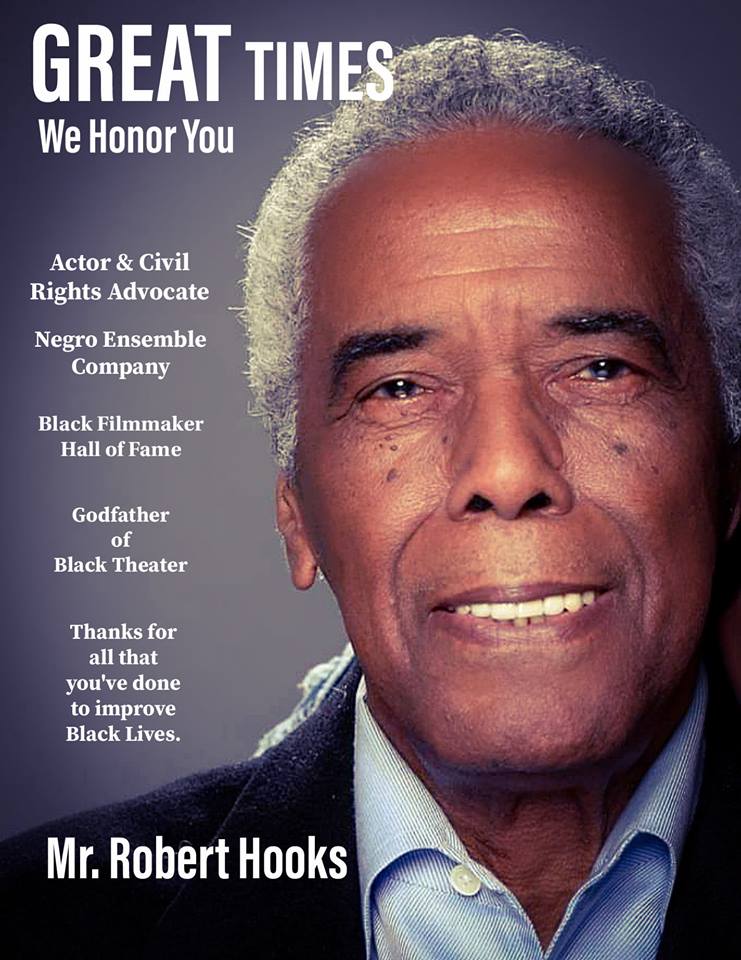
Robert Hooks
Production credits:
Splendid Mummer
by Lonne Elder, III
Washington University
St. Louis, Missouri (1979)
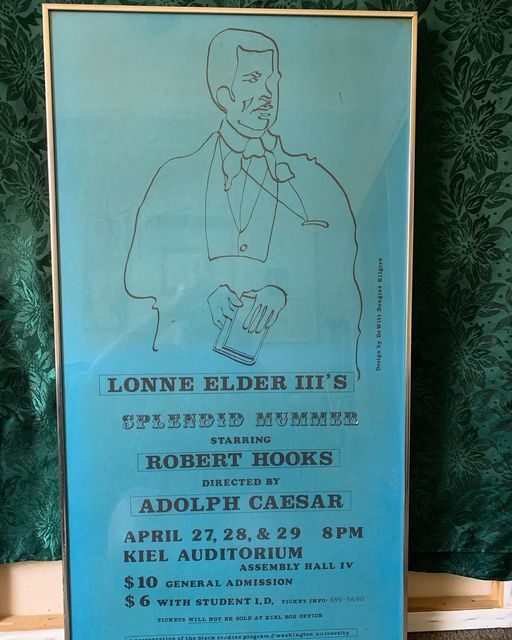
Thanks to Playwright/screenwriter/ artist Christian Elder (son of legendary playwright/screenwriter Lonne Elder III)..”Splendid Mummer” was a one-man show written by Elder and directed by illustrious artist Adolph Caesar. We presented the work for a limited engagement at Washington University in St. Louis (1988) It was an honor for me to perform this piece, as the great Ira Aldridge was a hero and an inspiration for me in my career as an artist. The poster artwork had quite a cool resemblance to me I thought. And what a great experience it was working with two of my greatest friends and colleagues in this life.
Ceremonies in Dark Old Men
Negro Ensemble Company
Ford’s Theatre
Washington, DC
February 5 – March 3, 1985
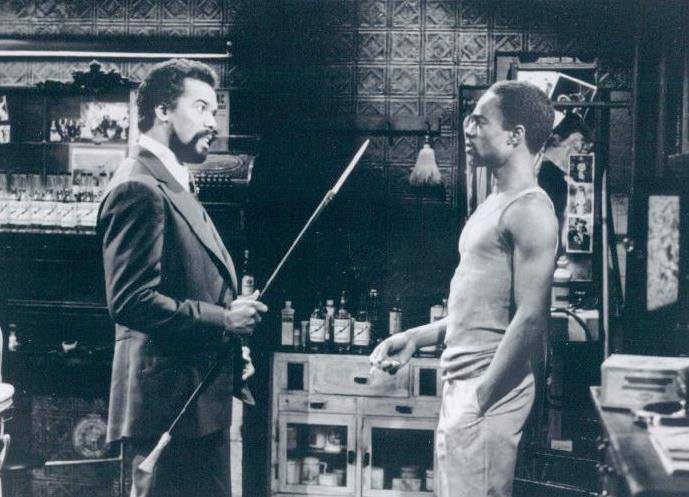
“Here’s a throwback to one of my favorite friends and colleagues in life Glynn Turman. This was a classic (and fun) scene from the great playwright Lonne Elder III’s “Ceremonies in Dark Old Men”. Glynn’s “Theo” and my “Blue Haven”. – {“Glynn Turman and I have been close and dear friends for decades, but had never shared a stage together until this unforgettable production of “Ceremonies in Dark Old Men” This was one of the first NEC productions to move from stage to television, and I had the enormous pleasure of ‘finally’ acting with Glynn. Here In this scene, I was Harlem badass gangster “Blue Haven” in the classic confrontation scene with Glynn’s “Theo Parker”! I have never been so soul-satisfied as an actor than playing opposite the masterful Glynn Turman!” )
“I remember when Douglas Turner Ward asked me if I would play the role of ” Blue Haven’ in the ABC television version of Lonne Elder III’s “Ceremonies in Dark Old Men”. I said “Doug I swore I’d never act in any of our NEC projects”, ..it’s not why we created the company!
He then reminded me that ABC insisted that I play “Blue Haven” or they would back away from the TV special. So, naturally, I agreed to play Blue Haven,.. BUT only if Glynn Turman was cast as “Theo” in the film!…AND Glynn was indeed cast in the role, AND… as we all expected, he was an amazing ‘Theo Parker’. Together with Douglas Turner Ward, Rosalind Cash, Godfrey Cambridge, Jerry Bell, Glynn, and I, we made it happen. A big successful film from a play that did great justice to the extraordinary original story from literary giant playwright Lonne Elder III. Here,… Glynn and I, give the audience “Theo” and “Blue” in “Ceremonies”!… It was a thrilling experience to act with Glynn!“

The great and legendary singer Nancy Wilson was a dear and close friend of mine. She would share with me her real desire to be a play producer here in LA . At the time I was in the process of mounting Lonne Elder III’s Black Harlem drama “Ceremonies in Dark Old Men” for its LA opening. I had produced Ceremonies originally in New York at our classic Negro Ensemble Company, and LA was the next stop. ..Nancy Wilson came on my production as Associate Producer, and began learning the ropes of professional play producing. Personally, Nancy Sue and I were true ‘soulmates’ until she passed. The photo was taken as we were leaving memorial services for our great and dear friend singer Carl Anderson who had transitioned…Nancy Wilson was not just a great singer, but an amazing human being.
Hallelujah, Baby!
Martin Beck Theatre
New York, NY
April 26, 1967 – January 13, 1968
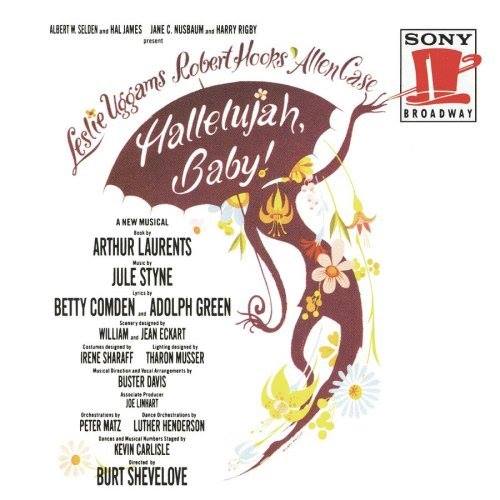
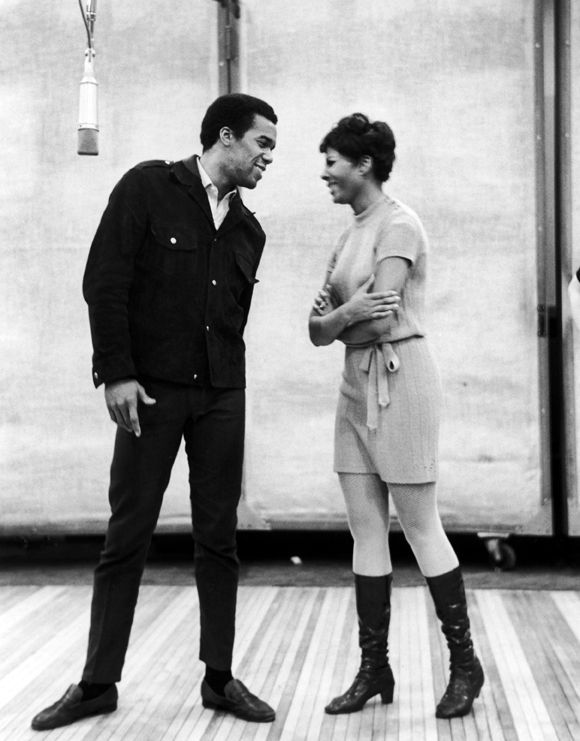
Robert Hooks and Leslie Uggams –
Hallelujah, Baby!, written by Arthur Laurents, with a score by Jule Styne and lyrics by Betty Comden and Adolph Green opened at the Martin Beck Theatre on April 26, 1967, it ran for 293 performances.
© 2020 Sony Music Entertainment. All Rights Reserved.
Talk about Broadway musical giants, we had the ‘legendary best’ on “Baby”: Book by Arthur Laurents, Music by Jule Styne, Lyrics by Betty Comden & Adolph Green, Dance Orchestrations by Luther Henderson, Directed by Burt Shevelove! and other greats from the musical world of Broadway!
Hallelujah, Baby!: Watch My Dust
Where’s Daddy?
Clem * (1966) Stage Play: Where’s Daddy? Comedy. Written by William Inge. Directed by Harold Clurman [final Broadway credit]. Billy Rose Theatre: 2 Mar 1966- 26 Mar 1966 (21 performances + 14 previews that began on 17 Feb 1966). Cast: Beau Bridges (as “Tom”) [Broadway debut], Barbara Dana (as “Teena”) [final Broadway role], Betty Field (as “Mrs. Bigelow”), Robert Hooks (as “Razz”), Hiram Sherman (as “Pinky”), Barbara Ann Teer (as “Helen”). Standby actor: Dortha Duckworth. Produced by Michael Wager. Produced by arrangement with Robert Whitehead.
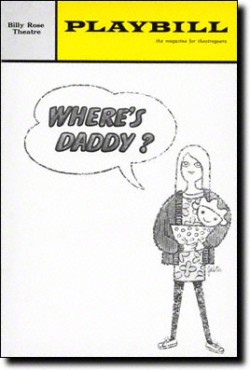

“Where’s Daddy” was a new comedy by the marvelous playwright William Inge. Opening in March 1966 at Broadway’s Billy Rose Theatre, it was the ‘shortest’ run of a play I ever experience of the eight plays I’ve done on Broadway. We opened and ran for only two weeks, but the cast had awesome fun with Inge’s deeply funny two act stage piece. Directed by the legendary Harold Clurman (of Group Workshop fame) the New York theatre critics cast shadows on the play’s script, and we were forced to close for lack of ticket sales. Seen here are three of Where’s Daddy’s stars, (LtoR) the late great Barbara Ann Teer, Robert Hooks, and Barbara Dana in a second act scene. Other stars of Where’s Daddy not pictured, were Betty Field, Hiram Sherman, and Hollywood’s Beau Bridges (in his first Broadway acting assignment.)
From the pen of the great William Inge comes his comedy in two acts “Where’s Daddy” Opening in March 1966 at Broadway’s Billy Rose Theatre. Produced by Michael Wager (by arrangement with Robert Whitehead.) Directed by Harold Clurman (of The Group Theatre fame). Seen here are (l to r) Barbara Ann Teer, Robert Hooks and Barbara Dana. Also starring were Betty Field, Hiram Sherman and Beau Bridges.
THE NEGRO ENSEMBLE Company
(1967) Co-founders of the renowned theatrical troupe The Negro Ensemble Company.
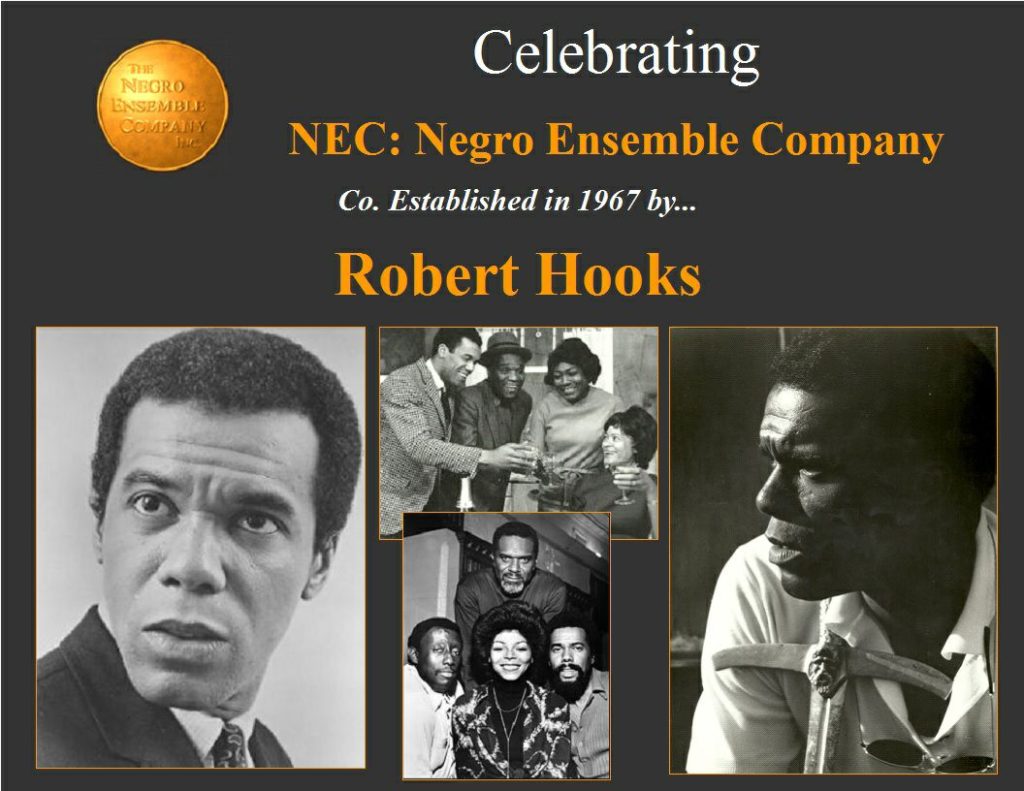
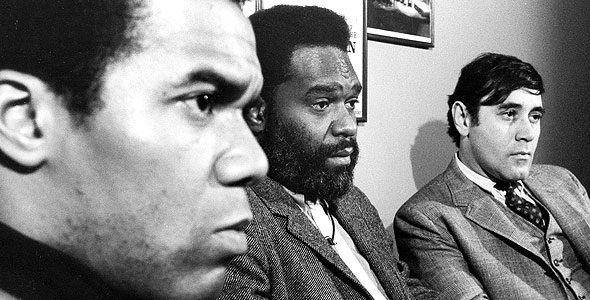
Robert Hooks, Douglas Turner Ward, Gerald S. Krone,
At the end of NEC’s first (and very successful) theatre season, staff photographer Bert Andrews set up this awesome photo assemblage of many company members gathered and celebrating our ‘four’ electrifying plays that year!
Here, with the three founders front, are other NEC artists, staff, and trainees, making up a proud and dedicated new Black Theatre Company, that was dubbed a national treasure’ by top New York theatre critics!
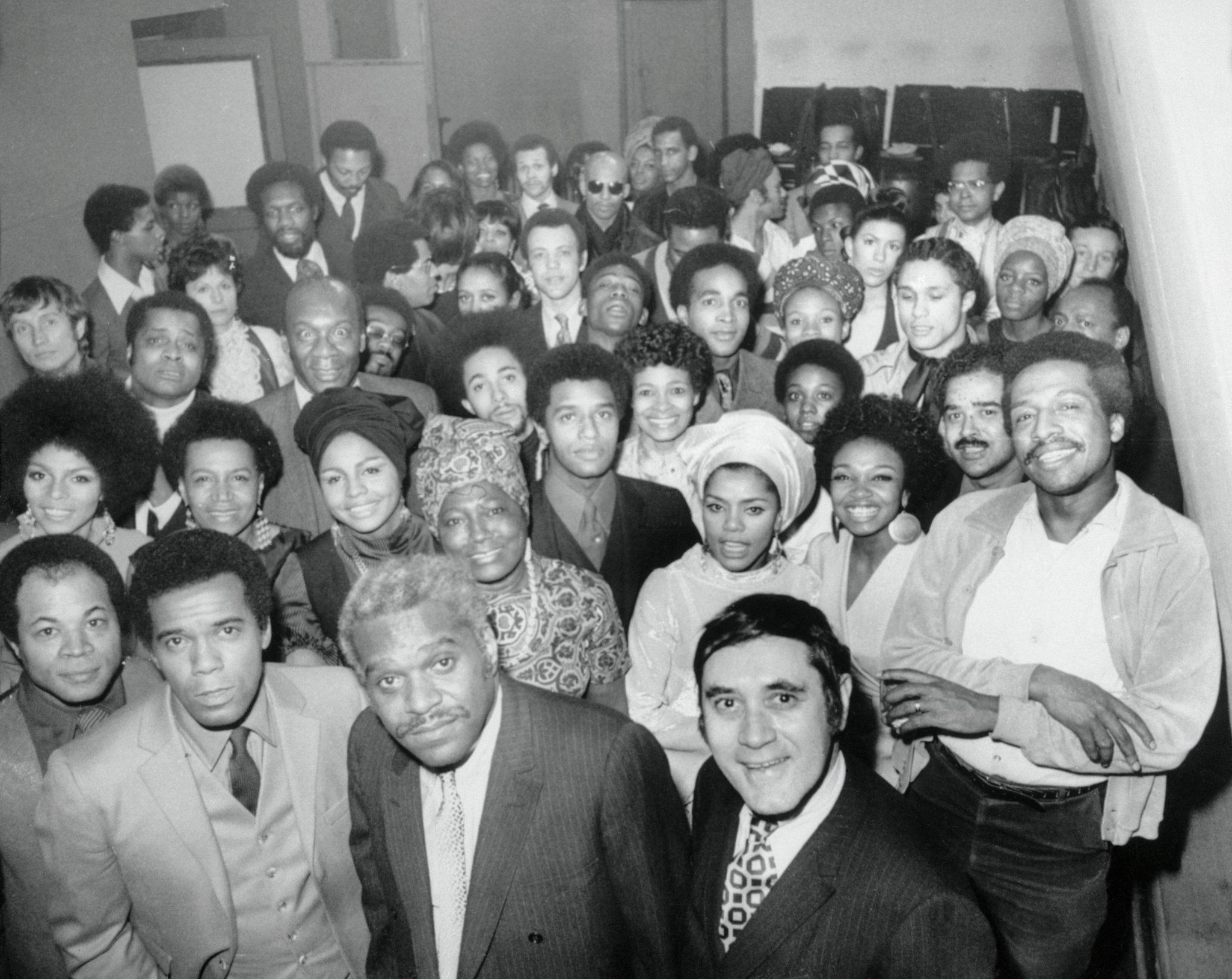
Robert Hooks, Douglas Turner Ward, and Gerald Krone (front row from left), the founders of the Negro Ensemble Company, with other members of the company in 1969 – “At the end of NEC’s first (and very successful) theatre season, staff photographer Bert Andrews set up this awesome photo assemblage of many company members gathered and celebrating our ‘four’ electrifying plays that year!
Here, with the three founders are other NEC artists, staff, and trainees, making up a proud and dedicated new Black Theatre Company, that was dubbed a national treasure’ by top New York theatre critics!” Credit…Bettmann, via Getty Images
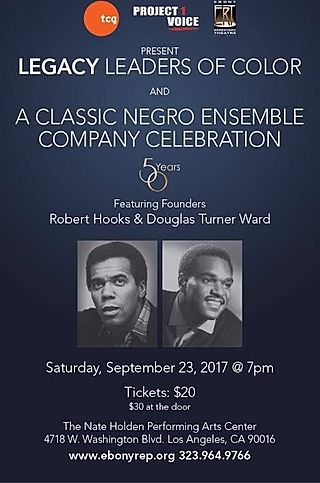

Negro Ensemble Company (circa 1967), Nigerian playwright Wole Soyinka’s brilliant musical pageant “Kongi’s Harvest”. – Douglas Turner Ward, and Robert Hooks. Directed by Michael Schultz, Dance Direction by Louis Johnson, Sets by Edward Burbridge, Costumes by Jeanne Button, Lighting by Jules Fisher, Music by Pat Patrick.
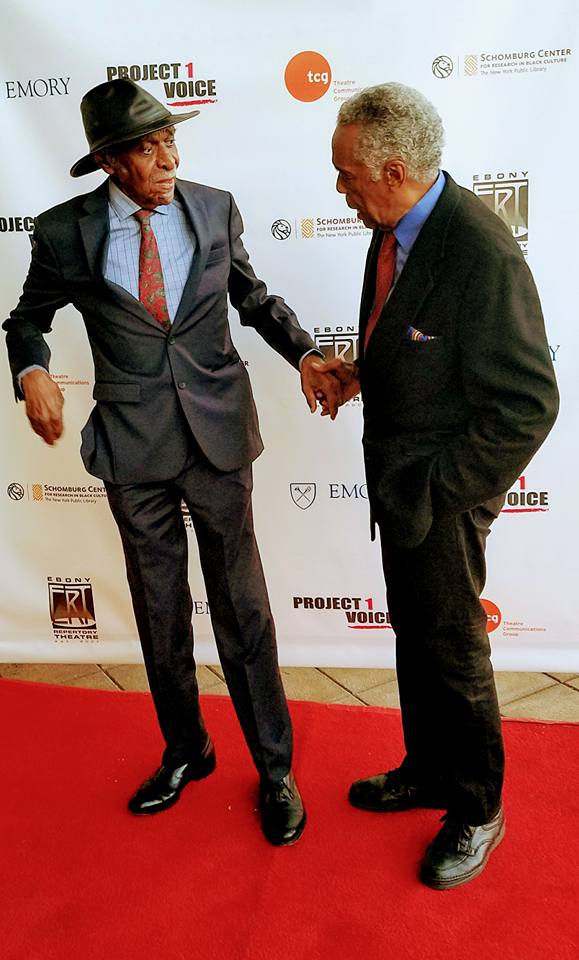
Douglas Turner Ward and Robert Hooks.
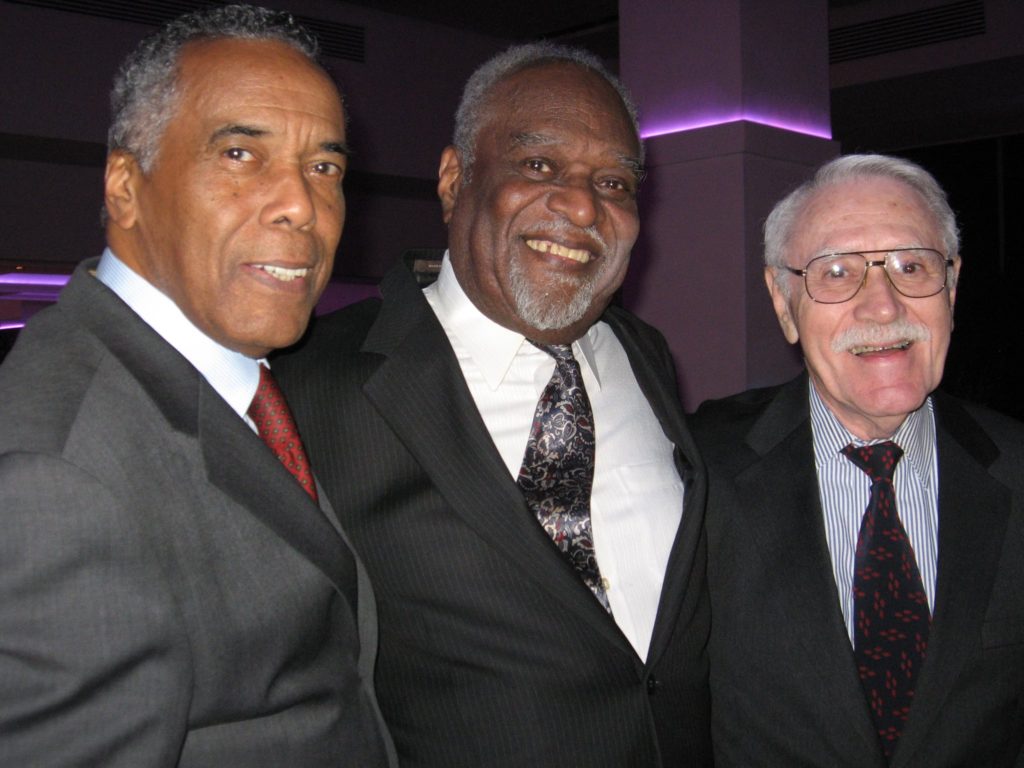
Robert Hooks, Douglas Turner Ward, Gerald S. Krone
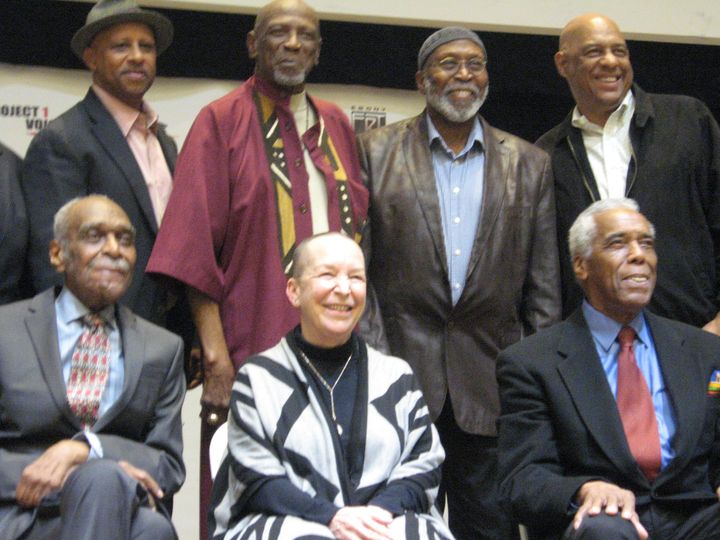
“Staying in celebration mode of the world-famous NEC, and in honor and tribute to its recently departed Artistic Director, Douglas Turner Ward. Photographed here is an August assemblage of NEC alumni joining in its 50th Anniversary Founders Tour in Atlanta Ga.! Standing, Ruben Santiago Hudson, Louis Gossett Jr., the late Walter Dallas, and Oz Scott. Seated: Douglas Turner Ward, Pearl Cleague, and Me. What a grand and auspicious coming together of some of our NEC greats!”

We started out together in the classic Broadway production of Lorraine Hansberry’s “A Raisin in the Sun” (circa 1960), Doug was already in the play (understudying Sidney Poitier in the lead role from it’s inception) and I came in and replaced Louis Gossette Jr. while the play was still selling-out on Broadway.That’s were our bound began. Here many years later where the three of us are at the 50th Anniversary celebration of the The classic Negro Ensemble Company, being honored at Atlanta’s Spelman College… I honor and cherish the great relationships we enjoyed as Black thaetre friends, brothers and cultural colleagues! RIP dear Black theatre pioneers Douglas and Louis!
A Raisin In The Sun

When Louis Gossett left “A Raisin in the Sun”, the biggest and only Black play to hit Broadway ever, to do the film version, I – Bobby Dean Hooks – was cast to replace him and finish out the Broadway run of the Lorraine Hansberry classic. Ironically, I had seen the play in its pre-Broadway tryout in Philadelphia where I was studying acting and theatre. And seeing “Raisin” at that point in my young drama-student life totally convinced me that I needed to pack up, move to New York and commit to becoming a professional actor. Even MORE ironically and fatefully, the first professional acting job I got was in the same play that had prompted my move to Gotham in the first place… “A Raisin in the Sun.” Here I am with the amazing and legendary actor Diana Sands at the Booth Theatre. When we closed on Broadway we then traveled the country on a year-long national tour with this brilliant play, sharing it with eager audiences across the country!
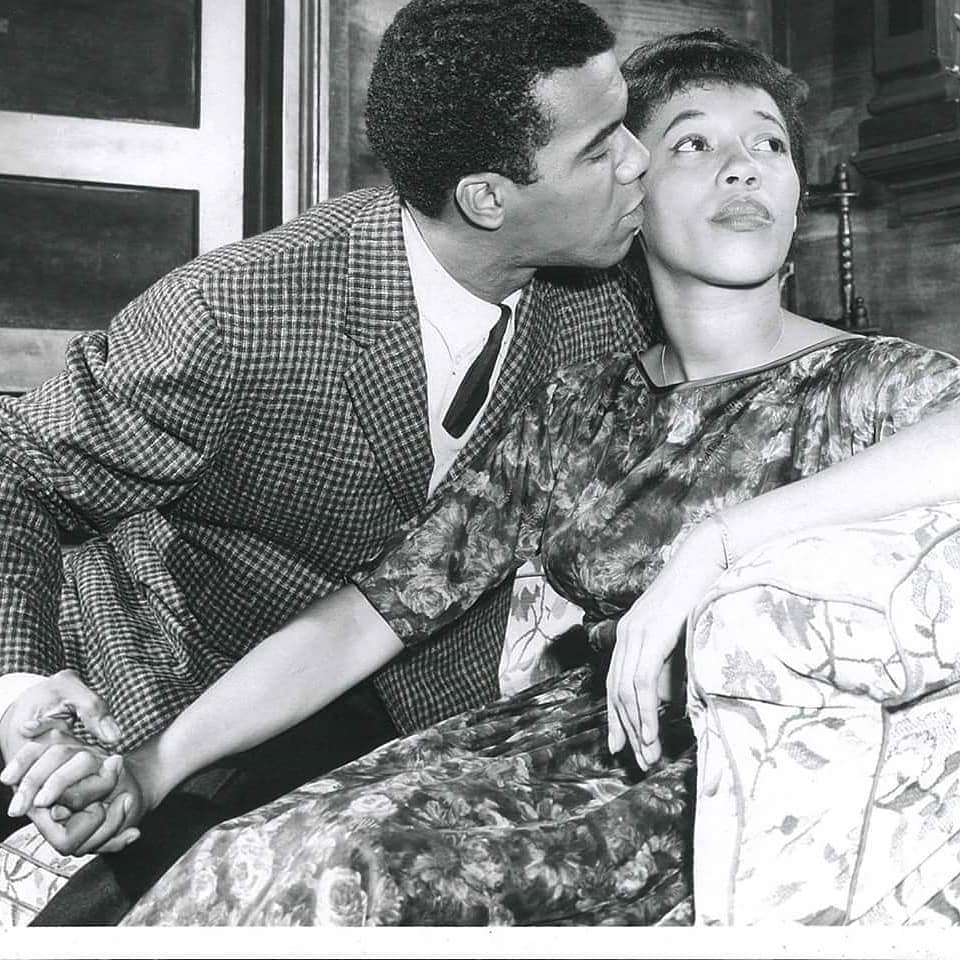
Robert Hooks and Diana in the original production of A RAISIN IN THE SUN. Mr. Hooks—then known as Bobby Dean Hooks—replaced Louis Gossett, Jr. during the show’s Broadway run and later appeared with Diana on the national tour.
“I was studying theatre at the Bessie V. Hicks School of Drama in Philadelphia when I saw “A Raisin in the Sun” at the Walnut Street Theatre on its way to Broadway. Little did I know when I was studying acting in Philadelphia and attended on that fateful evening …my very first professional play with an all-Black cast during its pre-Broadway run, that I would soon be hired for that same Broadway production a few months later!
A great beginning and turning point in my acting career! Here, as George, I’m trying hard to ‘woo’ Beneatha, but she wasn’t havin’ it!
Of course, by that time it had become a huge Broadway hit and the first to be written, directed, and performed by Black artists. “A Raisin in the Sun” had become the most critically acclaimed Broadway play ever, and I was cast to replace Louis Gossett (who played DIANA SANDS’ suitor…hence me and Diana!) in the role of George Murchison in that original production!
Louis was on his way to Hollywood to reprise his role in the film version. And I was the extraordinarily lucky young thespian fresh in New York, getting his first Broadway job in the same play that changed my life and prompted me to make the move to New York. And performing with THE GREATS!
I closed out Raisin on Broadway and toured for a year on the national Raisin tour, and when I returned to New York, I couldn’t stop working both on and Off Broadway for years …I had a pocket full of dreams!”
{“Louis Gossett was responsible for me getting to perform in my first Broadway play, the one that prompted me to move to NYC from Philadelphia. After its tremendous and historic 1959 success, “A Raisin in the Sun“, (which Louis co-starred in,) Hollywood producers immediately bought the movie rights. When Louis left the play to act in the movie (while it was still enjoying its busy Broadway run), director Lloyd Richards selected me to replace him to finish the Broadway production run and continue with the countrywide tour. Lou and I became good friends and colleagues in the brand new and promising Black theatre movement at the turn of the 1960s. We also both played for the Negro Actor’s Guild with teammates Lonne Elder, III, Robert MacBeth, Hal DeWindt, Reni Santoni, and (believe it or not) George C. Scott -who declared, “I just want to pitch for the Negro Actor’s Guild!”- and pitch he did! We won the Broadway Show League championship two years in a row! Louis and I soon worked on stage together in Jean Genet’s “The Blacks” and then he went on to great success in film and television winning the Academy Award for “An Officer and a Gentleman” and an Emmy Award for his brilliant character “Fiddler” in “Roots“! Google Louis Gossett Jr. for more information on his brilliant career. He is, was, and forever remains a true Black Theatre Pioneer!“}
Tiger Tiger Burning Bright
BoothTheatre (1962)

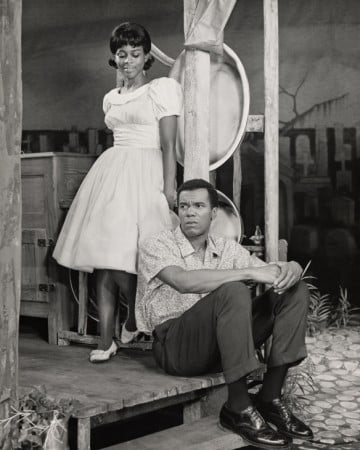
Broadway play “Tiger Tiger Burning Bright” which opened at the Booth Theatre in December 1962, here is Cicely Tyson and me, playing brother and sister in the Peter Feibleman drama. The play also co-starred Alvin Ailey in his first (and only dramatic) acting role in a Broadway play! There was a stupendous array of Black talent in “Tiger Tiger”: Diana Sands, Ellen Holly, Roscoe Lee Browne, Claudia McNeil, Al Freeman Jr., Robert Macbeth, and Janet MacLaughlin among others.
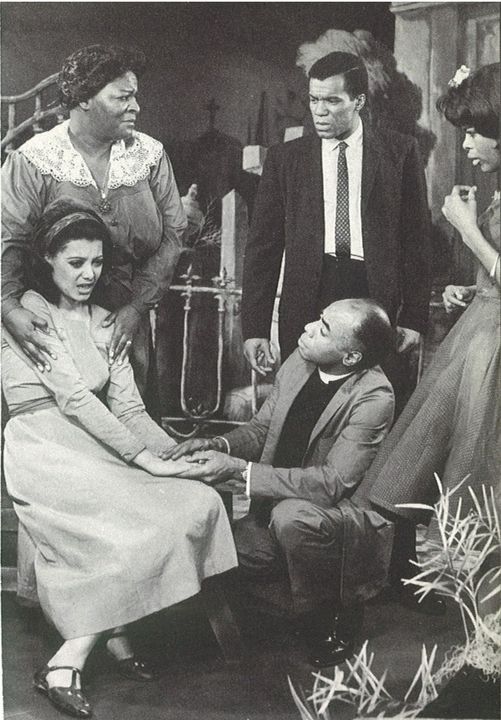
Though I had already appeared in two Broadway plays, replacing Louis Gossett Jr. in “A Raisin in the Sun” and taking over for Billy Dee Williams in “A Taste of Honey”, it was in “Tiger Tiger Burning Bright” that allowed me my first “original role” to create! Written by Peter S, Feibleman , Directed by Joshua Logan, and Produced by Oliver Smith and Roger L. Stevens. The New Orleans drama opened at the Booth Theater (circa 1962) and featured some of the best Black dramatic talent ever assembled on a Broadway stage. In this scene are: Claudia McNeil (holding) Ellen Holly, Roscoe Lee Browne (kneeling), Me, and Cicely Tyson. Also starring in ‘Tiger’ but not seen here were: Alvin Ailey, Diana Sands, Al Freeman Jr. Robert Macbeth, Janet MacLachlin, Paul Barry, and Rudy Challenger. Because of a citywide New York newspaper strike, the play closed after a short run.
Henry V
(1965) Stage: Appeared (as “Henry V”) in “Henry V” at the New York Shakespeare Festival.
The New York Shakespeare Festival’s (NYSF) production of “Henry V”, with Joe Papp cast me as King Henry and performed in Central Park at the Delacourt Theatre.
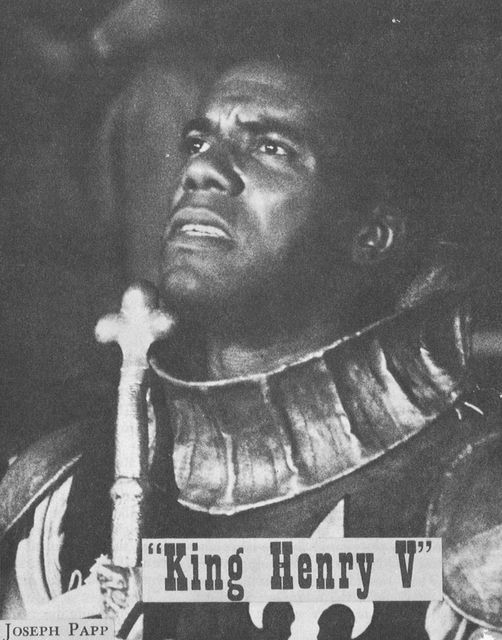
New York Shakespeare Festival’s prolific and innovative producer Joseph Papp was ready to cast a Black actor in the complex and powerful role of Henry V… and offered me the role. Although I had always had a passion for Shakespeare, I hadn’t performed in Shakespeare since studying theatre at the Bessie V. Hicks School of Drama back when I was a young fledgling upstart. I was always a serious student of the ‘Bard’ , but never imagined a Black actor would ever be hired to play anything but Othello on the professional American stage. Joe Papp thought differently, assuring me I would be a wonderful Henry. And indeed I had a ball doing the play at his famed New York Shakespeare Festival in the Park, and then touring the city performing in the neighborhood parks in all the five major boroughs to plant the seeds of theatre around the city. Here, Henry readies for the mighty Battle of Agincourt.
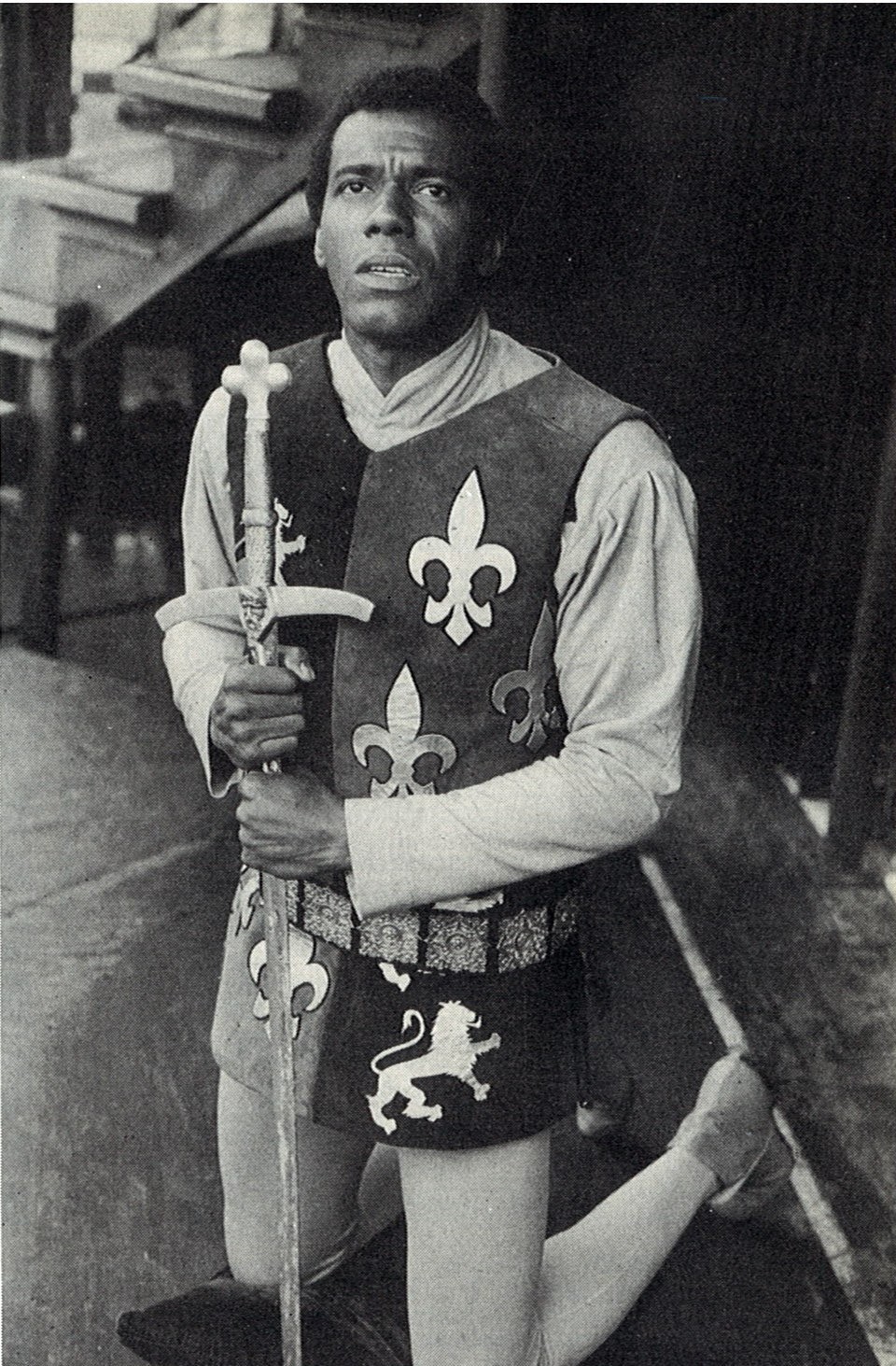
Well, I’m not a king (I’ll leave that business to the new King Charles III of England) But I did play one on stage! I played the title role in Shakespeare’s “King Henry V”, directed by Joseph Papp, and presented at the Delacorte Theatre in New York’s Central Park – opening in June of 1965. As seen here, Henry V is preparing for the Battle of Agincourt. A drama in two parts, the action takes place in England and France. The profoundly talented and beautiful Ellen Holly played Katherine, along with a great and large cast of the top classical actors from the New York stage, as (of course) the great Festival creator Joseph Papp was famous for. It was the first time a Black actor was cast as Henry V and I was honored! The New York theatre audiences at the Central Park Delacorte (and afterward on the Summer City tour with the Delacorte Mobile Theatre) were thrilled at this extraordinary Shakespeare production.
On the City Tour, and in addition to my evening performances of Henry V, my brand new teenage theatre company – The Group Theatre Workshop – was hired by Papp to perform its own show – Gwendolyn Brooks’ “We Real Cool” – in the afternoons WITH PAY for the community youngsters on all the stops on the summer Shakespeare tour! What a fabulous experience for us all! Many of the GTW students even got their Equity cards as a result of the Papp hire!
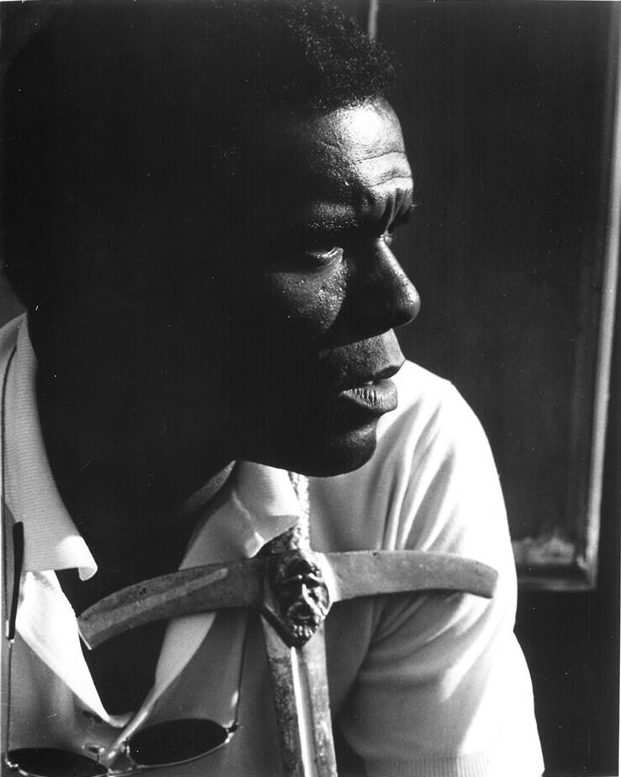
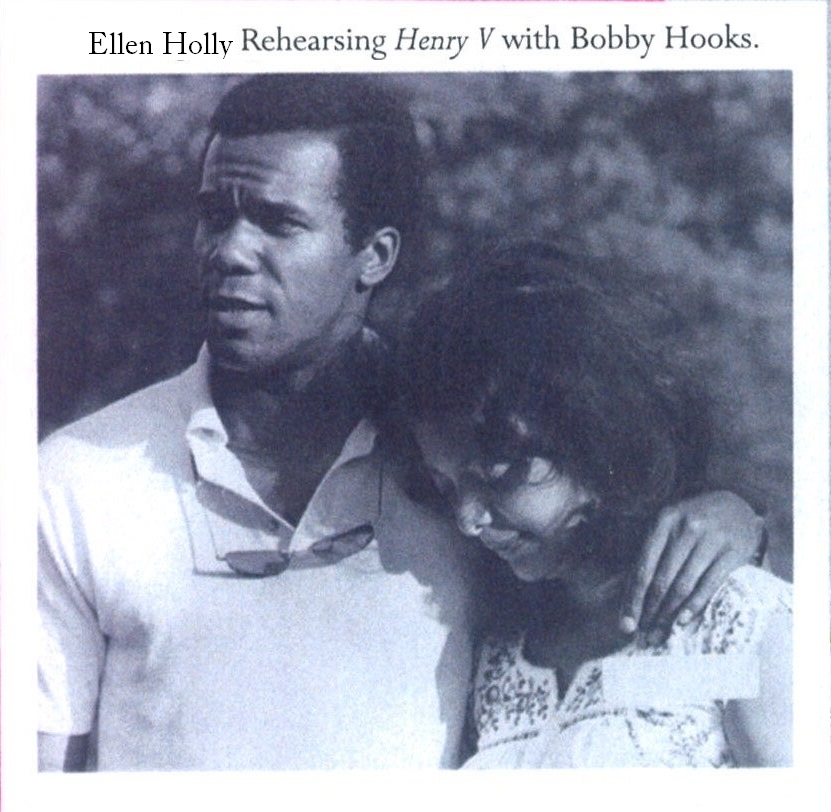
New York Shakespeare Festival. That extraordinary time was made more special when the great actress Ellen Holly was cast as my leading lady. Then, another historical moment came when we toured Henry V through the city neighborhoods on the Summer Mobile Unit production. I was able to convince producer Joe Papp to present my new theatre company “The Group Theatre Workshop” (teenagers all) on stage in a showcase production “We Real Cool” (conceived by Ron Mack, Barbara Ann Teer and myself) in the afternoons on that same schedule and on the same Shakespeare stage as our Henry V. It was a tremendous success that summer (circa 1965) and many of the GTW students got their union cards and went on with their careers.
Seen here from the Central Park production (taking a rehearsal break) is myself and the great classical actor Ellen Holly, who BTW was Joe Papp’s leading lady in (count em’) Eight of his classic plays. She was Papp’s favorite female star, and a great “Princess Katherine” with me in Henry V. Ellen is sorely missed, and was a great love in my life.
New York Shakespeare Festival – Joseph Papp
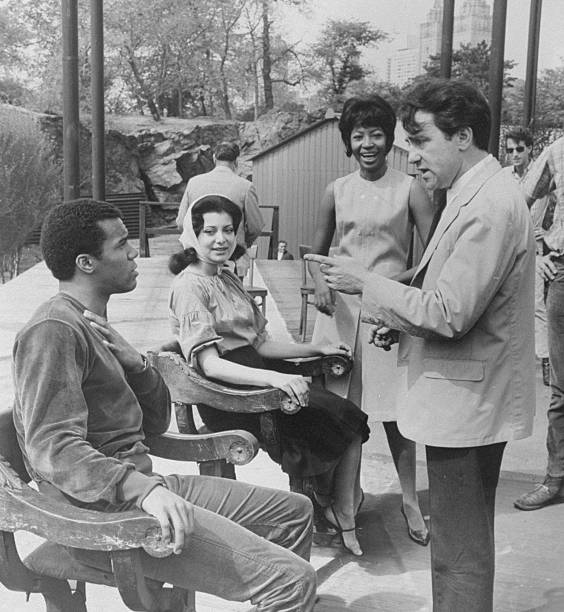
Joseph Papp (right), founder, producer, and director of the New York Shakespeare Festival coaches Robert Hooks, Ellen Holly, and Lynn Hamilton (l. to r.) for a production at the Delacorte Theatre in Central Park. (Photo by Paul DeMaria/NY Daily News Archive via Getty Images)
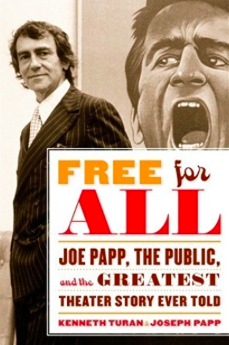
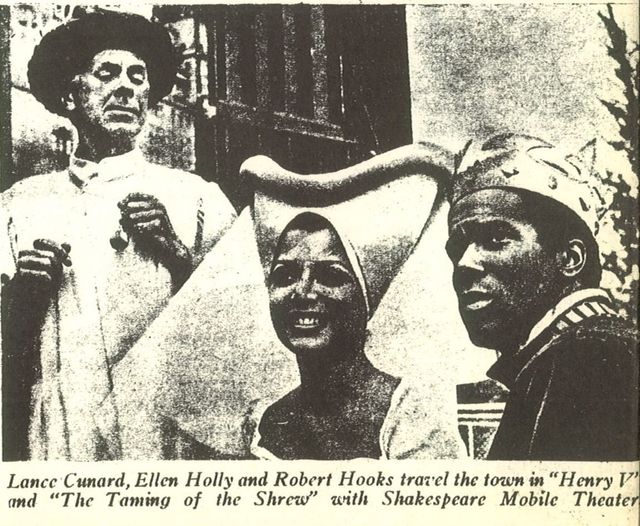
New York Shakespeare Festival in repertory with “Taming of the Shrew” and “Henry V” playing the Delacourt in the park, then touring the five boroughs. Here is the beautiful and deeply talented actress Ellen Holly as “Katherine” in “Shrew” and Me as “Henry” doing PR for the city tour. That’s masterful Shakespearean Lance Cunard looking on. Both productions were directed by Joseph Papp! Also touring with the festival and performing in the afternoons at each location for the community youth- was my brand new teenage Group Theatre Workshop (20 actors strong) presenting Gwendolyn Brooks’ “We Real Cool, A Live Teenage Show” directed by Barbara Ann Teer and Ron Mack. What an amazing summer for us ALL!
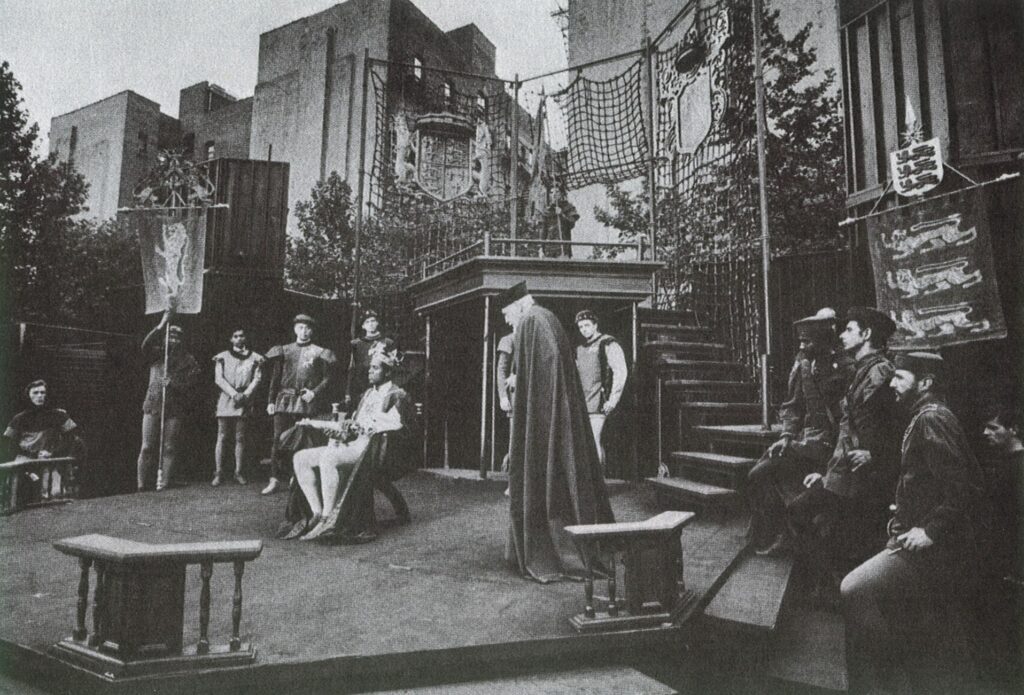
Hallelujah, Baby!
(1967) Stage Play: Hallelujah, Baby! Musical. Music by Jule Styne. Lyrics by Adolph Green and Betty Comden. Book by Arthur Laurents. Musical Director: Buster Davis. Vocal arrangements by Buster Davis. Music orchestrated by Peter Matz. Dance arrangements by Luther Henderson. Choreographed by Kevin Carlisle. Scenic Design by William Eckart and Jean Eckart. Directed by Burt Shevelove. Martin Beck Theatre: 26 Apr 1967- 13 Jan 1968 (293 performances + 22 previews that began on 6 Apr 1967). Cast: Allen Case (as “Harvey”), Robert Hooks (as “Clem”), Leslie Uggams (as “Georgina”), Lou Angel (as “Calhoun”), Chad Dee Block (as “Bouncer”), Hope Clarke (as “Maid/Ensemble”), Marilyn Cooper (as “Mrs. Charles/Mistress/Ethel/Dorothy”), Carol Flemming (as “Princess”), Frank Hamilton (as “Mister Charles/Timmy”), Lillian Hayman (as “Momma”), Winston DeWitt (as “Hemsley Tip/G.I.”), Justin McDonough (as “Captain Yankee/Ensemble”), Saundra McPherson (as “Cutie”), Garrett Morris (as “Prover/Ensemble”) [Broadway debut], Michele Murray (as “Cutie”), Alan Peterson (as “Director”), Ann Rachel (as “Brenda”), Barbara Sharma (as “Mary”), Don Strong (as “Sugar Daddy/Master”), Bud Vest (as “Prince/Ensemble”), Alan Weeks (as “Prover/Tap/G.I.”), Standby: Norma Donaldson (as “Georgina”). Understudy: Justin McDonough (as “Harvey”). Replacement actors: Clifford Allen (as “Ensemble/G.I./Prover”), Lou Angel (as “Ensemble”), Judith Austin (as “Ensemble”), Michael Beirne (as “Captain Yankee/Ensemble”), Chad Dee Block (as “Ensemble/Official”), Carol Flemming (as “Ensemble”), Lee Hooper (as “Ensemble”), Bernard Johnson (as “Ensemble/G.I./Tip”), Louis Johnson (as “Ensemble”), Carolyn Kirsch (as “Ensemble”), Saundra McPherson (as “Ensemble/Maid”), Gerrianne Raphael (as “Dorothy/Ethel/Mistress/Mrs. Charles”), Larry Roquemore (as “Ensemble/Prince”), Kenneth Scott (as “Ensemble/G.I./Prover”), Don Strong (as “Ensemble”), Ella Thompson (as “Ensemble”), Billy Dee Williams (as “Clem”). Standbys: Lincoln Kilpatrick (as “Clem”), Lu Parks (as “Momma”), Freda Payne (as “Georgina”). Understudies: Michael Beirne (as “Harvey”), Carol Flemming (as “Ethel”), Louis Johnson (as “Tap/Tip”), Suzanne Rogers (as “Mary”). Produced by Albert W. Selden, Hal James, Jane C. Nussbaum, and Harry Rigby. Note: Mr. Hooks was nominated for a Tony Award as Best Actor (Musical).
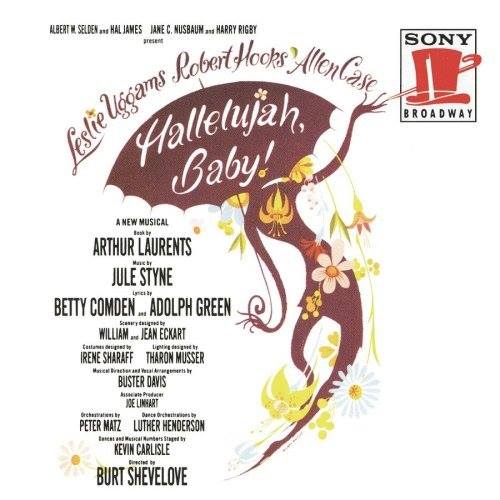
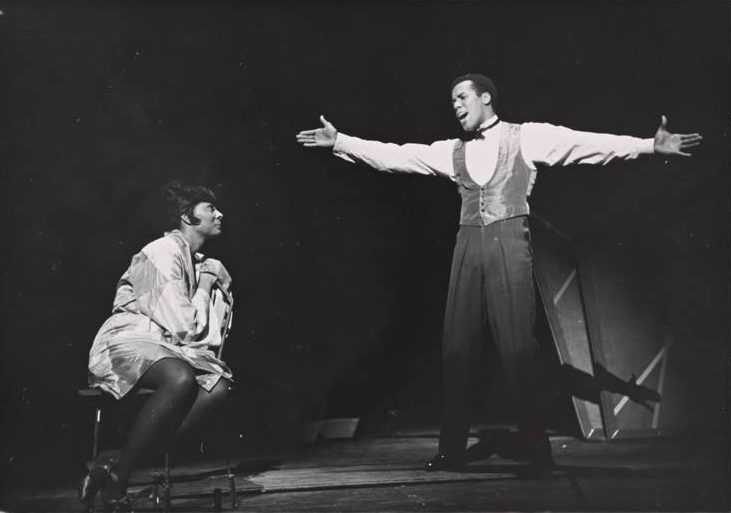
Hallelujah, Baby!: Watch My Dust
Hallelujah, Baby! (Original Broadway Cast Recording)
℗ Originally released 1967 Sony Music Entertainment
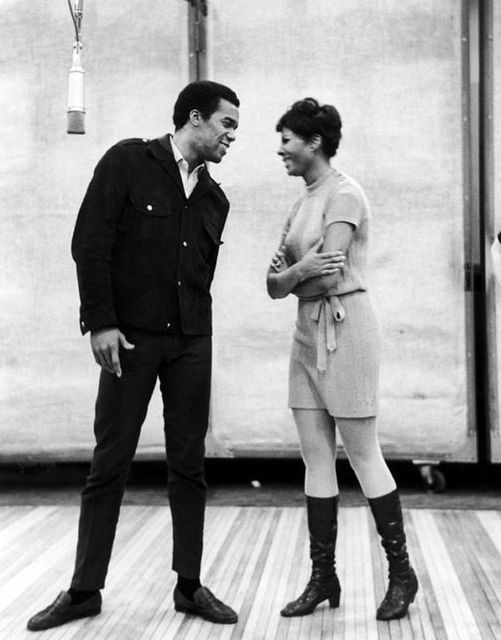
The great Leslie Uggams and me fooling around in the Columbia Records Studio, singing and recording the Original Cast album from our Tony Award-winning musical “Hallelujah Baby” (circa 1968). Talk about Broadway musical giants, we had the ‘legendary best’ on “Baby”: Book by Arthur Laurents, Music by Jule Styne, Lyrics by Betty Comden & Adolph Green, Dance Orchestrations by Luther Henderson, Directed by Burt Shevelove! and other greats from the musical world of Broadway!
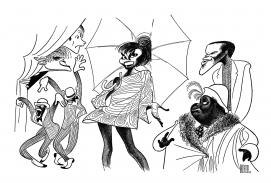
The Al Hirschfeld Foundation
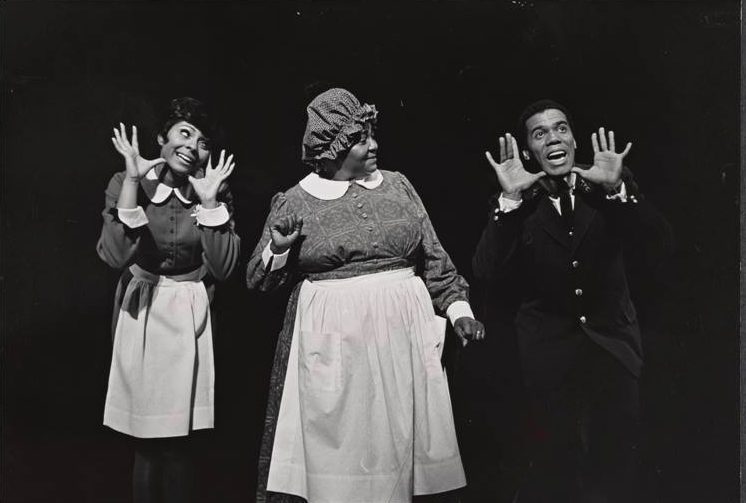
Leslie Uggams ` Lillian Hayman ~ Robert Hooks
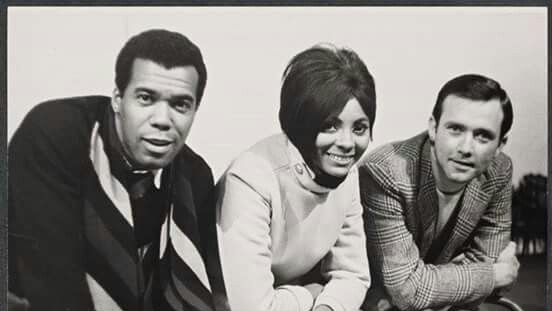
Robert Hooks ~ Leslie Uggams ~ Allen Case
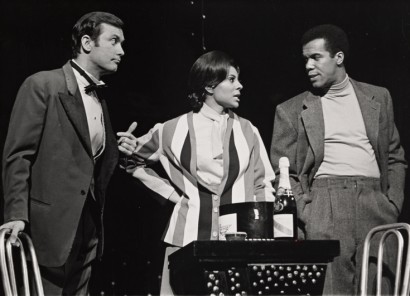
Friedman-Abeles/New York Public Library
The Blacks
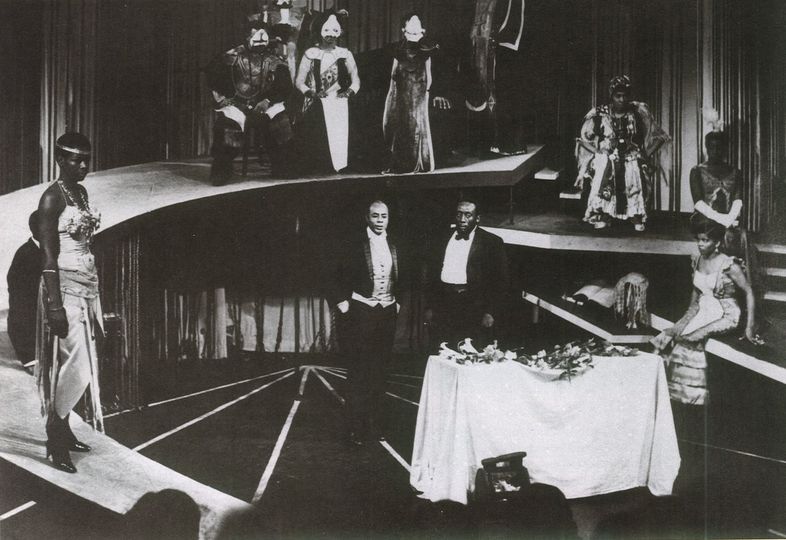
“In 1961, an English translation of Jean Genet’s absurdist drama ‘The Blacks: A Clown Show’ opened at the St. Marks Playhouse in Greenwich Village. The play concerns a group of Black performers who must act out the murder of a white woman for the entertainment of a white tribunal, which is then required to judge the Blacks for the crime. The Blacks’ cast was made up of young, talented actors who later became very well known. Seen here are Cicely Tyson (far left) Roscoe Lee Browne, Godfrey Cambridge, Louise Stubbs (far right sitting on the ramp,) Cynthia Belgrave (behind her,) Helen Martin (in chair,) on top ramp level Maya Angelou, Larry ‘Flash’ Riley and Lex Munson. …Louis Gossett and James Earl Jones,m Raymond St Jacques, and Charles Gordone round out the brilliant cast! The Blacks ran for 1.400 performances, longer than any Off-Broadway non-musical of the decade! In 1962 I was truly fortunate to replace James Earl Jones in the original cast of the classic play!“
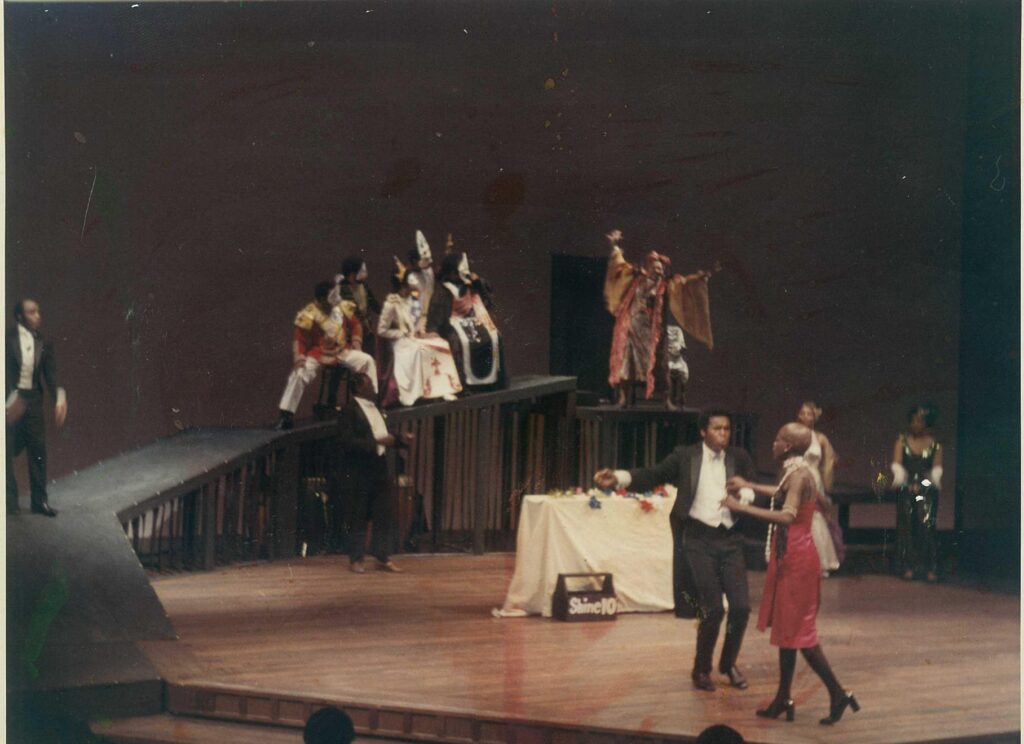
Dutchman
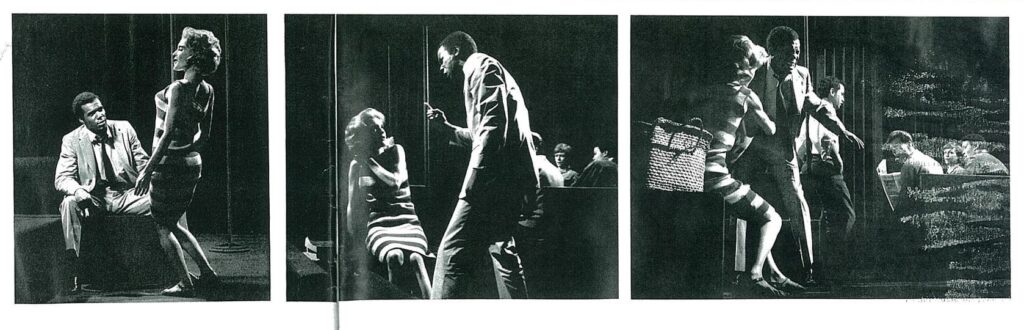
Though I had already performed in three Broadway plays portraying amazing young Black men and building a strong reputation on the New York stage. It wasn’t until ‘Dutchman’, the absolutely awesome two-character play by the then ‘brand new’ Black poet/playwright LeRoi Jones (later Imamu Baraka.) As an actor, it changed my career status big time, led to a higher cultural awareness, and created many cultural avenues for me as a Black artist, and eventually a successful theatre builder! Dutchman was a scathing confrontational drama set on a New York City subway train that shocked and enthralled Off-Broadway audiences throughout its popular run at Off Broadway’s Cherry Lane Theatre. Then we successfully toured Europe after closing. Here is the brilliant actress Jennifer West giving one of the great performances of that 1964 theatre season!

The time is 1964, (before Amiri Baraka was Amiri Baraka) then playwright Leroi Jones wrote the brilliant, and disturbing One Act drama “Dutchman”. I had attended a Backer’s Reading of the play in late 63 and thought it was a brilliant One Act, and right in time with the civil right’s movement that was really heating up. Al Freeman Jr. was reading the lead role of “Clay” and he was his wonderfully talented self. So, I was quite surprised and shocked when I got the call from playwright Edward Albee (one of Dutchman’s producers) asking if I would be interested in starring in the play. Of course I said yes!, but never found out why Al Freeman Jr. (who was great in the Backer’s reading,) wasn’t doing the role of “Clay”. In any case I co-starred in Dutchman along side the amazing actress Jennifer West as “Lula”. The play, the role, and I’m sure my performance had something to do with the fact that my acting career simply soared professionally in New York and in world theatre.
“This sassy young White girl got on the A Train just lookin’ for trouble. The young Black Ivy League brotha’ was just subwaying his way home. Then, all hell breaks loose!!
From the brilliant pen of Leroi Jones (later Amiri Baraka) comes his most successful play “Dutchman” the one-act gem that put the glowing and awesome then-new Black poet/playwright on America’s growing professional theatre map! Here are Dutchman’s two stars, Jennifer West and Me, just before the ‘big plot’ blowout!“
Seen here in an earlier scene, before ‘all hell breaks loose!’ in the finally, is me being flirted with by the brilliant actress Jennifer West. Both our careers were handsomely rewarded as a result of our performances in Dutchman! And, Thanks to two great playwrights Leroi Jones (later Amiri Baraka) who wrote Dutchman, and Edward Albee (along with Richard Barr and Clinton Wilder, ) who produced the play. And,..well..NOW (you guessed it) “Dutchman” is a Black theatre classic!
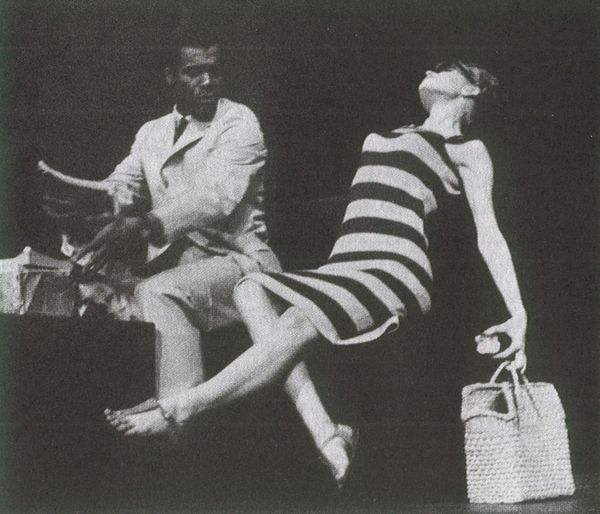
“Leroi Jones is great”… “He’s awful”, “He’s divine”, … “He’s dirty”,…” He’s talented”…” He’s terrible”! Over dinner tables and bars, across class lines and color, uptown and down, so it went about the brand new Black playwright Leroi Jones. During the 1964 season, Jones became the most talked-about dramatist in New York when he had five plays performed one after the other in four different houses. The five one-acters attracted such attention pro and con that two of them were closed by orders of the police (long story) …By the time Dutchman was presented by Theatre 1964 word had gotten around concerning the startling talents of the amazing new playwright. Lines formed at the box office at the Cherry Lane Theatre and the play was a hit almost before it began. Set in a New York subway car in motion, the story concerns a white floozie across the aisle who so teases and baits an unknown young Ivy League Black man she had never seen before that he explodes, cusses out the crazy floozie, and ends up with her knife in his belly as a result. Jones (later Amiri Baraka) “Dutchman” coupled with a revival of Edward Albee’s “American Dream” was off to a great start, and sold out the West Village theatre for its entire run! …Here are its two stars Jennifer West and Robert Hooks. Directed by Edward Perone and produced by Theatre 1964, Off-Broadway New York.
Jesus Christ Superstar
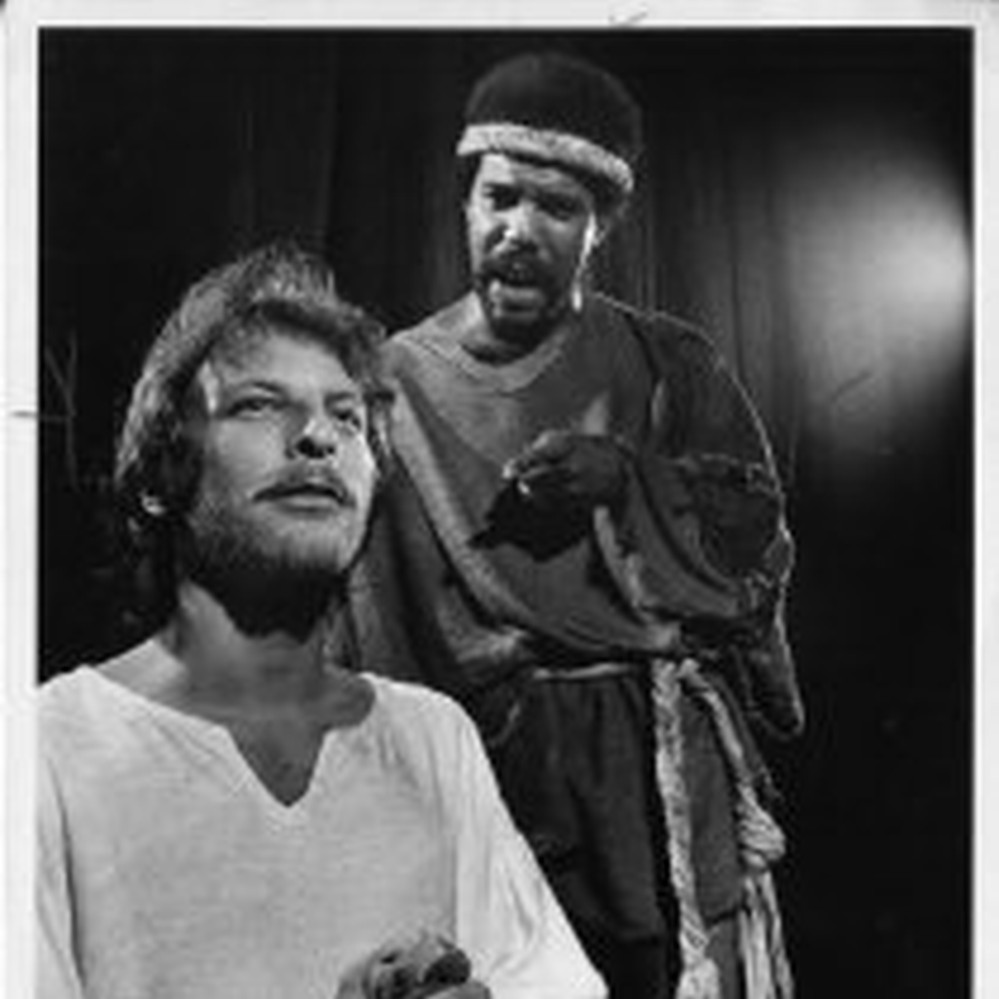
Sacramento Bee features actor Robert Hooks (rear) in his role as Judas and Robert Corff (foreground) as Jesus for the Sacramento Music Circus production of Jesus Christ Superstar. The image, dated June 20, 1975
A Soldier’s Play
Robert Hooks and Denzel Washington – A Soldier’s Play. Photo by Jay Thompson. August 19 – October 2, 1982 – MARK TAPER FORUM.
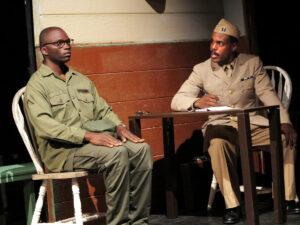
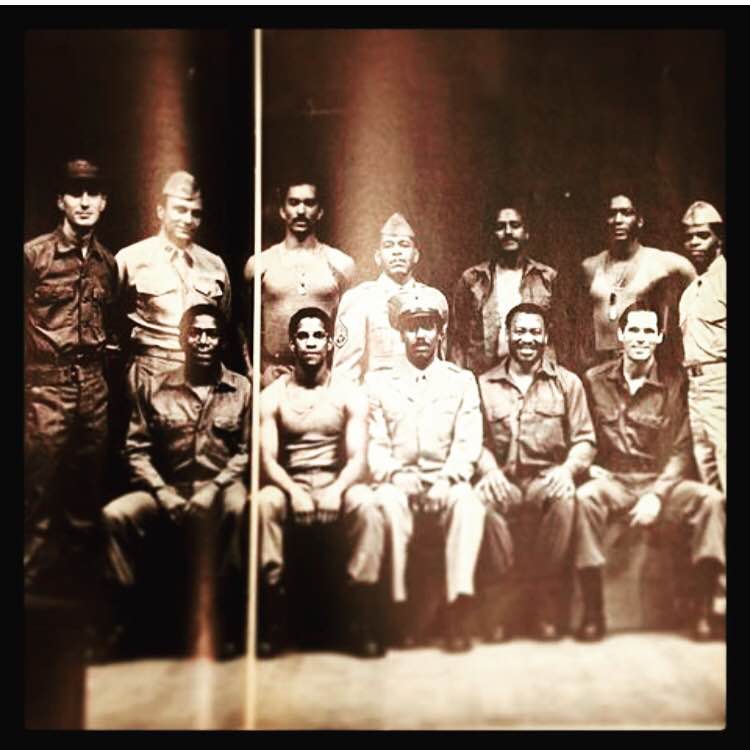
Bill Overton, Adolph Caesar, Charles Weldon, Larry Riley, Kene Holliday, Denzel Washington, Robert Hooks.Earl Billings, Cotter Smith, and Jesse Goins.