ROBERT HOOKS
Robert (Bobby Dean) Hooks
by Dale Ricardo Shields
Actor, Producer, and Activist
Along with Douglas Turner Ward and Gerald S. Krone,
the Negro Ensemble Company was founded.
A trailblazing American actor, producer, and “activist” who broke major color barriers in Hollywood Film, Television, and Broadway Theater during the Civil Rights and Black Theatre Movement era.
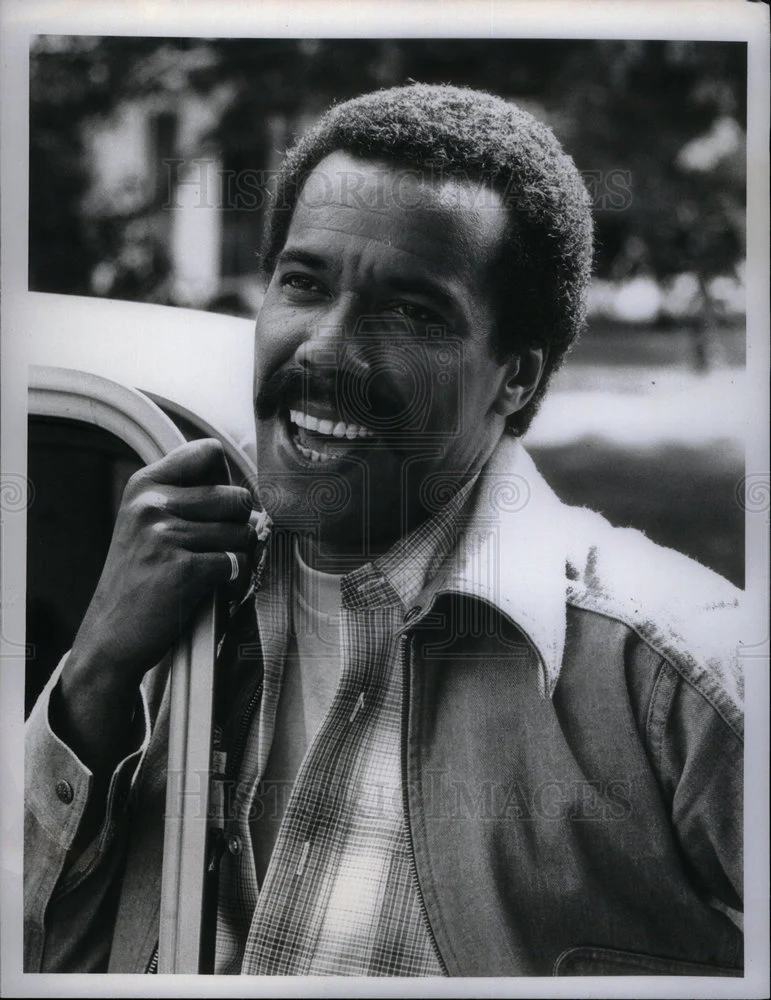
Renowned for being the first Black male lead in a network television drama. – N.Y.P.D.

Graphic by Dale Ricardo Shields ©
“The main thing I want people to remember about me is that my career and my success are more than myself, which is really the title of my upcoming book. What I’ve done, the legacy that I leave, is what I’ve done for others, what I’ve been able to do for other artists in this industry, Black artists in this industry.
Acting is fine, and the credits are nice and all that, but that’s not why I’m in this industry. That’s not why I have been successful in this industry. It’s because I’ve done things for other people. And I’ve enjoyed doing things for other people, starting all the way back to the Group Theatre Workshop with those kids I got off the streets of New York when they didn’t have any place to go.
And now their careers are blooming. That’s what I want to be remembered by.“
The Helen Hayes Pioneer Legacy Award (2025)
Robert Hook receiving the Helen Hayes Pioneer Legacy Award.

41st Helen Hayes Awards at The Anthem in Washington, DC, – May 19, 2025.
“The 2025 Helen Hayes Tribute was awarded to Robert Hooks for his distinguished career as an actor, producer, and political activist who significantly increased the visibility and representation of Black voices in the arts and was a prominent figure in the Black Arts Movement that arose during the Civil Rights Era. Among his numerous awards and accolades are an NAACP Image Award for Lifetime Achievement, and induction into the Black Filmmakers Hall of Fame.”
Hooks is a trailblazer who founded three important Black theatre companies:
New York’s Group Theatre Workshop
The Negro Ensemble Company
The DC Black Repertory Company
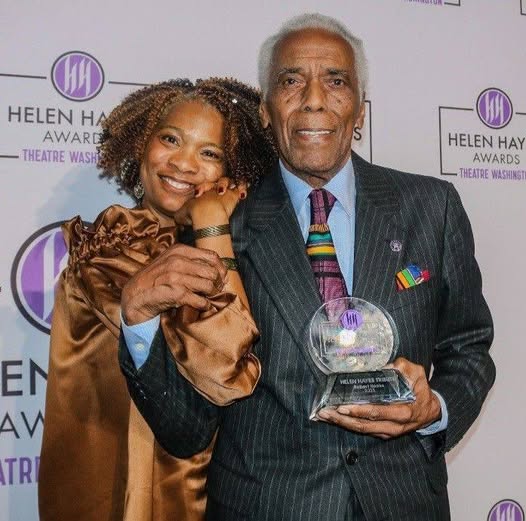
“I was so surprised receiving my Helen Hayes when the presenter turned out to be my amazingly talented goddaughter Deirdra LaWan Starnes, who’s mother was a member of the DC Black Repertory Company, and little Deirdra then joined our Children’s workshop. She is now grown,beautiful, and a brilliant actress in her own right.”
This photo was posted by the DCBRC Alumni Association on Awards night.
“Robert Hooks is the touchstone for Black Theater in DC. With the DC Black Repertory Theatre, he created the beginnings of a Black community of theater artists, musicians, designers and educators and opened its doors to all races. Bobby’s dream has taken root and lives on in our vibrant and diverse theatre community,” said Bonnie Nelson Schwartz, founder of the Helen Hayes Awards”.
~*~
The Negro Ensemble Company is credited with the launch of the careers of many major Black artists of all disciplines, while creating a body of performance literature over the last thirty years, providing the backbone of African-American theatrical classics.
The Impact of the Negro Ensemble Company (NEC)
Founded in 1967 by Hooks, Douglas Turner Ward, and Gerald Krone, the NEC redefined American theater.
-
Career Launcher: The company served as a critical training ground and launching pad for legendary Black actors, include: Denzel Washington, Samuel L. Jackson, Denise Nicholas, Hattie Winston, Adolph Caesar, S. Epatha Merkerson, Angela Bassett, James Pickens Jr. and Phylicia Rashad.
-
Institutional Legacy: Since its inception, the NEC has produced over 200 plays and provided a professional home for more than 4,000 cast and crew members.
-
Awards & Recognition: NEC productions have garnered over 40 major honors, including two Tony Awards, the Pulitzer Prize for Drama (for A Soldier’s Play), and 13 Obie Awards.
-
Cultural “Artivism”: Beyond entertainment, the NEC pushed the Civil Rights Movement forward by creating a space where Black artists could control their own narratives and authentic stories.
The NEC is often referred to as the “West Point” of Black acting.
Additionally, Hooks is the sole founder of two significant Black theatre companies: The D.C. Black Repertory Company, and New York’s Group Theatre Workshop.
It is fascinating to see how Robert Hooks’ influence stretched across both New York and Washington D.C., creating a “pipeline” for Black excellence in the arts.
The D.C. Black Repertory Company (1971–1976)
After the success of the NEC in New York, Hooks moved to Washington D.C. to found this company. His goal was to provide professional training and performance opportunities for the local community.
-
Community Impact: It wasn’t just a theater; it was a school that taught dance, vocal training, and acting to hundreds of students.
-
The “Hooks” Method: He insisted on a high level of discipline and professionalism, which turned the D.C. area into a major hub for Black theater.
-
A Stepping Stone: Many of the students and performers from the D.C. Rep eventually followed Hooks back to New York or out to Hollywood.
Robert Hooks founded the Group Theatre Workshop (GTW) in 1964 in New York City as a tuition-free acting program for disadvantaged urban youth.
Initially operating out of his Chelsea apartment, where he even removed a wall to build a 30-seat stage, the workshop served as the foundational precursor to the world-renowned Negro Ensemble Company (NEC).
Origins and Early History
-
Establishment: Hooks started the workshop with roughly three dozen “young theatre hopefuls” to provide them with acting, writing, and dance training.
-
Leadership: Hooks was the sole founder but soon brought in Dr. Barbara Ann Teer to help develop the curriculum and teach classes.
-
The Chelsea Apartment: Early classes and performances were held in Hooks’s living room until his neighbors, suspicious of the large crowds of young Black men and women, led to his eviction.
-
Expansion: The group later found a home at the Cherry Lane Theatre, which allowed them to use the stage on Monday nights for rehearsals and showcases.
Transition to the Negro Ensemble Company
The workshop is historically significant as the “inception” of the Negro Ensemble Company, which Hooks co-founded in 1967 with Douglas Turner Ward and Gerald Krone.
-
The Catalyst: In 1965, the workshop produced a showcase featuring Douglas Turner Ward’s plays Happy Ending and Day of Absence. A glowing review in the New York Postcaught the attention of the Ford Foundation, leading to a major grant to establish a permanent professional company.
-
Legacy Training: When the NEC was formed, the Group Theatre Workshop officially became its training unit.
-
Notable Alumni: Future stars who trained at the workshop include Antonio Fargas, Hattie Winston, and Whoopi Goldberg (whom Hooks met when she was young).
Robert Hooks’s Vision
Hooks named the workshop after his favorite theater organization, the legendary Group Theatre of the 1930s. His goal was to empower Black artists by creating a “Black-oriented, Black-controlled theatre” that maintained high professional standards while remaining accessible to the local community.
Hooks prioritized building these institutions over personal fame.
The Black Theatre Movement:
The Black Theatre Movement, which peaked during the 1960s and 1970s as the “aesthetic and spiritual sister” to the Black Power movement, aimed to establish a distinctly Black aesthetic, fostering cultural pride and political consciousness. It was driven by artists like Amiri Baraka and Ed Bullins, shifting from protest-focused, early-century drama to revolutionary, Black-centered art for Black audiences.
Key aspects of the movement include:
Black Arts Movement (BAM): Often synonymous with the 1960s-70s, it focused on creating art that served as a “political spearhead for civil justice and protest”.
* Key Figures & Groups: Influential playwright figures included Langston Hughes, Zora Neale Hurston, Lorraine Hansberry, James Arthur Baldwin, Douglas Turner Ward, Robert Hooks, Amiri Baraka, Ed Bullins, Ossie Davis, and Ntozake Shange. Foundational institutions like the Negro Ensemble Company and the National Black Theatre were established, for instance by Dr. Barbara Ann Teer in 1968.
Origins: The movement grew from a long history of African American theatre, including the early 20th-century work of the Ethiopian Art Theatre of Chicago and the Howard Players, as well as 1930s Federal Theatre Project productions , New Lafayette Theatre (NLT) in Harlem and Karamu House in Cleveland, Ohio.
Purpose: It was designed to challenge and combat racial stereotypes, create a unique mythology/symbolism for African American culture, and, as in the case of the National Black Theatre, address inaccuracies regarding cultural identity.
Impact: The movement fostered a move away from seeking approval from white audiences, promoting, instead,, independent production of, and for, Black communities.
Key works often cited include Lorraine Hansberry’s A Raisin in the Sun (1959) and Amiri Baraka’s Dutchman (1964).
The Legacy of Activism and Artistry *
Robert Hooks didn’t just want to be a star; he wanted to build institutions. By creating the NEC and the D.C. Black Rep, he ensured that Black actors wouldn’t have to wait for “permission” from White-led theaters to perform.
He provided the stage, the scripts, and the funding himself.
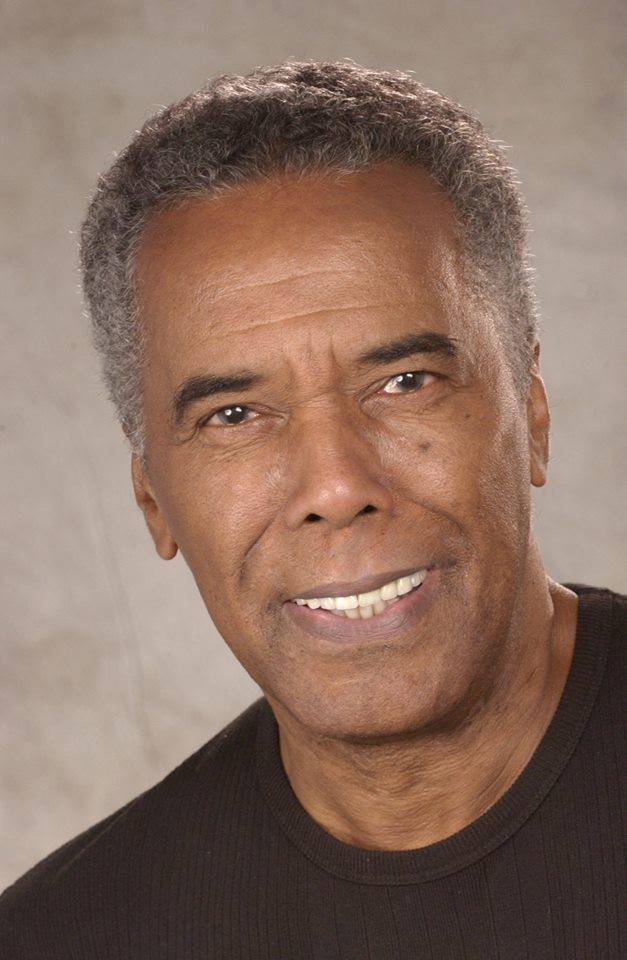
Born Bobby Dean Hooks into the rat-infested Foggy Bottom of segregated Washington, DC in 1937, a product of the post-Depression Northern Migration, the story of Robert Hooks’ life, in many ways, characterizes the turbulent growing pains of an America which are still struggling to come to terms with its racial history.
A celebrated and recognizable performer who was repeatedly chosen to break the color barrier in all media before the term “colorblind casting” even existed.
Hooks was instructed by the Rev. Dr. Martin Luther King, Jr. to never forget that artists were an integral and vital part of the struggle for civil rights and the movement.
That mandate has shaped his existence and career.
Negro Ensemble Company
– The list of people who got their start there is a “Who’s Who” of Broadway and Hollywood royalty
Created as a consequence of Hooks’ first producing venture a double-bill of Douglas Turner Ward’s Happy Ending and Day of Absence the NEC was the most important enterprise of its kind, launching the careers of many of our major Black artists in all disciplines.
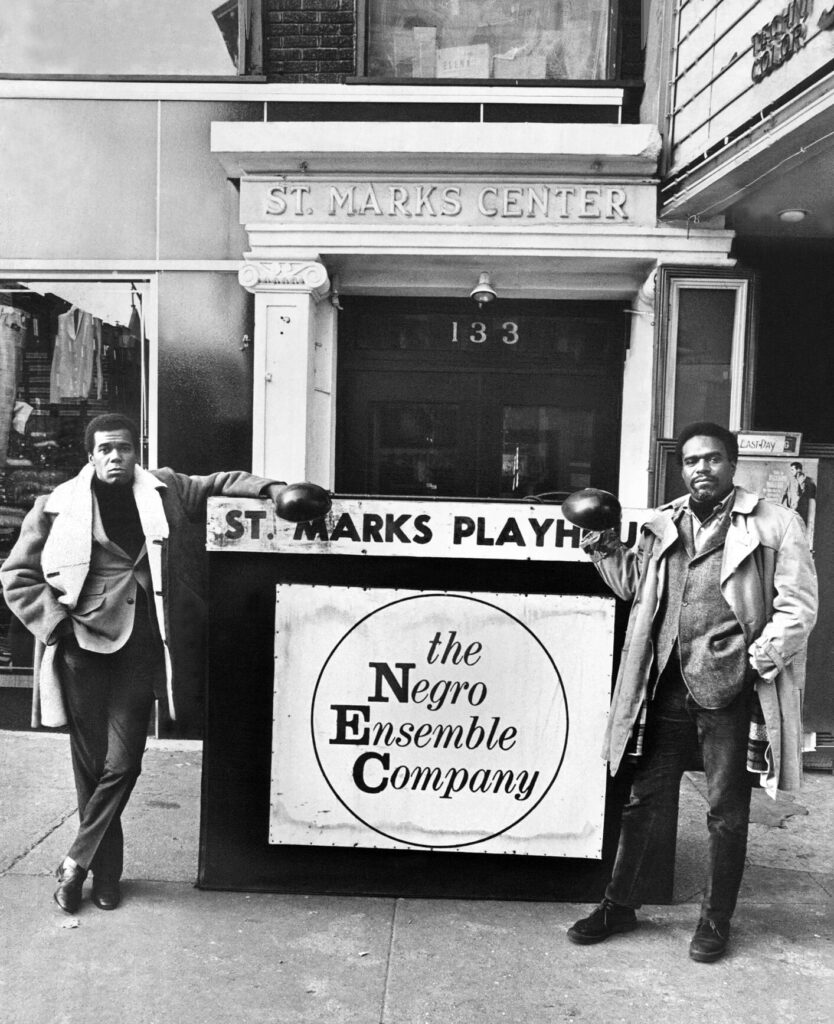
Robert Hooks and Douglas Turner Ward
“My mother remarried in 1954, and we moved to Philadelphia and I went to my first integrated high school: West Philadelphia High School, where I really started acting. Philadelphia was a tryout town for Broadway, and I would go see these plays. Most of the plays I saw were all White plays with no Black characters. But then came “A Raisin in the Sun” on its way to Broadway. It blew my mind. I was in tears just wanting to be on that stage because it had Sidney Poitier, Ruby Dee, Claudia McNeil, Diana Sands, Ivan Dixon, and Louis Gossett Jr. — they were all there. I made up my mind. I wanted to be a professional actor. Instead of going to Temple University, a few months later I was in New York.
I replaced Lou Gossett in the play, and I met Douglas Turner Ward and Lonnie Elder, who were actors but mainly playwrights. So I met these guys as they were writing plays while we went on the road on the national tour. That’s how I really got into understanding the structure of theater and the structure of plays and what made them work. That’s where the whole idea of bringing theater to the Black community came from — in every city that we went, Black people who had never seen a Black play came and were just so enthusiastic. We saw the potential of Black audiences in every city.“
– WASHINGTON POST [ Roxanne Roberts 2018]

“This is how lucky I was as a young professional actor, to work with and act opposite two of the greatest actors the world has ever seen and enjoyed.
These two actresses, who were also two of my best friends and colleagues, who really taught me the importance of listening (as an actor,) and not just playing a scene, though beautifully written. Of course as a teacher/director I would always express the importance of truly listening in any scene, they were total experts at listening to others, then cleanly and brilliantly responding. As a stage actor, I learned so much in my transition from stage to film acting from theses two giant acting talents.
Seen on the left in a scene from Lorraine Hansberry’s “A Raisin in the Sun” is the gloriously talented Diana Sands. On the right, in a scene from “Just an Old Sweet Song” is the legendary thespian Cicely Tyson.
Both played key roles in my early acting career, and Oh! how I miss them both.“
Cicely Tyson (1924–2021) was a transformative American actress and fashion model whose seven-decade career was defined by her refusal to accept demeaning roles. By insisting on portraying Black women with dignity, strength, and complexity, she became a foundational figure in African-American cinema and a central icon of the “Black is Beautiful” movement.
~*~
Robert Hooks-Vintage Reel of an American Cultural Architect
A vintage highlight reel examining the career of Actor/Producer/ Director and co-founder of the internationally esteemed Negro Ensemble Company Robert Hooks.
From stage to screens large and small this is a vivid look at a man who broke color barriers, helped change the racial makeup of American arts, and politically worked in front and behind the scenes to enlarge and then protect those rights of access.