FAMILY HERITAGE
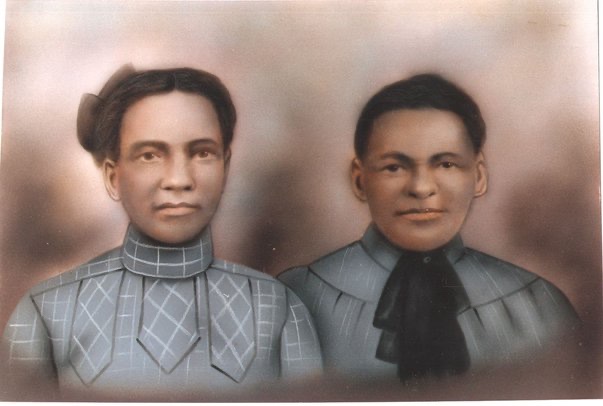
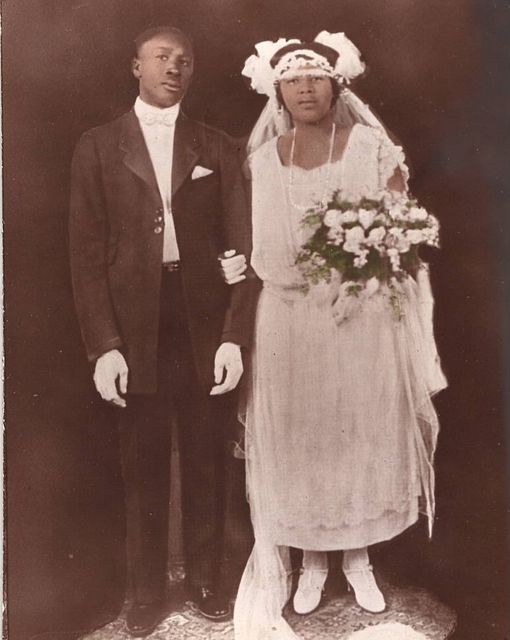
Great Great Grandparents (Maternal) – Clausell
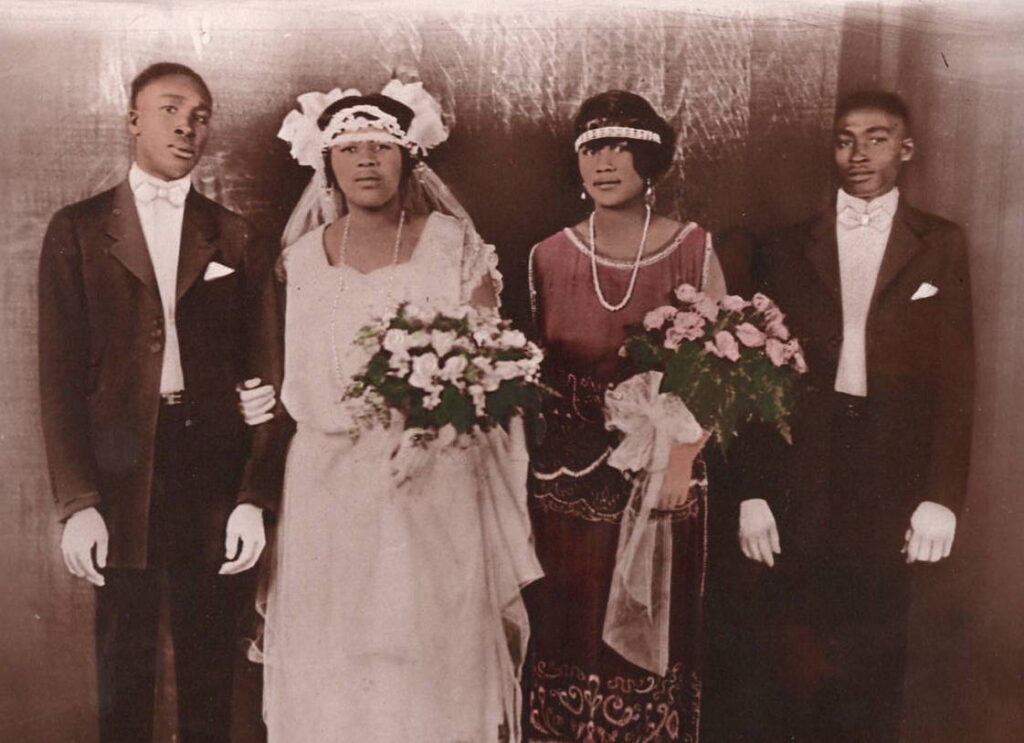
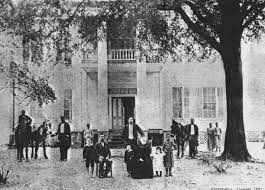
Grandparents wedding with Great Aunt Hattie (mother of Don King)
The Shields Line
The Shields line started as early as we can find with Soloman Shields in 1800 born in South Carolina. His son Tom (b.1822) and his wife Susan (b.1835) Shields were born in Crumptonia, Alabama on the Cochran plantation. The plantation house is still there although it is not open to the public.
Tom and Susan had four children. Adam Wilson who may have been Tom’s son by another woman was born in 1859 and married Katie Seltzer. So, DNA test with Wilson, that is actually the Shields family. Adam and Katie had three children, Captain Wilson (1884), William Willson (1887), and Leon Sellzer (1910). Tom and Susan’s second son Barry Shields (1822) married Married Mariah Selzer (1865-1945) who would be my great-grandfather. Their daughter Patsey Shields was born in 1875 and their son Tommie Shields was born in 1877.
Cochran House at Crumptonia near Orrville, AL (built c. 1855)
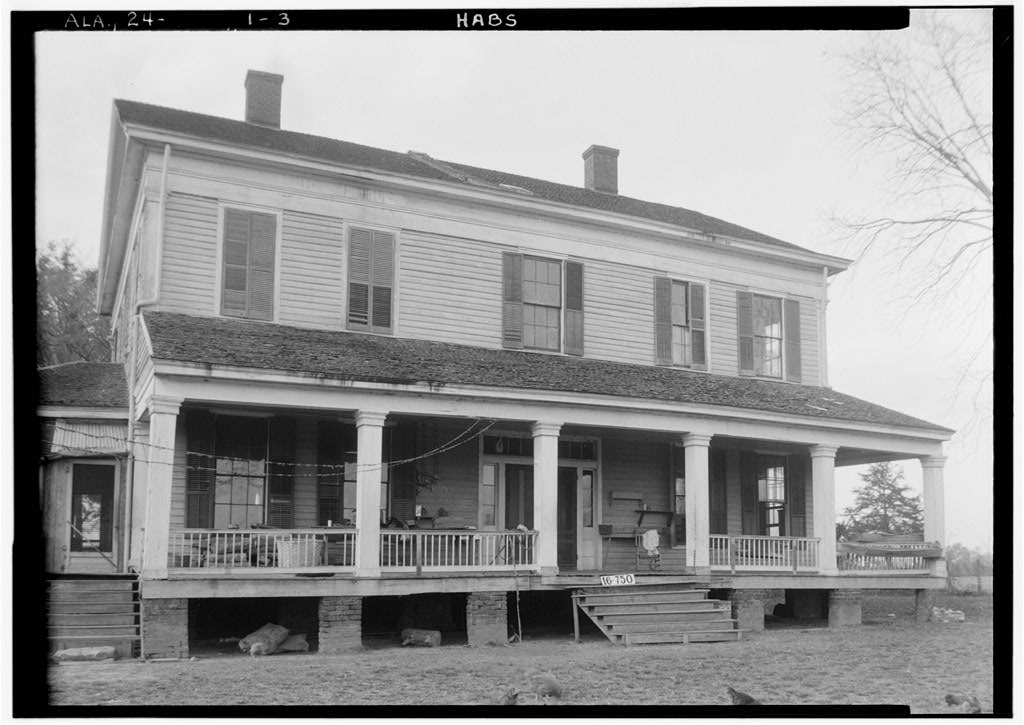
Antebellum, Historic Home | Crumptonia in Dallas County
“Crumptonia is an unincorporated community in Dallas County, Alabama.[2] It is named for a local plantation house of the same name, built in 1855 by Claudius M. Cochran and later owned by the Crumpton family.” [Wilipedia]
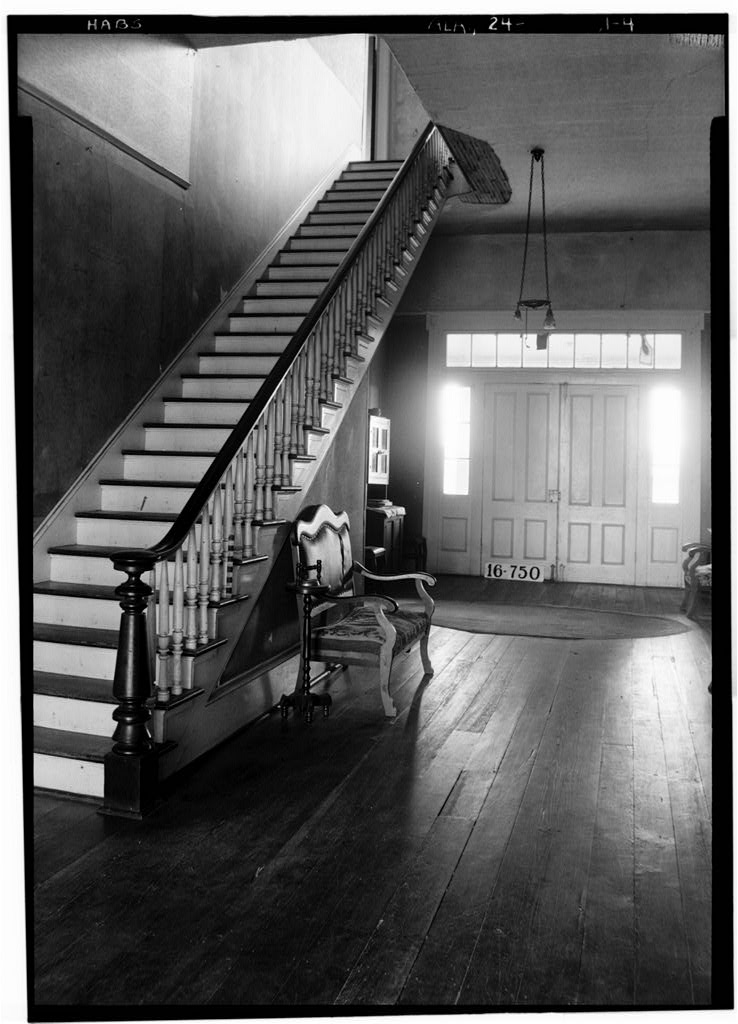
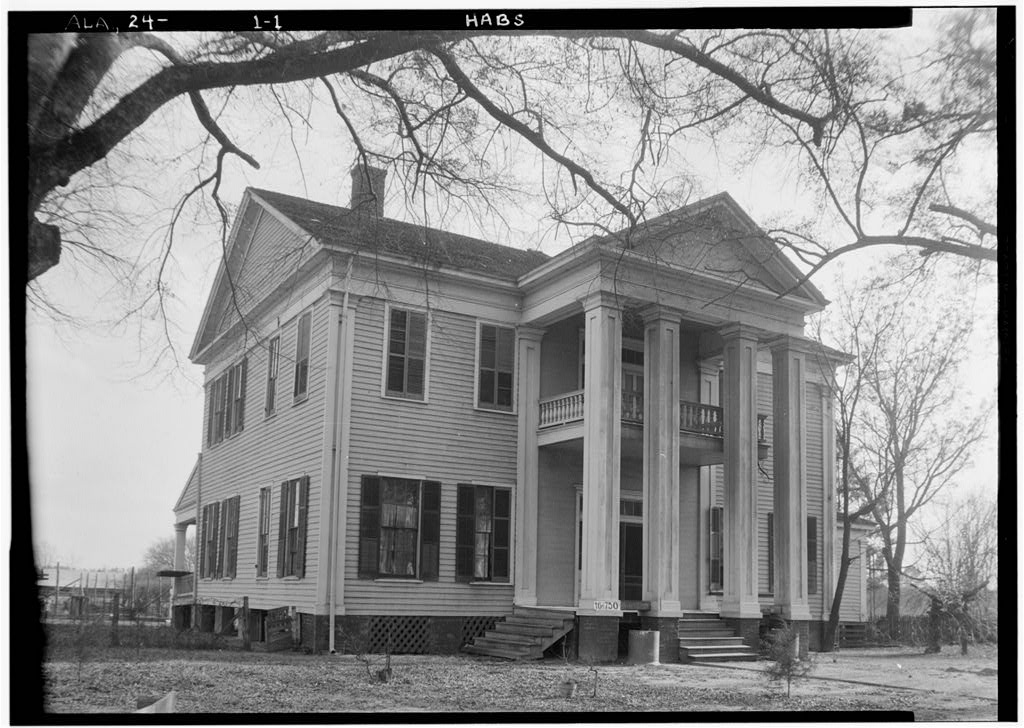
Also referred to as the Cochran-Crumpton House, Crumptonia, and the McCrary House, this 2-story Greek Revival style home was built circa 1855 for South Carolina-born, Claudius M. Cochran. It was later owned by the Crumpton family and it became part of the Crumptonia Plantation. The front of this house is almost identical to those of the McMillan-Oxford House, Tasso, and Moseley Grove which are also located in the vicinity of Orrville. The Cochran House was documented in the Historic American Buildings Survey (HABS) in 1934. It is featured in “Silent in the Land” by Chip Cooper, Harry J. Knopke, and Robert S. Gamble.
This house is located approximately 8 miles southwest of Orrville on Dallas CR 21 (32°12’49.2″N 87°17’22.9″W – Google Maps).
This is a private residence – drive by only.
Sources: 1) wikipedia.org/Crumptonia_Alabama; 2) “Silent in the Land” by Chip Cooper, Harry J. Knopke, and Robert S. Gamble; 3) “The Alabama Catalog: A Guide to the Early Architecture of the State” by Robert S. Gamble.
B&W photographs courtesy US Library of Congress (HABS), photographer: W. N. Manning, date: March 17 & 23, 1934. The recent photographs that are provided were taken in February 2012.
Claudius McRelas Cochran
Birthdate: January 31, 1804
Birthplace: Marlboro County, South Carolina, United States
Death: February 22, 1884 (80)
Dallas County, Alabama, United States
Place of Burial: Martins
Immediate Family:
Son of Lt. Thomas Cochran and Elizabeth Hunter Cochran
Husband of Eleanor Bainbridge Cochran
Father of Robert M. Cochran; Eleanor Cochran; William Alexander Cochran; Elizabeth Jane Cochran; Ellen Pouncey Cochran and 1 other
Half-brother of Nancy (Ann/Anne) Cochran Hamer; Robert Cochran; Rachel Bethea; Margaret Bethea; Thomas Cochran and 2 others
Occupation: Postmaster
The Shields line starts as early as Soloman Shields in 1800 born in South Carolina. His son Tom (b.1822) and his wife Susan (b.1835) Shields were born in Crumptonia, Alabama on the Cochran plantation. The plantation house is still there although it is not open to the public. Tom and Susan had four children. Adam Wilson who may have been Tom’s son by another woman was born in 1859 and married Katie Seltzer. On the several DNA tests I have taken, There are more Wilson matches than Shields. So if one should see a DNA test with Wilson, that is actually the Shields family. Adam and Katie had three children, Captain Wilson (1884), William Willson (1887), and Leon Sellzer (1910). Tom and Susan’s second son Barry Shields (1822) married Married Mariah Selzer (1865-1945) who would be my great-grandfather. Their daughter Patsey Shields was born in 1875 and their son Tommie Shields was born in 1877.
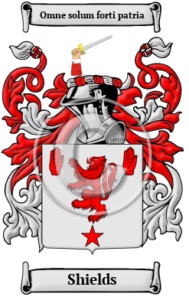
Early Origins of the Shields family
The surname Shields was first found in the Ulster region counties of Donegal, Derry, Antrim, and Down. This family is reputed to be descendants of the great King Niall of the Nine Hostages. The motto was originally a war cry or slogan. Mottoes first began to be shown with arms in the 14th and 15th centuries but were not in general use until the 17th century.
Shields Family History
Meaning ‘of Shields’, this is a locational name from the seaport and market town in County Northumberland. This name is of Anglo-Celtic origin and is popular throughout England, Ireland, Scotland, and Wales.
Prior to 1840, a White farmer from the Pee Dee region of Marlboro County in South Carolina settled in an area of Dallas County, Alabama which was then known as the Lexington Beat. His name was Claudius M. Cochran. In order to provide labor for his farm, Claudius brought along 26 slaves belonging to him. John Cochran was one of the slaves. John was about 10 years old in 1840. The slaves could have been John’s siblings, cousins, parents, etc. Slaves were only enumerated and identified as male or female between certain age brackets. In 1855 Claudius M. Cochran built a large plantation house, which took on the name, the Cochran Plantation House. My GGG Grandfather John Cochran was one of the slaves that built the Cochran Plantation house. The house still bares that name today, “Cochran Plantation House) in Alabama. The community that was then known as the Lexington Beat became known as Crumptonia after one of Claudius’s daughters married into a prominent family by the name of Crumpton.”
Some branches of the Shields family have Black ancestry. This includes the lineage of Michelle Obama, whose ancestor was a slave named Melvinia Shields, and a separate Shields family with African ancestry that included the Negro Seminole Scouts, according to Mixed Race Studies, The New York Times, and Treemily Family Tree Builder. The Shields name is common, so the family history depends on which Shields family is being discussed.
- Melvinia Shields was a slave on the Shields plantation in Georgia before the Civil War.
- She had children with a white man from the Shields family and her children were given the Shields name.
- Michelle Obama is a descendant of one of these children, Dolphus Shields.
- This Shields family had white and Black branches, with some members being of mixed race.
- Some family members were Negro Seminole Scouts, such as Archibald Shields and his son William Shields, who are noted as having been Buffalo Soldiers.
- Some members of this family had to hide their African ancestry to avoid being enslaved, and some even moved to Mexico to escape this fate.
- Shields Green was a fugitive slave who participated in John Brown’s Raid on Harper’s Ferry and was executed in 1859.
- He was born a slave in South Carolina and escaped through the Underground Railroad before meeting Frederick Douglass in Rochester, New York.
Claude Shields Sr.
“In Post-World War I Era Cleveland, a popular destination for African American migrants from the South, gospel music became increasingly popular. This growing popularity was due in no small measure to the business acumen of people like Claude Shields Sr., quartet singer, and owner of the Shields Brothers Cleaners on Cedar Avenue. Since the 1920s, Cleveland’s gospel quartet artists have not hesitated to support the recording of the music, public programs, and publications about gospel’s influence on other styles of American music, including Rock and Roll.” – Cleveland and the Rise of Gospel Blues
Claude Sr. had ten siblings: Isabella, Mary, Fannie, Maggie, Berry Jr., Louise, Claude, David, Willie, Coleman, and John.

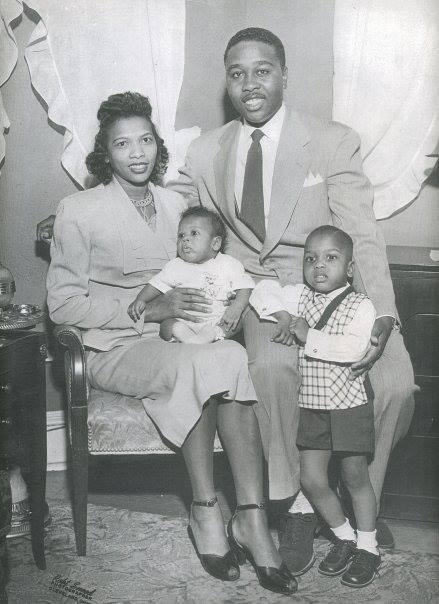
(Johnnie, Claude Jr., John and Claude Shields Sr.)
Johnnie Calloway Shields is the sister of Hattie Lynn King,

the mother of fight promoter Don King and the late Joesph Lynn (actor).
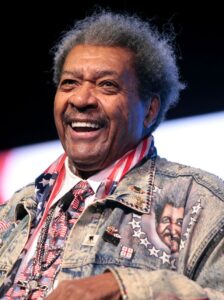
Claude Shields Jr. is a native of Cleveland, Ohio.
He married Fannie and had two sons, Gerald Donel and Dale Ricardo.
Fannie Sanders Shields is a native of Mobile (Burnt Corn) Alabama . – “Historical records show that Africatown, formally known as Plateau, was bought by 32 of the freed survivors of the Clotilda after the Civil War, about 3 miles (4.83 kilometers) north of Mobile.”
**
“There comes a time when you look into the mirror and you realize that what you see is all that you will ever be. And then you accept it. Or you kill yourself. Or you stop looking in mirrors.”
— Tennessee Williams
“It is not your job to like me… it is mine.”
. The praise comes from professional organizations, educational institutions, former students, and peers in the arts community.
- Paul Robeson Award: He won this prestigious award, presented by the Actors’ Equity Association and Actors’ Equity Foundation, for his commitment to using theatre for social justice.
- The HistoryMakers: His lifetime of work was recognized by The HistoryMakers, which interviewed and permanently archived his contributions in the Library of Congress.
- Kennedy Center/Stephen Sondheim Award: Shields received this award for his inspirational work as a teacher.
- Numerous other awards: Other honors include the AUDELCO/”VIV” Special Achievement Award, ENCORE Awards from The Actors Fund, and the Ebony Bobcat Network Legend Award from Ohio University.
- From a former student: Actress Danai Gurira, who Shields directed at Macalester College, described him as an inspiration. Shields is credited with helping her develop the focus and strength visible in her work.
- Comments on his teaching style: A former student noted that Shields is a passionate and intelligent professor who uses his real-world experience to help students improve. He is described as a role model who helps students discover their artistic voices.
- From a fellow artist: A colleague who has known Shields for over 30 years described him as “an artist and a great soul” whose productions leave a lasting impact.
- Digital archive: Colleagues praise his dedication to creating the Iforcolor.org digital archive, which provides free access to his extensive research on the history and cultural contributions of artists of color.
- Activism: He is recognized for his activism through platforms like Iforcolor.org and his work with Project1voice, where he advocates for African American theatre and playwrights.
Iforcolor.org
A website created by educator and activist Dale Ricardo Shields to preserve and present the history and cultural contributions of communities of color. It is primarily a historical and educational resource, though recent social media posts suggest an association with a scam involving commissions.
- Founder: Dale Ricardo Shields, an actor, director, and professor, uses the site to share his extensive research and knowledge of theater, history, and the arts.
- Mission: The site focuses on celebrating and preserving the history and cultural impact of African American, Latinx, and Indigenous American art forms. It is explicitly for educational and entertainment purposes.
- Content: Topics include profiles of historical figures and artists, articles on historical topics, poetry, and discussions of music and dance.
- Activism: The website reflects Shields’ broader activism, using his art and platform to educate the public, inspire empathy, and advocate for social justice.